This is the oldest evidence of people starting fires


“It is certainly possible that Homo sapiens in Africa had the ability to make fire, but this cannot yet be proven from evidence. We only have evidence so far from Barnham,” said Chris Stringer, an anthropologist at the Natural History Museum in London, co-author of the study, at the press conference.
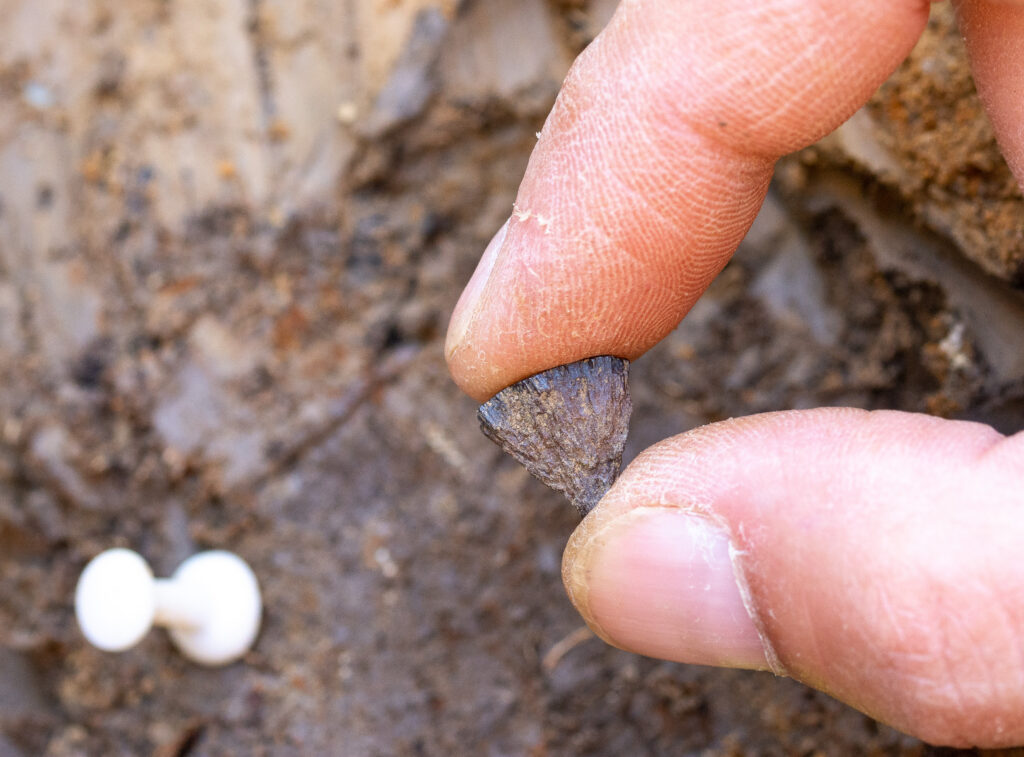
The two pyrite fragments on the side may have broken off a larger nodule when it was struck against a piece of flint.
Credit: Jordan Mansfield, Pathways to Ancient Britain project.
Dig into the details
Several types of evidence at the site indicate that Neanderthals started their own fire, not borrowing from a local forest fire. Ancient forest fires leave traces in the sediments that can last hundreds of thousands of years or more: microscopic pieces of charcoal and ash. But the area that is now Suffolk was not in peak wildfire season when the Barnham fire pit was in use. Chemical evidence, such as the presence of heavy hydrocarbon molecules in the sediments around the fire, suggests that this fire was homemade (wildfires typically disperse lighter fires over several square kilometers of landscape).
But the key piece of evidence in Barnham – the kind of clue arson investigators probably dream of – is pyrite. Pyrite is not a naturally common mineral in the area around Barnham; Neanderthals would have had to venture at least 12 kilometers southeast to find them. And while few hominids could resist the lure of picking up a shiny rock, it’s likely that these chunks of pyrite served a more practical purpose.
To determine what type of fire the reddened clay might have produced, Davis and his colleagues performed a few experiments (which involved lighting several fires on clay collected from near the site). The archaeologists compared the baked clay from Barnham to the clay found under their experimental fires. The grain size and chemical composition of the clay from the ancient Neanderthal home resembled almost exactly “12 or more heating events, each lasting 4 hours at temperatures of 400º Celsius or 600º Celsius,” as Davis and colleagues wrote.
In other words, the Barnham home alludes to the rhythms of daily life for a group of Neanderthals 400,000 years ago. For starters, it seems like they started their campfire in the same spot over and over again and let it burn for hours. Nearby flint shards conjure up images of Neanderthals sitting around the fire, banging stone tools while telling stories late into the night.
Nature2025 DOI: 10.1038/s41586-025-09855-6 About DOIs).


