This Liquid Glass toggle is a window into Apple’s broken design process


What is the importance of a rocking? You probably haven’t thought much about these small cursors that you find dispersed in iOS. But what happens if a rocking can shed light on the way a system is designed and the priorities of its creators? This is something that I think we can discover the overhaul of Apple’s liquid glass, and it is not an encouraging lesson.
Do not get me wrong, there is much to love in liquid glass. I think it looks beautiful in MacOS Tahoe, and there are a lot of places in iOS 26 where it is a real step on the creations that we have seen in iOS 18 and before. But it is difficult for me to deny that I am often irritated by him and that I left with the feeling that it is an indulgence on the part of Apple, an example of the company trying to point out how intelligent its designers are rather than adding something of real and coherent value.
And this is where the humble rocking comes into play. Because in iOS 26, the transparent cursor illustrates everything that does not go with liquid glass – and how far Apple has moved away from Steve Jobs’ guidance philosophy.
The Steve Jobs effect
I know, I know, invoking the “What would Steve Jobs think?” Even is one of the cardinal sins of technological journalism. But the co-founder of Apple and Maven of versatile design have left extremely important rules on what makes a design really great, and the liquid glass in much rupture.
So let me explain what’s wrong with the downflows in iOS 26. For example, open the parameter application and access an application such as Camerawhere you will see a bunch of these tips. Try to slide your thumb on one and keep it in place. You will notice that the button turns into a larger glass in glass that refracts light when it moves. It looks quite attractive and almost fascinating the first time you use it.
But once you just try to type it, the rocking seems to jump as it moves through the screen, the glassy effects and the scale now feeling much more prominent. The button becomes so large that it is distracting and feels almost slow as it moves. The animation is impossible to miss, and that is perhaps the point.
Apple’s design philosophy has always been to reduce the extras and distractions to let the product shine. What is the purpose of a rocking? To allow something to happen (or not). It allows and it deactivates. In other words, its goal is to be a way to reach an end, not at the end itself. You might think that it should therefore be elegant, minimal and never distracting, something that goes away quickly so that you can come back to what you do before.
Jumping like the rocking of liquid glass is expressly and very obviously distracting. This violates Apple’s own conception philosophy. And this contradiction left me an uncomfortable feeling: that the main inspiration behind the liquid glass is the form of function, to look cool rather than serving a useful objective.
Contribute to your attention
I do not want to appear as a kind of stiffness staid and without joy. Products should See attractive, daring and interesting, just like liquid glass. But it should not seem well should not be the main motivation. If this is the case, this may neglect the advantages that accompany a design that works well and finds itself in the place with something that looks elegant but which is not fun to use. While the famous Maxime of Steve Jobs says it, “the design is its operation”.
Think about how Apple has launched liquid glass to WWDC. Alan Dye, vice-president of the human interface by Apple, summed it up in this way: “Our goal is a new new design that brings joy and pleasure to each user experience.” He has repeatedly highlighted the “specular reflections” of Liquid Glass “,” beauty, crafts and joy “and” vitality “which” create a more animated experience than we think that you will find really delicious “.
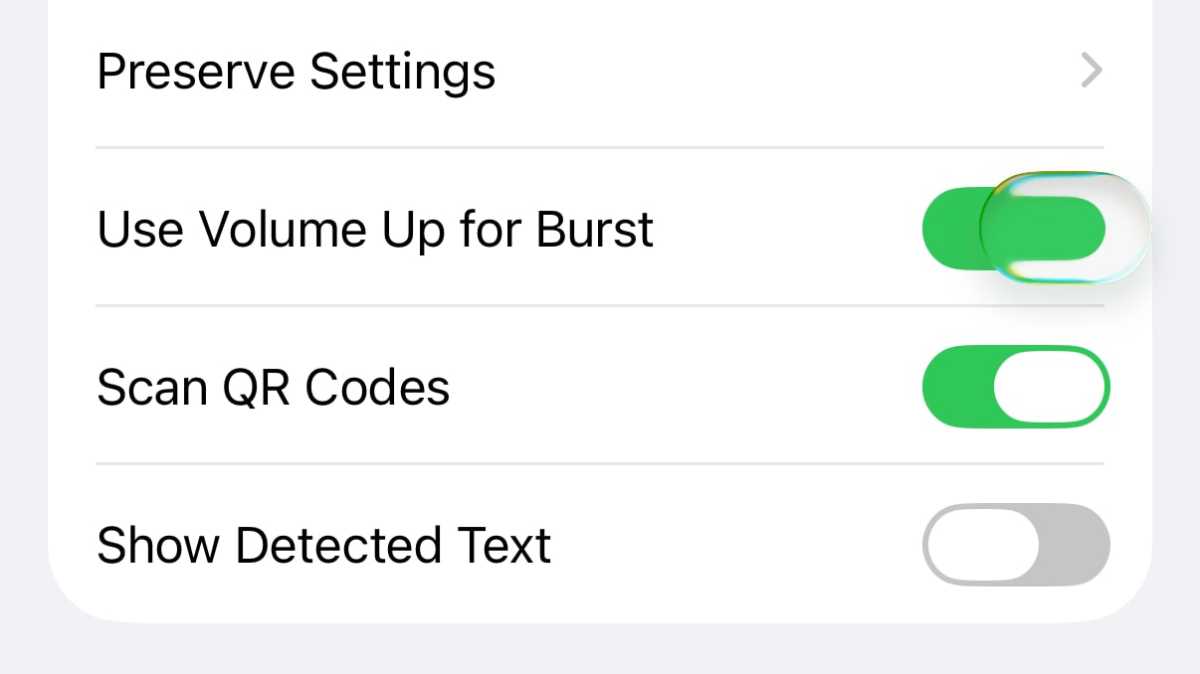
Liquid glass tilles are cool to look at but also slower and more distracting than before.
Foundry
However, Dye has rarely talked about tangible improvements that this new look would bring to daily use. Many of those he highlighted, such as alerts that now appear when you type, could be made without the visual signals of Liquid Glass and are not inherent in his design. It was revealing that Dye had placed the creation of a “delicious” experience before being familiar and easy to use when listing the advantages of Liquid Glass.
Dye also explained that Liquid Glass aims to put “more accent on your content”. But with all its shimmering and refractory properties and its nervous and nervous animations, liquid glass often takes attention far of your content and on itself. It is an attraction of attention, not a design that is deferential to your work.
For example, is it essential that a contextual menu stretch when you shoot it? Or that a text grew up the rod that moves? Certainly, these effects are quite amazing when you see them in action. However, these are also qualities that attract your attention, not those that allow these accessory elements to deviate and put “more emphasis on your content”. They want you to preach your attention to them, not your work.
Be careful
One might feel like making a lot of noise on nothing, that all of this is a storm in a rather small cup of tea. And I must admit that motivations behind Liquid Glass may not seem to be the most blatant problem with Apple’s design. But that seems important because it reveals part of Apple’s thought with regard to the design of the interface.
Really, it’s not about whether the liquid glass looks good or not. There are many parts which are undeniably beautiful, of the cursor which appears when you scroll the navigation buttons to the flexible glass in frosted glass in the application of the camera.
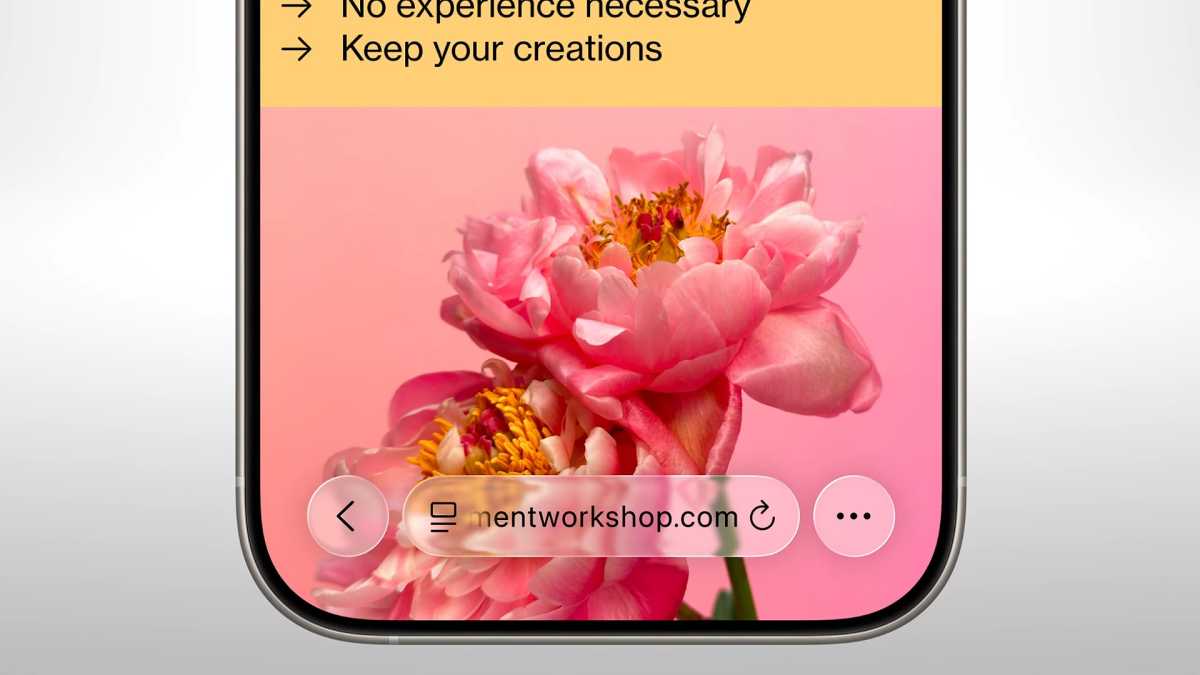
Liquid glass is pretty, but can also interfere with conviviality.
Apple
Instead, this is Apple’s priority here. Is it to make incredibly excellent products that improve the lives of users? Or is it just to do something that attracts your eyes? There is no doubt that there are still many first to find in iOS 26, but I fear that there is also an uncomfortable level of the latter.
The simple fact of looking pretty should not be the basis of a design. An excellent design is great because of its operation, not just its appearance. Steve Jobs summed it better when he discusses the endless imitators Imac G3 who misunderstood the question of his design: “The thing that all our competitors are missing is that they think that it is fashion, they think that this is the surface appearance … They say: ‘We will slap a color on this unwanted computer, and we will also have one.’ ‘And they lack the point.
Or take Jony Ive, who hated products that used “swoopy forms to look good, things that are so aggressively designed, just to attract attention. I think it is arrogance, it is not done for the benefit of the user. ”
Doing something for fashion reasons is one thing, but when these decisions aggravate the user experience, as sometimes happens with liquid glass, it is difficult to tolerate. The fact that these falls have made their way in iOS 26 should be worrying.
Always time for adjustments
Of course, making beautiful interface elements is a valid pursuit. A great art makes you feel things you cannot explain, after all. But when this art begins to have a negative impact on the experience in a distractioning way, it did not benefit the user.
And that brings us back to the unpretentious rocking. If Apple can conceive that which presents magnificent visual effects of Liquid Glass without the nervous, distracting, “Hey look at me!” Persistence of the current iteration, it will be a sign that he always includes the Golden design rule of Steve. And if this can bring this new way of thinking about the rest of the liquid glass, iOS 26, and everything that comes after, will be a much better global experience.
Liquid Glass is a multi -year project, so there is still a lot of time for Apple to make adjustments, and I have no doubt that it will be, on the basis of the modifications that we have already seen during the first beta updates. I just hope that Apple will also be able to temper the thought which is under its recent conception decisions before things become too uncontrollable.