Why is the blue-ringed octopus so deadly?


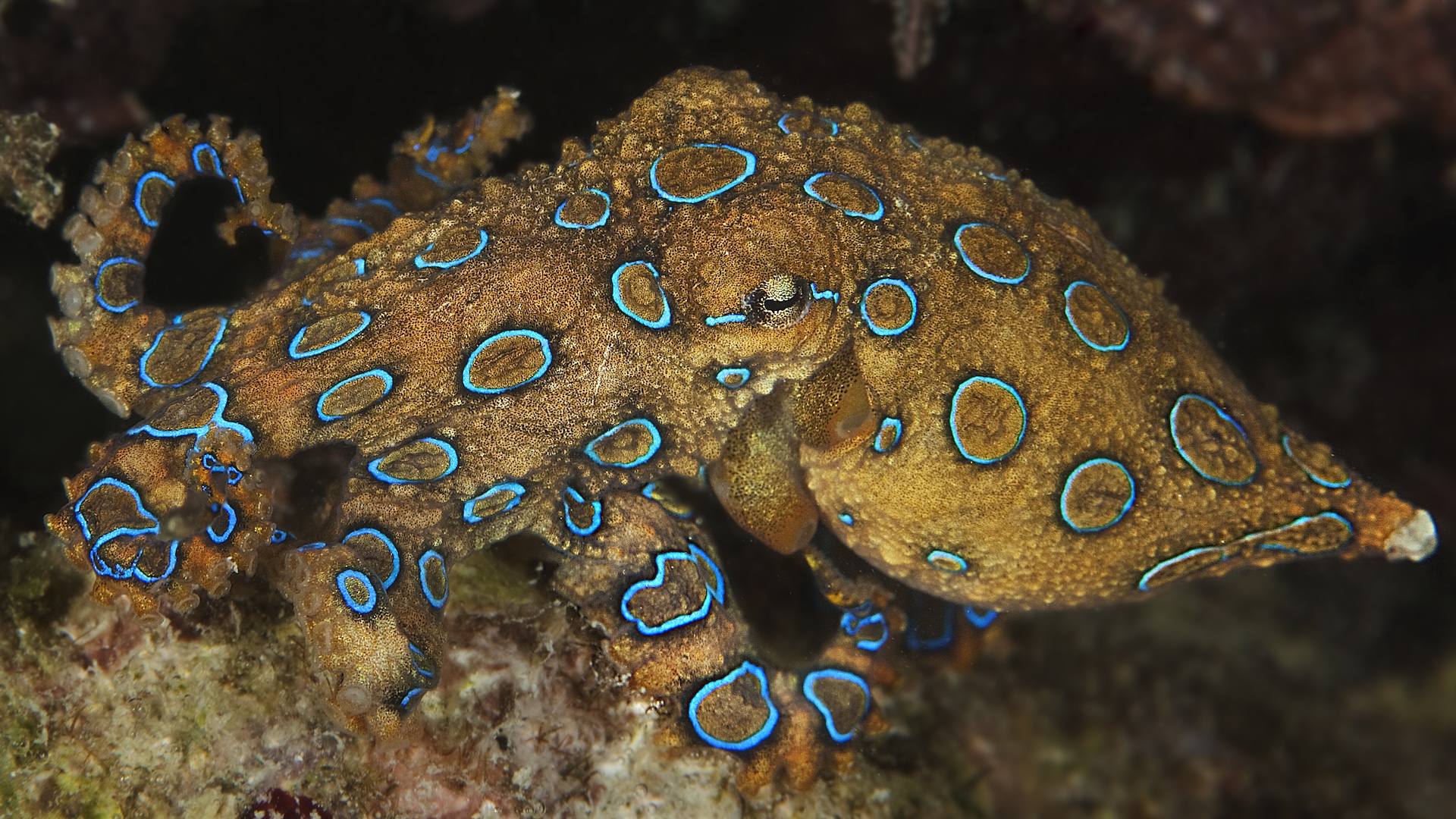
The octopus had the reputation of being Cunning camouflars And smart creatures. But some are known for a more disturbing reason: they are deadly.
A group – The blue ring octopus (genre Hapalochlaena) – is particularly dangerous. But what makes this creature so fatal?
The blue rings octopuses carry a killer concoction called tetrodotoxin (TTX), a powerful neurotoxin which can paralyze living beings, including humans. Tetrodotoxin is the most Famous known to buffersfish – poorly prepared “fugu” can kill those who eat it. Tetrodotoxin is 1,200 times more toxic For humans that cyanide and he has no known antidote.
All four octopus genus species Hapalochlaena have a tetrodotoxin, which makes it the four most poisonous species of octopus: the largest blue ring octopus (H. Lunulata), the octopus with a south or lesser blue ring (H. Maculosa), the blue bordered octopus (H. Fasciata) and the common blue ring octopus (H. Nierstraszi). These cephalopods, with their iridescent blue circles, are indeed beautiful, but also dangerous.
All octopodes – a group of marine animals that includes octopuses – have venom, but some of these animals are more powerful than others, said Michael VecchioneA zoologist complementary to the Smithsonian Museum of Natural History. “The Blue-Ring is perhaps the most poisonous,” he told Live Science in an email, in part because he lives in shallow waters teeming with predators who could hope for this octopus. His venom is a natural defense.
“Venomous secretions are among a wide range of natural toxins produced by Octopods,” added Vecchione. However, blue rings octopuses do not really make tetrodotoxin by themselves. On the contrary, symbiotic bacteria in their salivary glands produce it, Australian Institute of Marine Sciences Reports.
In relation: How many hearts has a octopus?
These octopuses reside in coral reefs and on the rocky foundations in the Pacific and Indian Oceans. They drag at depths of about 66 to 164 feet (20 to 50 meters) Deep, depending on the species. They are also tiny, measuring between 5 and 9 inches (12 to 22 centimeters) long, including their arms.
“It is logical that such a small octopus should have such impressive abilities to defend yourself”, ” Bretish BretThe director of cephalopod operations at the Marine Biological Laboratory of the University of Chicago, told Live Science.
This powerful venom includes a number of compounds – such as histamine, acetylcholine and dopamine – but its main component is tetrodotoxin. It acts on nervous tissue like a neural inhibitor by blocking sodium channels – proteins in nerve cells which are essential to communication between these cells and these muscles. When tetrodotoxin acts on these channels, this can prevent the pulmonary muscles from a creature from breathing and even their heart from beating.
This venom is useful for fighting predators and capturing prey. The blue rings octopuses generally deploy their venom with direct bites. Although the researchers have found a venom of octopus with a blue ring throughout his body, as in his branchies and the bag which contains his internal organs, he is most concentrated in the posterior salivary gland, said Grasse.
They can also disperse the venom in the surrounding water. When neighboring creatures – predators or prey – breathe, they absorb toxic water, which “can start slowing down their motor activity and paralyzing them,” said Grasse.
But venom is not only weapons; The blue rings also use it in mating, said Grasse. As with other animals, the female blue rings octopus is “significantly” larger than the male – sometimes even three to five times larger – so that the male faces risks during mating, including the danger of being cannibalized.
Although the blue ring octopus has a certain resistance to its own toxins, it is not completely immune. Thus, the male can temporarily paralyze the largest females with venom long enough to transfer a sperm packet.
The females also integrate venom into their eggs, said Grasse. They overlap their eggs with toxin to dissuade predators.
It is rare for a human to be bitten by a blue ring octopus, said Grasse. There are at least three reported deaths caused by the blue rings octopus – two in Australia and one in Singapore, according to the Australian Institute of Marine Sciences.
Although this powerful toxin can lead to an dying death as little as 20 minutes or as long as 24 hourssome people lived to tell the story. The results are “really variable,” said Grasse. “Some cases where humans have confirmed the blue ring’s octopes of the blue ring cause absolutely nothing.”
In a case From 2006, a 4 -year -old boy was bitten by a blue rings octopus in Australia. In the 10 minutes following the exhibition, the boy was vomited three times, said he had a blurred vision and could not stand alone. An ambulance precipitated him in the emergency room, where he was put on a fan to help him breathe for a total of 17 hours. But 28 hours after the initial bite, he was released without long -term complications. Grasse has confirmed that the search for medical aid and the use of a fan is the best way to follow in this case.
This little but powerful creature can certainly take care of itself. “It is a widely used advantage that they have, and they deploy in various ways,” said Grasse.


