Thomas Frank exits Spurs after lifeless, ineffective spell in charge


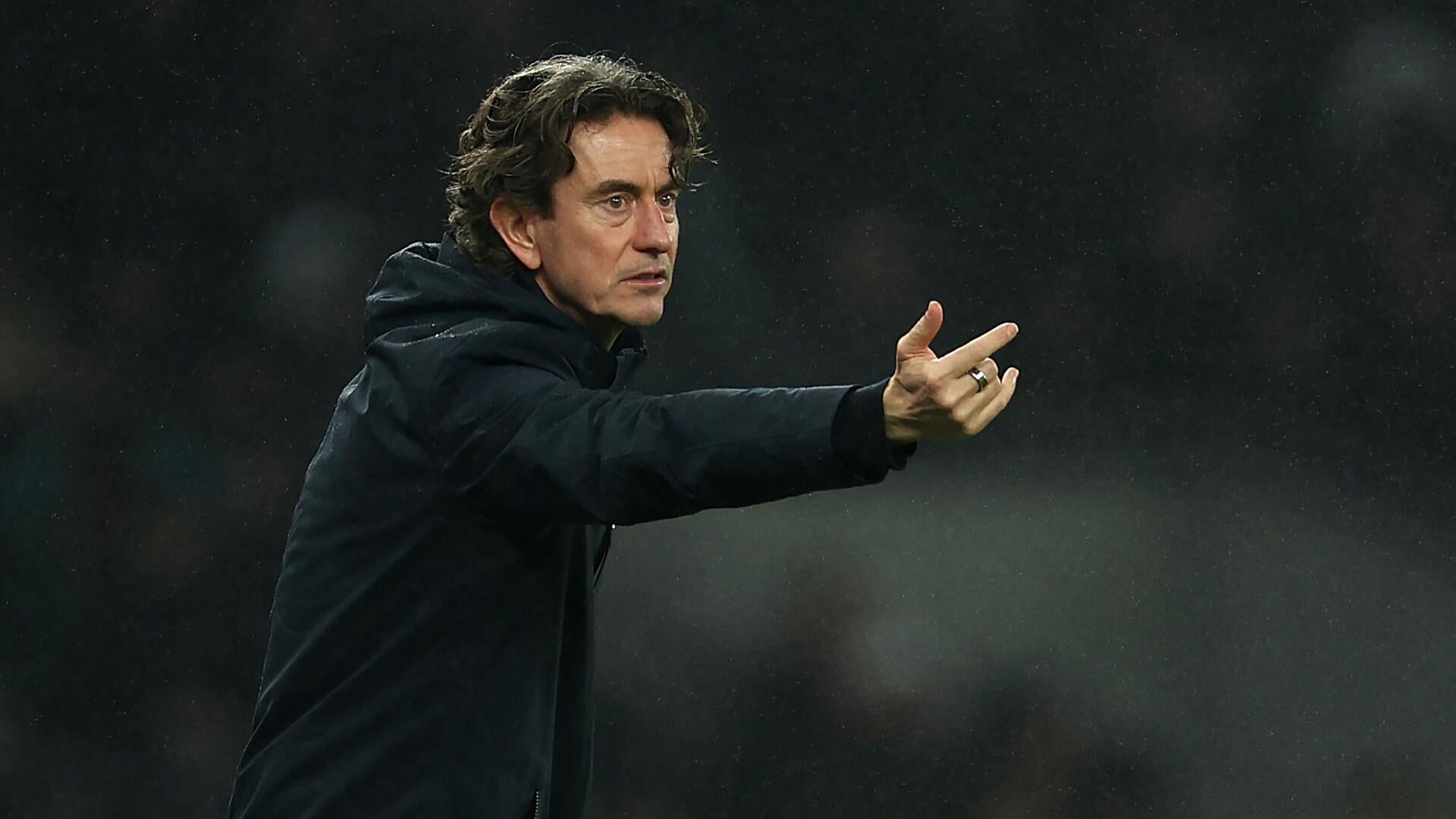
Six months into a season, it’s not uncommon to know what to expect from a given team on a given day and that was certainly the case for anyone who wanted to check out Tottenham Hotspur on Tuesday as they took on Newcastle United. A sluggish team that seemed a step or two behind the opposition in terms of intensity levels? Check. A porous defense that seems to lack chemistry? Check. An attack that has very few ideas? Check. Few redeeming qualities as team collapses in the face of yet another Premier League defeat? Double check.
Thomas Frank, whose months-long tenure in charge of the team finally came to an end after their last dismal performance, is not the cause of all of Spurs’ problems. He is right to point out that he, like his predecessor Ange Postecoglou last season, has had to deal with an injury crisis of epic proportions, while captain Cristian Romero is serving a suspension for a red card in their 2-0 defeat at Manchester United on Saturday. He was not wrong to note that this same team finished 17th in the Premier League last season, an admission that the ceiling is not that high for the current iteration of Spurs. Frank, however, did himself no favors during his brief spell in north London, becoming a rare example of a manager who genuinely deserved promotion to the big leagues but failed to prove his worth for the most part.
Frank’s tenure with Spurs is notable for all the wrong reasons, with the Denmark native unable to live up to the billing in any real sense. He was meant to be a practical alternative to Postecoglou, who spent much more time ensuring his team had a functional offense rather than a competent defense. That wasn’t the only problem the next manager theoretically should have fixed: his Brentford side were organized when defending set-pieces and hard-hitting at the other end, a signal that Frank’s Spurs would be effective at both ends of the pitch.
His perceived pragmatism, however, was confused with his ability. Frank inherited a disorder, but he also failed to improve problems that were entirely within his control. There are very few categories in which Frank has had a notable positive impact, an underperformance that is easy to spot regardless of how one chooses to define success. An average of 0.1 more points per game compared to Postecoglou’s Spurs last season isn’t exactly flexibility, and neither is an improvement of 0.3 goals per game when the team ranks 13th in the Premier League in terms of expected goals. If Postecoglou was reckless in allowing a porous backline to take shape despite brilliant defenders in Cristian Romero and Micky van de Ven, Frank is guilty of the same crime despite having the upper hand over an in-form first-choice centre-back pairing for much of the season.
|
Points per game |
1.1 |
1.0 |
1.5 |
|
Goals per match |
1.4 |
1.7 |
1.7 |
|
Expected goals per match |
1.1 |
1.6 |
1.6 |
|
Goals against per match |
1.4 |
1.7 |
1.4 |
| Expected goals against per match | 1.5 | 1.7 | 1.5 |
The Spurs’ defensive shortcomings were hard to ignore, even during a cursory monitoring of a given game day. The defenders at his disposal had years of experience alongside each other and yet seemed completely disjointed, a natural result of Frank failing to lock down the tactical basics and going back to the drawing board more often than a coach of his caliber usually does. His defenders seemed unsure of their next move, unable to trust their instincts and therefore prone to mistakes. The frustration and despair came out of the players every time a goal was conceded, no matter how predictable it was. Contempt grew among fans, who were more likely to boo than applaud fairly quickly during Frank’s tenure.
Frank’s Spurs underperformed in equal measure in front of goal. The coach had the essence of an offensive idea from the start of the season, one that seemed to go hand in hand with the odd construction of the Spurs team. He would bypass the midfield for the most part and instead prioritize play on the wings to generate attacking opportunities, something of a solution for a team that lacked real passers after James Maddison tore his ACL in preseason, while scoring a few goals from set pieces. That plan hasn’t exactly paid off: The Spurs’ offensive numbers this season are buoyed by an early-season blitz in which they outperformed their expected goals total, a beginner’s chance that’s usually difficult to maintain.
In no time, Spurs were out of ideas. Performing simple attacking plays was a difficult task, while their game was never built around winning more set pieces, even though that was the rare area of the game in which they actually excelled. Sometimes Frank would suck the life out of games instead, hoping that his disinterest in scoring goals would grind his opponents’ attacks into dust. The coach took too conservative an approach several times last fall in matches that could have served as highlight performances and at this point, it’s no surprise that it didn’t work. Spurs managed three shots and 0.12 xG in a 1-0 defeat to Chelsea in which the Blues were unlucky not to have scored more as they racked up 15 attempts and 3.68 xG. A few days later, Arsenal made sure not to waste their chances – they secured a 4-1 victory by having 17 shots and 1.93 xG, while Spurs had three shots and 0.07 xG to speak of. This was obviously worse than Postecoglou’s numbers, but even Frank’s in his final season at Brentford.
The inability to defend and attack properly was visible even at the end of Frank’s tenure, summed up perfectly in the last goal Spurs conceded before his dismissal. His side were unable to complete a simple breakaway minutes after equalizing against Newcastle, instead leaving Anthony Gordon to dance around an immobile Spurs defense before Jacob Ramsey fired the ball into the back of the net.
Frank’s Spurs were lifeless, a whiplash-inducing exercise for anyone who remembers watching Postecoglou’s version of the team. It was strange to see Frank’s Spurs try to attack for 45 minutes at a time every three or four games, then settle into a defensive structure that they couldn’t maintain, inviting their opponents into the game rather than completely killing the game. Almost single-handedly, he demonstrated that the belief that pragmatism is inherently effective is a trope rather than a proven philosophy for success in the sport. There’s nothing practical about taking your foot off the gas when things are moving in the right direction. It’s not effective to keep trying a losing strategy and hoping it will turn out to be good in the end. It is terribly unrealistic not to find a way to rely on one’s strengths, even if they are few and far between. There is nothing sensible about not establishing tactical foundations, which would leave your team incapable of implementing a stylistic vision that seems to be a prerequisite for becoming an elite coach.
With Frank at the helm, the Spurs simply dragged their feet through games as if they were simply there to collect an attendance reward rather than to play. No one wins trophies with style points, but Frank proved that you can certainly lose without them, with his team always arriving on the pitch feeling lacking in purpose. Little wonder, then, that he incurred the ire of the Spurs faithful, who, unlike his team in attack, lost no opportunity to castigate him for spearheading a “boring, boring Tottenham” – in every sense of the word he sucked the entertainment value and inherent joy out of the game. In a landscape where the sport’s next great managers increasingly prefer tactical rigidity, Frank’s Spurs will serve as an example of disadvantages of straying too far from this path. Being careful is not inherently rewarded, nor necessarily stable, and in this case it can slowly contribute to the erosion of an already decaying product. It also raises existential questions about what exactly the point of this particular exercise was for a team in desperate need of a course correction.
The Spurs team may not be up to the task of finishing even remotely in a UEFA Champions League place, but neither is Frank. In an era where clubs are quick to get rid of managers, he was given a chance but completely squandered it, with the glimmer of hope in the UEFA Super Cup against Paris Saint-Germain an exception rather than the start of a promising trend. Frank’s dismissal will require a serious overhaul by Spurs’ management, many of whom are new to the job following the departure of long-serving chairman Daniel Levy in September, as their current woes are the result of years of mismanagement and remarkably poor team building, with their trip to the Champions League final seven years ago a distant memory of a bygone era.


