Electrical workers uncover 5,000-year-old burial pits in Germany


The current high -voltage electrical power project in the course of Germany is one of the largest infrastructure efforts in the country. But construction along the transmission road 105 miles long also gives some of the most striking and surprising archaeological discoveries in the country for years. In July, workers discovered several graves near the city of Krauschwitz dating from 4,500 years to cultivate the articles of Neolithic cord. According to the State Office for Heritage Management and Saxony-Anhalt Archeology, the construction revealed another notable funeral site, this time about 115 miles to the east. About 500 years older than the previous discovery, the 12 pits were built by Salzmünde culture – a people whose ceremonial burials seem to reflect a violent and difficult world.
The culture of Salzmünde was a regional emanation of the wider culture of the funnel which lived along the lower and average Saale river between around 3400 and 3050 BCE. Archaeologists have discovered evidence of the group for the first time in 1921 and have since documented several sites related to the group. Among these are tombs displaying elaborate and unusual traditions, including burials under broken pottery mounds, charred householders and even partial skeletons re -eminent – most often the skulls.
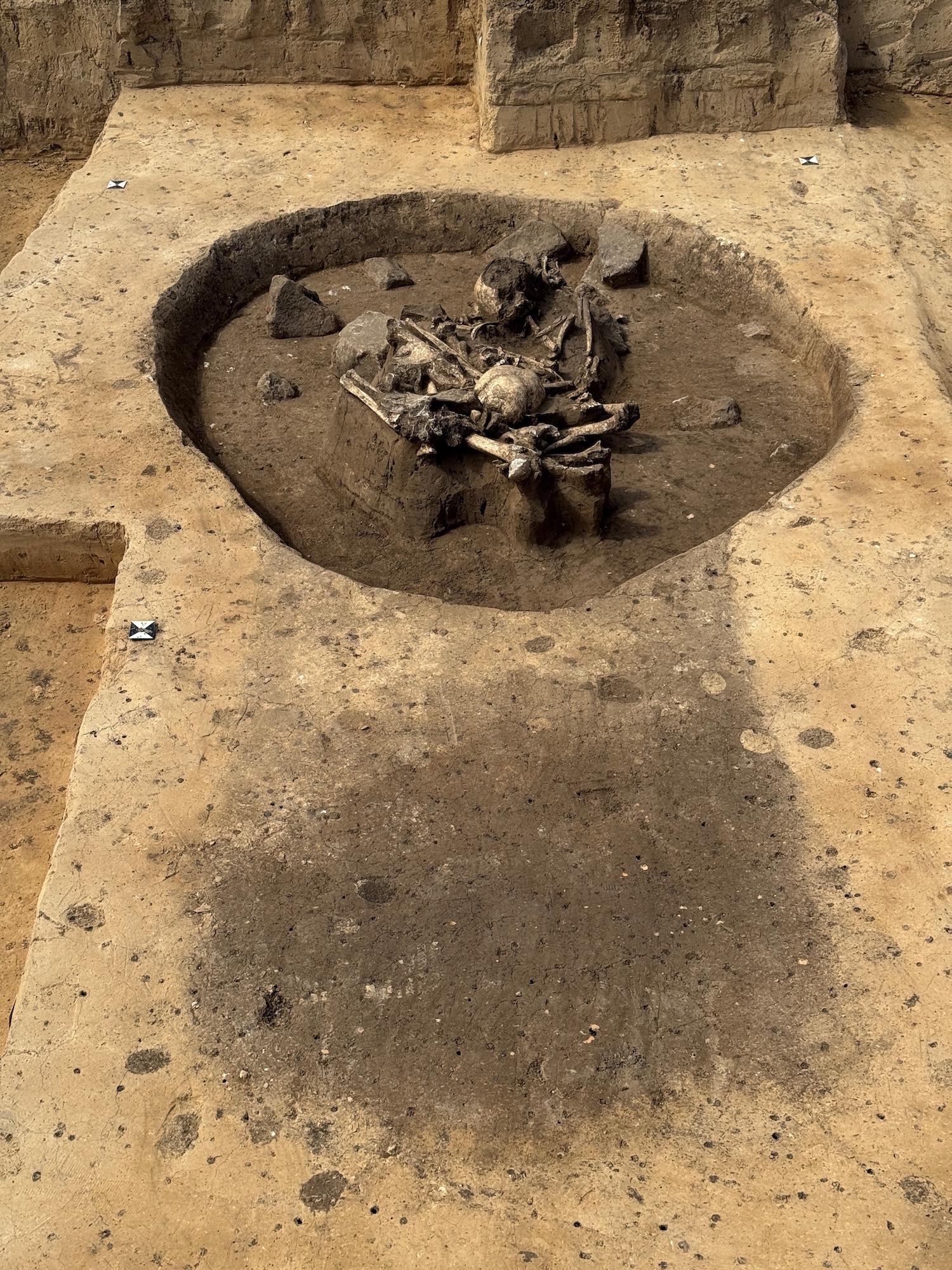
The latest discoveries reflect these ceremonies in many ways. Each pit measured 6.5 to 9.8 feet wide and 6.5 to 8.2 feet deep, and contained burnt mixtures, including housing rubble. A room included in particular a pair of well -preserved ceramic ships designed as sacrificial offerings. In another room, archaeologists have found charred bones still buried in an anatomical order alongside a human skull which has shown no signs of alteration.
“This suggests that the stands remained open during prolonged ceremonies, or that dog bones were kept in another place for an extended period,” the researchers said in a statement.
Experts believe that these details reflect the complexities of funerals for Salzmünde culture. A burial also seems to be in a converted oven pit and included the remains of two individuals. The experts explained that it seems that they had been, “apparently arranged elsewhere for a while” before the community moved them to their final internment site. This also suggests the mourning rituals of Salzmünde culture required several phases before being finished.
But why were these observances so long, detailed and complicated? While direct evidence, archaeologists think that the process reflected the hard era in which the culture of Salzmünde lived. Physical artifacts and climatological data indicate that central Europe at the end of the 4th millennium before our era saw cooler and more erratic weather conditions. This would have considerably affected agricultural communities such as salzmünde. Meanwhile, another Neolithic group known as the Bernburg culture began to develop in the northern region almost at the same time, perhaps adding even more stress on community and local resources.
“The rituals, by which people apparently sought the support of their ancestors, can be included in the context of this period of crisis,” said the team.
More specifically, the inclusion of dogs perhaps symbolized the belief of Neolithic culture to animals as spiritual guides, protectors or even intermediaries between this world and life after death. Otherwise, there is simply not much direct evidence to explain the burnt rubble, or if the ceremonies were common, family -oriented or reserved only for important personalities of the company.

More offers, reviews and purchasing guides


