Tiny spider crabs snack on parasites from Chile’s favorite fish


For the first time, a Chilean seafood staple has been documented engaged in an unexpected relationship. According to a study recently published in the journal Ecologycusk (family Ophididae) congregate deep underwater among thickets of tube worms near a methane seep in the Atlantic Ocean. The fish seem to prefer this spot not for the sights, but for their neighbors: tiny spider crabs that feast on the animal’s parasites.
Cusk eel is beloved in Chilean cuisine, so much so that famous poet Pablo Neruda wrote an ode to the “pink” creature of “snowy flesh.” However, these are not true eels (Anguilliformes) in the true sense of the term. Instead, they feature ventral fins originating from a forked organ under the mouth, similar to that of the carp. The cusk eel averages about three feet long, but a particularly prized species known as the red cusk eel (Genypterus chilensis) can reach a length of five feet. Also known as congrio colorado, red eels also live near the ocean floor, off the coasts of northern Peru and southern Chile.
Unfortunately, their commercial demand continues to take a toll on the overall population. Although the situation is still little studied, a 2003 study determined that 75 percent of all eels captured had not yet reached sexual maturity. As recently as 2022, eel fishermen amassed around 2,000 tonnes of red eel each year. A better understanding of its life cycle, habitat and the consequences of fishing could contribute to conservation efforts.
A recent opportunity presented itself last year. Researchers aboard the Schmidt Ocean Institute research vessel Falkor (also) unexpectedly documented species engaging in never-before-seen behavior during an expedition. Using shipboard sonar to map methane seeps in the ocean depths about 11 miles off the central coast of Chile, the team noticed a particularly large formation of tube worms about 1,427 feet below the water’s surface. Tube worms themselves depend on their own symbiotic relationship with bacteria living among methane emissions along the ocean floor. Scientists decided to send a remotely operated vehicle (ROV) named SubBastien to get visual confirmation of the scene. Once there, they found much more than tube worms.
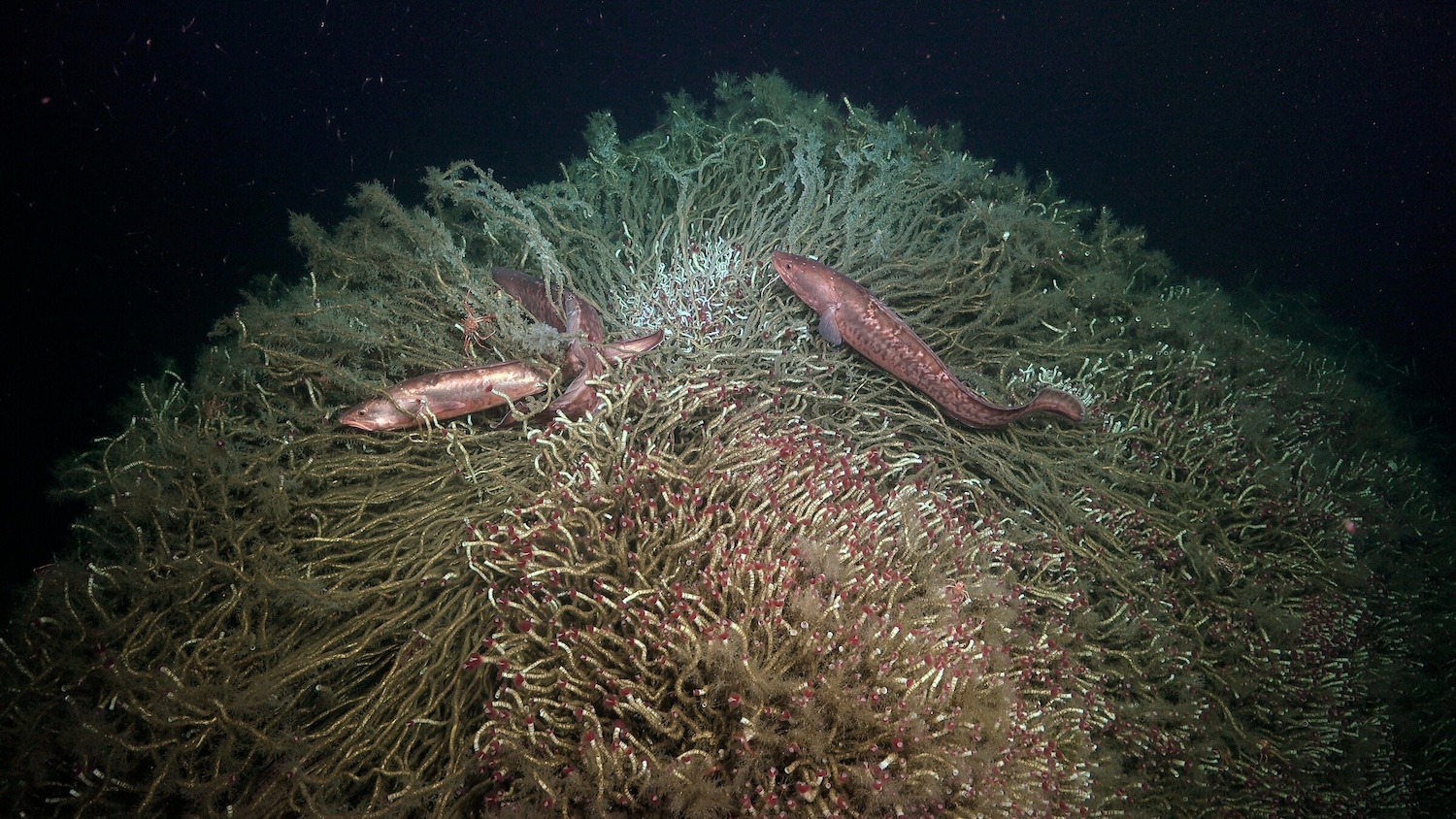
“At first, we were amazed by the size of the tubeworm bush,” study co-author and University of San Diego oceanographer Lisa Levin said in a statement. “Eventually we noticed all these fish with their heads sticking out from inside the bush.”
During the two ROV excursions to the site, Levin and his colleagues counted 46 to 48 red cusk in their hiding places. Video footage also showed sea spiders near the fish engaged in what appeared to be pest cleaning. The study authors hypothesize that in addition to eliminating parasites, cusk may also visit the tubeworm mound to feed, find shelter or reproduce. Regardless, it illustrates a complex and unknown ecosystem involving fish in high demand.
“The presence of this important fishery resource in a methane seep ecosystem close to the coast, where it faces pressure from fishing and pollution, forces us to think about measures to protect and conserve these habitats,” explained Eulogio Soto, co-author of the study and chief scientist of the expedition.
Levin, Soto and the others also noticed a peculiar detail: This was apparently the only mound that attracted red cusk. Eleven other tubeworm colonies nearby collectively supported only three additional fish. Significant human pollution in the form of fishing nets and gear on the surrounding ocean floor suggests the area could be a harvesting hotspot.
“Almost every time we visit these ecosystems, we discover something new,” Levin said. “There is so much more to learn, and we must continue to explore and study it. »
Given the relatively short time spent reviewing the training, Levin and the others hope to return soon to learn more.
“Our discovery happened in just two days, so we don’t know what’s out there, or what’s happening at other times of the year. We need to go back,” Soto said.

Shop Amazon’s Prime Day Sale