Tornado warning issued for parts of southeast Michigan: See radar

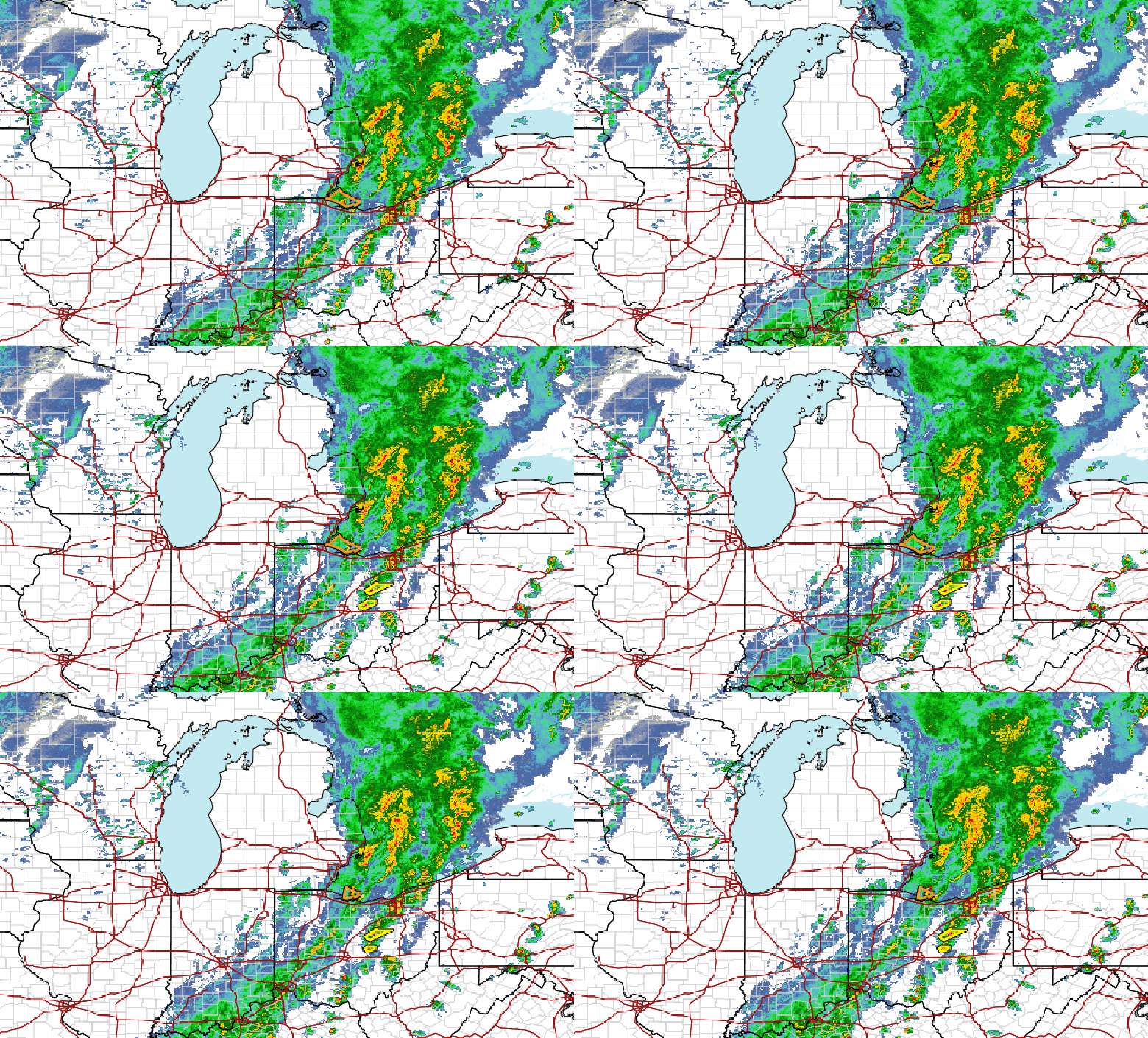
The National Weather Service Detroit/Pontiac has issued a tornado warning for southern Oakland and Macomb counties, including Warren, Sterling Heights and Troy, until 7 p.m. Saturday, April 4, 2026.
At 6:12 p.m., the NWS said a severe thunderstorm capable of producing a tornado was located over Troy, moving east at 30 mph, and radar indicated rotation. The storm will occur near Warren, Troy, Sterling Heights, Royal Oak, Rochester and Clinton Township around 6:20 p.m.; St. Clair Shores and Mount Clemens around 6:25 p.m.; Macomb Township around 6:30 p.m.; and New Baltimore around 6:40 p.m.
The service previously issued tornado warnings for Dearborn, Taylor and Dearborn Heights in Wayne County until 6:15 p.m., and for Monroe, South Monroe and West Monroe in Monroe County until 6:30 p.m. as storms moved through the area. Both warnings have since expired.
The service previously issued a flood warning for much of southeast Michigan as a line of strong storms moved through the region, with winds up to 40 mph and pea-sized hail possible.
Michigan Weather Radar

What is a tornado?
A tornado is a violently rotating column of air whose circulation reaches the ground. They almost always start as funnel clouds – rotating “funnels” that don’t touch the ground – and can be accompanied by a loud noise.
Tornadoes are usually associated with thunderstorms and can range in scale from EF0 to EF5 – winds of 65 mph to over 200 mph. The most powerful tornadoes can destroy brick buildings and throw vehicles long distances.
What is a tornado warning?
A tornado has been sighted or indicated by weather radar. There is imminent danger to life and property.
Move to an interior room on the lowest floor of a solid building. Avoid windows. If you are in a mobile home, vehicle, or outdoors, move to the nearest substantial shelter and protect yourself from flying debris.
Warnings are issued by your local forecast office. Warnings generally cover a much smaller area (about the size of a city or small county) that may be affected by a tornado identified by a forecaster on radar or by a trained spotter/law enforcement monitoring the storm.
When are warnings issued?
The National Weather Service is responsible for issuing forecasts, watches and warnings regarding a variety of weather and water hazards.
A warning is issued when hazardous weather conditions pose an immediate threat to life or property. However, the process for issuing a warning varies depending on the type of hazard. For example, tornadoes typically last a few minutes and affect relatively small areas, while Northeast storms can produce blizzard conditions over hundreds of square miles and last for several days. When weather hazards are small and develop quickly, forecasters must rely heavily on observational data from Doppler radar, satellites, and other ground-based equipment and sensors to inform them during the warning process.
Once the forecaster determines that a warning is necessary, computer software is used to write the warning and broadcast the message.
Jalen Williams contributed.
This is a developing story.
This article originally appeared on Detroit Free Press: Tornado warning issued for parts of southeast Michigan: See radar


