Trees May Not Anticipate Solar Eclipses, Calling Past Research Into Question


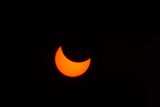
Solar eclipses have been shown to confuse animals and disrupt their usual routines, but how do trees respond to this phenomenon? A Royal Society Open Science A study published in April 2025 claimed that trees could anticipate a solar eclipse before it occurs, but some scientists disputed this idea.
A new article published in Trends in Plant Science argues that trees cannot anticipate solar eclipses, claiming to debunk the April 2025 study. The previous study observed synchronized electrical activity in European spruce trees, initially attributed to a partial solar eclipse in October 2022. The new paper, however, provides an alternative explanation for the electrical activity: it could have been caused by a thunderstorm that struck hours before the eclipse.
Learn more: The ancient Mayans used the Dresden Codex to predict solar eclipses with impressive accuracy
Are you feeling a solar eclipse?
For the April 2025 study, researchers measured the electrical activity of spruce trees at a study site in the Dolomites, a mountain range in northeastern Italy. They installed several sensors before the solar eclipse on October 25, 2022 to observe how the trees reacted.
This work specifically targeted tree electrome, which encompasses all electrical signals and ionic currents within a plant. By examining the data captured by the sensors, the researchers noticed that the trees’ bioelectric signals began to synchronize 14 hours before the solar eclipse.
The researchers interpreted this as a sign that the trees had prepared for the eclipse and were communicating with each other in anticipation of the event. The results also suggest that older trees – which showed the greatest increase in electrical signals – had evolved mechanisms to respond to a solar eclipse, almost as if they had retained memories of past eclipses.
Debunking Tree Forecasts
The authors of the new paper dispute the hypothesis that tree synchronization in 2022 was caused by the eclipse.
Ariel Novoplansky, first author of the paper and an evolutionary ecologist at Ben-Gurion University of the Negev, says the April 2025 paper did not take other environmental factors into account.
It is true that plants can anticipate impending events that pose a risk to their long-term fitness and communicate with neighboring plants. This is why they are ready to predict stresses such as drought, salinity changes and nutrient limitation.
“Regarding anticipatory responses in particular, evolution should favor preemptive responses only when the challenge is adaptively significant, reliable signals precede it, and organisms can detect and use these signals efficiently,” Novoplansky said. Discover.
But the article says a partial solar eclipse doesn’t produce a change drastic enough for plants to anticipate. The authors found that the eclipse of October 25, 2022 caused only a 10.5% reduction in light for two hours, which would not have posed a real obstacle to the fitness of the trees, according to a press release.
Another oversight from the April 2025 study, Novoplansky said Discoveris that he treated “the dynamics of synchronized electromes between neighboring trees as evidence of information transfer/communication, whereas the same pattern may arise from competing and independent responses to shared ambient factors”.
The paper also challenges the idea that older trees shared information with younger trees based on “memories” of past solar eclipses, since each eclipse has different trajectories, magnitudes and durations despite occurring at periodic intervals.
Energized by lightning
If the trees hadn’t anticipated the 2022 solar eclipse, why did their electrical signals experience a synchronized increase? The real culprit could be a series of lightning strikes before the eclipse.
The paper’s authors looked at lightning data from October 22-25, 2022, and found that 20 of them occurred within about 45 kilometers of the study site (18 of which occurred during the 14-hour time frame preceding the eclipse). The nearby lightning that struck on the night of October 24 could therefore have activated the trees’ electromes. Older trees – being taller than younger trees – would have been most affected by lightning; this would explain why they exhibited greater electrical activity.
Novoplansky noted that the April 2025 study was also limited by the small number of trees observed (three live trees and five tree stumps) at a single site. Future eclipse studies, he said, should attempt to replicate the work across multiple eclipses, sites and species and should take into account other variables such as weather fronts, temperature drops, rain and lightning.
Learn more: Witness a “ring of fire” eclipse and rare planetary parade in February 2026
Article sources
Our Discovermagazine.com editors use peer-reviewed research and high-quality sources for our articles, and our editors review the articles for scientific accuracy and editorial standards. See the sources used below for this article:


