Tropical Cyclone Narelle Crosses Australia


Tropical Cyclone Narelle tracked a long path across Australia’s northern edge, bringing devastating winds and rain to areas already saturated with heavy rainfall. The system made landfall separately in three different states and territories between March 20 and 23, 2026.
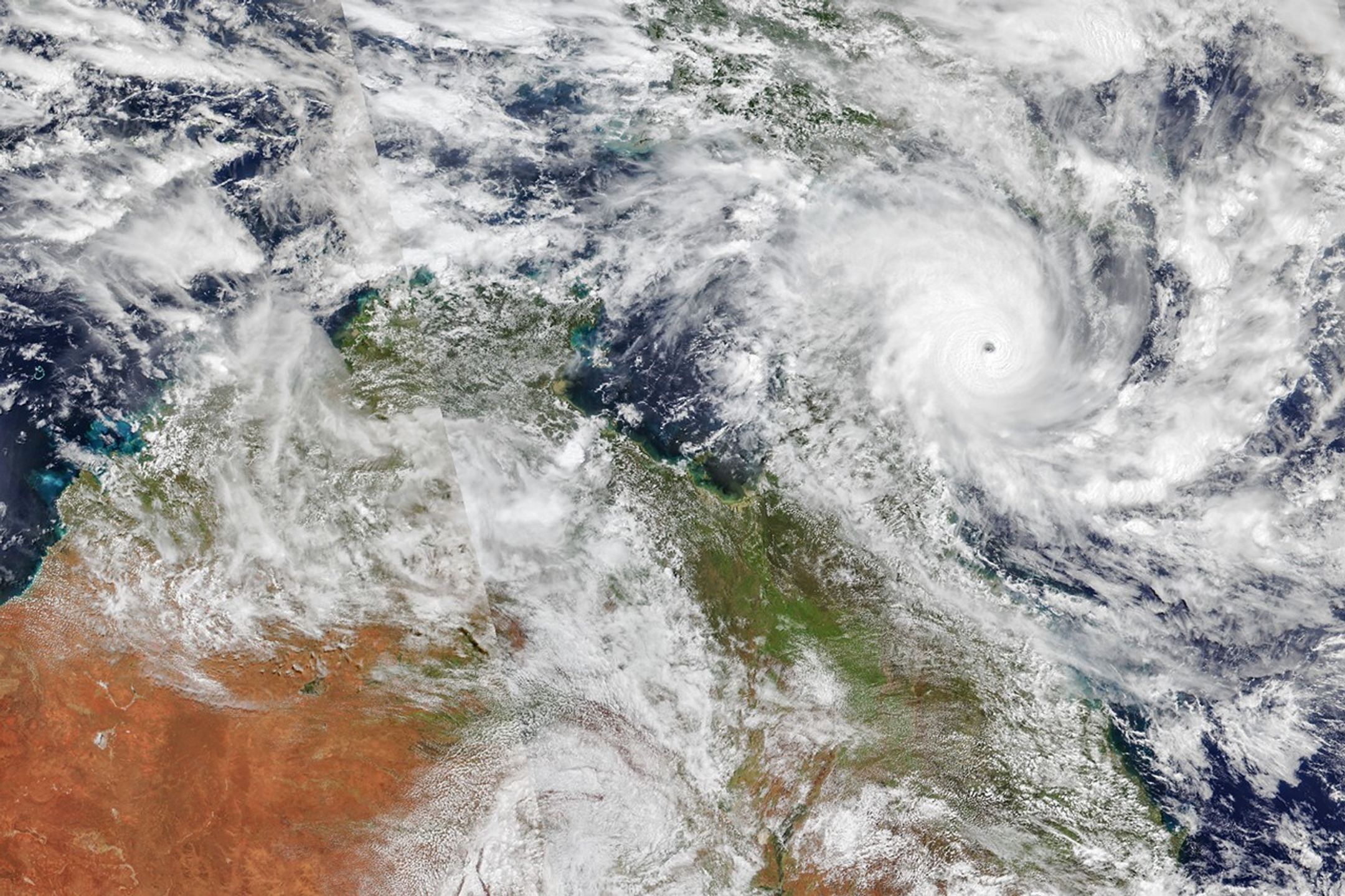
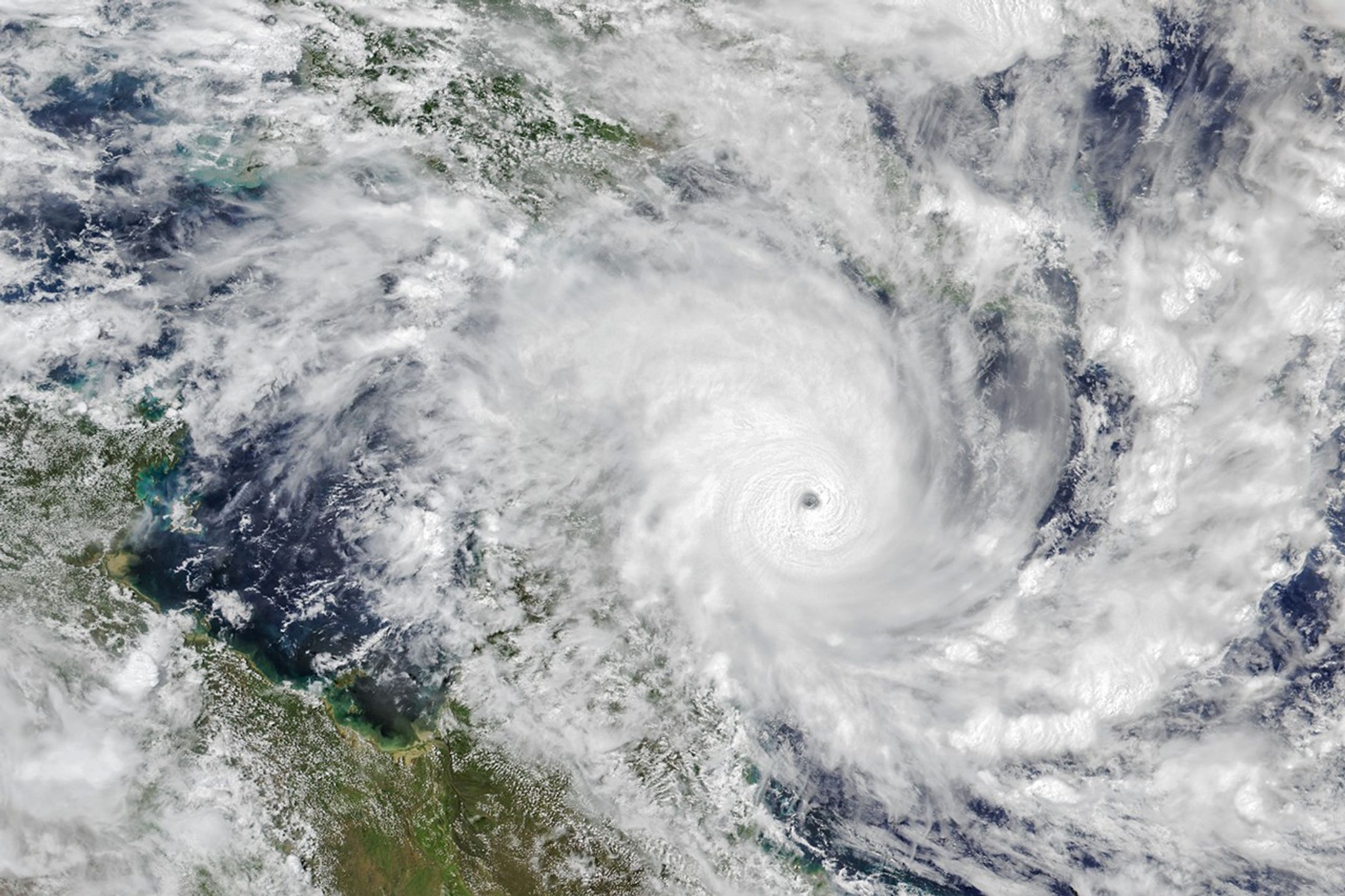
These satellite images show Narelle around 2 p.m. local time (04:00 UT) on March 19. At that time, the tropical cyclone was about to make its first and most powerful landfall after intensifying over the Coral Sea. Sea surface temperatures throughout its path were 0.5 to 1.0 degrees Celsius above average, experts noted, which helped fuel its rapid intensification.
As it approached Queensland, the storm intensified to category 5 on the Australian tropical cyclone scale, with maximum sustained winds of up to 225 kilometers (140 miles) per hour, equivalent to a category 4 hurricane on the Saffir-Simpson wind scale. However, because Narelle’s structure was compact by cyclone standards, the most destructive winds extended a relatively short distance from its core. Narelle reached the Cape York Peninsula, a sparsely populated region of northern Queensland, on the morning of March 20.
Narelle reappeared over the Gulf of Carpentaria as a weakened cyclone, and wind speeds continued to decrease as it approached the Northern Territory coast. The storm made landfall for the second time on the afternoon of March 21 with maximum sustained winds reaching 148 kilometers (92 miles) per hour. He traveled the “Top End” of the territory until March 22.
More than 100 millimeters (4 inches) of rain fell across a large area of the Northern Territory as Narelle passed, according to media reports. The Australian Bureau of Meteorology (BOM) has warned of minor to major flooding in several rivers. The storm arrived in the middle of a severe rainy season in the region, which had already caused devastating flooding and prompted evacuations.
After leaving the Northern Territory, the storm briefly crossed water and reached the northern Kimberley region of Western Australia as a tropical depression on March 23. Even after Narelle’s multiple strikes in northern Australia, the storm could continue. On March 23, the BOM said Narelle could potentially re-intensify into a tropical cyclone off the coast of Western Australia, curve south and move along the coast towards Perth.
Cyclones affecting multiple land areas in mainland Australia are rare but not unheard of. In 2005, Ingrid followed a path similar to that of Narelle. However, this “triple strike” storm made landfall each time as a Category 3 or higher tropical cyclone.
NASA Earth Observatory images by Michala Garrison, using VIIRS data from NASA EOSDIS LANCE, GIBS/Worldview and the Joint Polar Satellite System (JPSS). Story by Lindsey Doermann.
- Australian Broadcasting Corporation (March 17, 2026) Cyclone Narelle could be the first storm in 21 years to make landfall three times. Accessed March 23, 2026.
- Bureau of Meteorology, via YouTube (March 23, 2026) March 23, 2026 Severe Weather Update: Ex-Tropical Cyclone Narelle Impacts Washington State This Week. Accessed March 23, 2026.
- The Conversation (March 19, 2026) Cyclone Narelle: “compact,” dangerous and unusually predictable. Accessed March 23, 2026.
- The Guardian (March 22, 2026) The saturated NT is bracing for Tropical Cyclone Narelle which will dump an additional 300mm of rain. Accessed March 23, 2026.
- The New York Times (March 19, 2026) A remote part of Australia is bracing for a “significant” tropical system. Accessed March 23, 2026.
- Weather Underground (March 23, 2026) Tropical Cyclone Narelle. Accessed March 23, 2026.