Trump administration slashes mercury regulations from coal plants


February 20, 2026
3 min reading
 Add us on GoogleAdd SciAm
Trump administration cuts mercury regulations at coal plants
Mercury pollution from coal-fired power plants is linked to serious neurological problems, especially in children and babies.
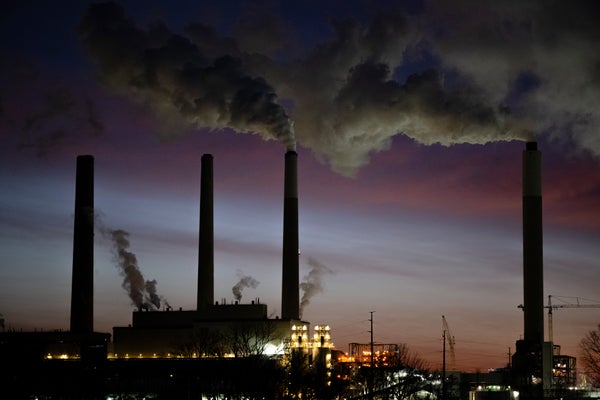
Mill Creek Generating Station, a coal-fired power plant located in Louisville, Kentucky.
The Trump administration on Friday officially rolled back a series of Biden-era environmental regulations on coal plants, some of which were aimed at combating mercury pollution. Environmental groups and experts denounced the decision, calling it a risk to human health: Mercury has been shown to cause serious neurological damage, particularly in infants.
The decision effectively returns regulations to those established in 2012 by the Obama administration. Those earlier rules allowed power plants burning a particularly dirty form of coal called lignite to emit more mercury than plants burning other forms of fossil fuel.
“The Biden-Harris administration’s anti-coal regulations sought to regulate this vital sector of our energy economy. If implemented, these actions would have destroyed reliable American energy,” Environmental Protection Agency Administrator Lee Zeldin said in a statement.
On supporting science journalism
If you enjoy this article, please consider supporting our award-winning journalism by subscription. By purchasing a subscription, you are helping to ensure the future of impactful stories about the discoveries and ideas shaping our world today.
The repealed regulations also included emission standards for filterable particulate matter and required factories to use emissions monitoring systems. The rules impose “undue burdens” on businesses, the EPA said last June.
“Today’s action by Trump’s EPA takes us back to weaker pollution protections and dirtier air. This will allow coal-fired power plants to dump more mercury and toxic pollution into our air, which will then end up in our water, our food and, ultimately, our children’s bodies,” said Surbhi Sarang, a senior attorney at the Environmental Defense Fund who specializes in power sector regulation, adding that the group plans to challenge the action in court.
The move is the latest in a series of actions taken by the Trump administration to prop up what has long been considered a moribund coal industry in the United States. The administration has ordered the State Department to run military facilities on coal, funded coal-fired power plant renovations, and even prevented power plants from closing. At the same time, the administration is trying to increase electricity production to support new artificial intelligence data centers and other energy-intensive infrastructure.
“Once again, the Trump administration is abandoning science and abandoning the law to give polluters carte blanche,” Julie McNamara, associate policy director of the Union of Concerned Scientists’ climate and energy program, said in a statement. “And once again, the Trump administration is doing it to the detriment of citizens’ health.” »
Coal-fired power plants are the largest source of mercury emissions in the United States, according to the EPA. When coal burns, it releases mercury into the atmosphere. Eventually, the heavy metal settles into soil and water, where it is absorbed by plants and animals, some of which we consume for food. Mercury contamination is particularly dangerous for children and can cause neurological disorders in infants.
“THE [EPA] The administrator’s legacy will forever be someone who does the bidding of the fossil fuel industry at the expense of our health,” Gina McCarthy, who served as President Joe Biden’s national climate adviser, said in a statement Thursday after new budget cuts were announced.
Mercury pollution has been declining for years. Between 2010 and 2017, mercury emissions fell by about 86%, thanks in part to regulatory measures that limited coal burning.
Regulations have also had a direct impact on our diet: in 2016, for example, researchers determined that declining mercury emissions in North America had led to a 19% drop in mercury levels in bluefin tuna samples analyzed between 2004 and 2012.
“By weakening pollution limits and monitoring mercury and other brain-damaging pollutants, [the EPA administrator is] actively intensifying any attempt to make America – and our children – healthy,” McCarthy said in the same statement.
Editor’s Note (02/20/26): This is a breaking news story and may be updated.
It’s time to defend science
If you enjoyed this article, I would like to ask for your support. Scientific American has been defending science and industry for 180 years, and we are currently experiencing perhaps the most critical moment in these two centuries of history.
I was a Scientific American subscriber since the age of 12, and it helped shape the way I see the world. SciAm always educates and delights me, and inspires a sense of respect for our vast and beautiful universe. I hope this is the case for you too.
If you subscribe to Scientific Americanyou help ensure our coverage centers on meaningful research and discoveries; that we have the resources to account for decisions that threaten laboratories across the United States; and that we support budding and working scientists at a time when the value of science itself too often goes unrecognized.
In exchange, you receive essential information, captivating podcasts, brilliant infographics, newsletters not to be missed, unmissable videos, stimulating games and the best writings and reports from the scientific world. You can even offer a subscription to someone.
There has never been a more important time for us to stand up and show why science matters. I hope you will support us in this mission.