Trump attacks on offshore wind could hurt infrastructure spending : NPR

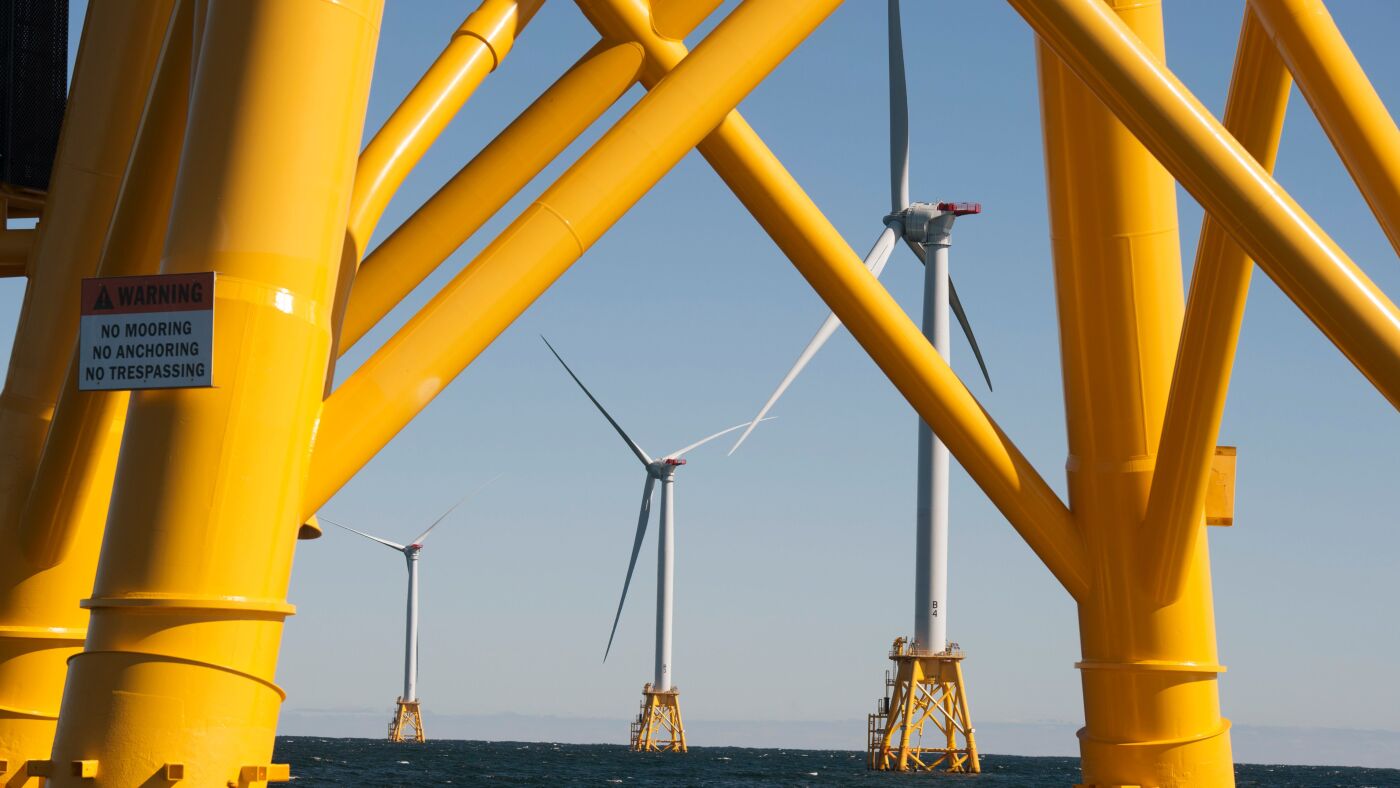

Wind turbines off the coast of Rhode Island. Supporters say offshore wind projects are a valuable resource to meet growing energy demand and ensure electrical reliability.
DON EMMERT/AFP via Getty Images/AFP
hide caption
toggle caption
DON EMMERT/AFP via Getty Images/AFP
The Trump administration on Monday announced a deal with French energy giant TotalEnergies aimed at shifting investment from the U.S. offshore wind industry to oil and gas. Industry analysts say the deal threatens to undermine business confidence in the United States by wielding unprecedented executive power to influence the private sector.
As part of this agreement, TotalEnergies said it will recover almost a billion dollars the company and its partners paid the federal government for offshore wind leases off the coasts of North Carolina and New York. TotalEnergies has committed to investing an equal amount in oil and gas production in the United States, as well as a liquefied natural gas plant in Texas.
Furthermore, TotalEnergies has committed not to develop any new offshore wind projects in the United States, adage such investments are not in the interest of the country.

“The Trump administration has created a new strategy for how a sitting president can limit energy resources or policies he opposes,” says Timothy Fox, managing director of ClearView Energy Partners, a research firm.
By intervening to stop investments that President Trump personally opposes, the administration risks curbing infrastructure spending across the economy, not just in offshore wind, says Leslie Abrahams, deputy director of the energy security and climate change program at the Center for Strategic and International Studies.
“This new dimension of political uncertainty may result in us having fewer infrastructure projects that move more slowly and are more expensive,” says Abrahams.
The White House referred comments to the Interior Department. The department cited a press release in which Interior Secretary Doug Burgum said the deal with TotalEnergies “is another victory for President Trump’s commitment to affordable and reliable energy for all Americans.”

At an energy conference in Houston this week, TotalEnergies Chief Executive Patrick Pouyanné called the deal a win-win for his company and the U.S. government. TotalEnergies said in a press release, it found that offshore wind projects in the United States, unlike those in Europe, “are expensive and could negatively impact the affordability of electricity for American consumers.”
TotalEnergies had already suspended its offshore wind activities in the United States shortly after Trump’s re-election.
Evan Vaughan, executive director of the Mid-Atlantic Renewable Energy Coalition, an industry group, said in a statement statement that the administration’s deal with TotalEnergies was “disappointing but unfortunately not surprising.”
With power demand growing faster than it has in decades, “we need every energy source available to provide affordable, reliable and safe energy to American consumers,” Vaughan said.

TotalEnergies CEO Patrick Pouyanné, left, shakes hands with Interior Secretary Doug Burgum after signing an agreement at an energy conference in Houston to end the French company’s offshore wind projects in the United States and redirect those funds toward fossil fuel production.
RONALDO SCHEMIDT/AFP via Getty Images/AFP
hide caption
toggle caption
RONALDO SCHEMIDT/AFP via Getty Images/AFP
Changes in US energy policy threaten both renewable energy and fossil fuels
The Trump administration has prioritized the use of fossil fuels while trying to limit the construction of renewable energy projects. Trump is particularly hostile to wind energy, attacking the industry after lost a fight with an offshore wind project near one of its golf courses in Scotland more than a decade ago.
The Interior Department announced the deal with TotalEnergies months after a federal judge struck A decree which had halted approvals for new wind energy projects on federal lands and waters. The administration also tried, unsuccessfully, to halt construction of five offshore wind projects already under development along the East Coast, citing national security concerns that the Ministry of Defense would have raised.
Referring to the agreement with TotalEnergies, Abrahams said: “Through this agreement, the administration demonstrates that it understands that it cannot resort to the courts to get what it wants.”
It’s unclear whether similar deals are in the works, wind industry experts say. The companies hold more than a dozen leases in federal waters that could serve as sites for future wind projects, says Nick Krakoff, senior attorney at the Conservation Law Foundation, which has been heavily involved in permitting offshore wind projects.
Given Trump’s opposition to wind power, some of these companies could “seek payment from the administration,” Krakoff says. However, TotalEnergies was perhaps in a unique position for a deal, he adds, since the company already has a huge oil and gas business it could invest into.
While the Trump administration and TotalEnergies have argued that offshore wind is a bad investment in the United States, organizations that manage power grids along the East Coast have said new offshore wind projects in the region are vital to ensure electrical reliability and to meet the growing demand for energy.

Today, the future of the industry in the United States is uncertain.
“Project developers and financiers may be hesitant to invest in a sector that is capital-intensive and has such obvious and high electoral risk,” says Fox of ClearView Energy Partners. “Even if you have a next president who says, ‘We love offshore wind,’ you might wonder, ‘Will there be another Trump-style opposition after that?'”
But Fox says the entire energy sector stands to suffer as the sector becomes more politicized and federal policy swings more and more dramatically from one administration to the next.
“When you build a power plant or think about oil production, you don’t just think about the current administration, you think about the next two decades,” Fox says. “And the pendulum swing constitutes a real political risk.”


