Rocket Report: SpaceX achieved daily launch this week; ULA recovers booster


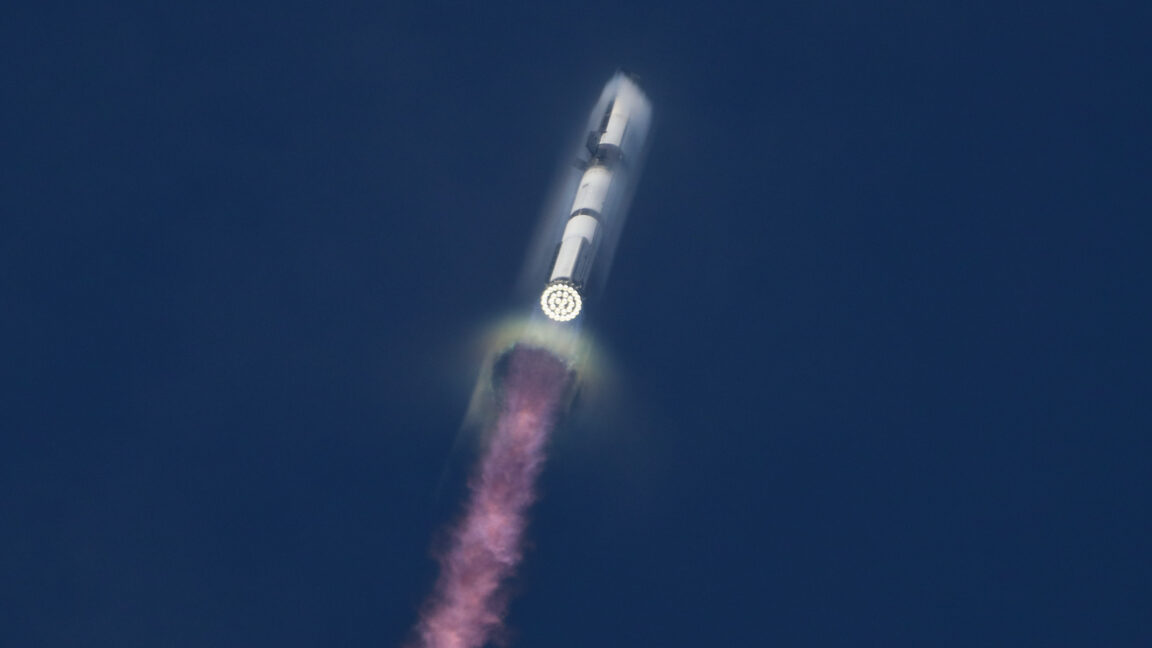
A rocket on a rocket … SpaceX Engineers installed two small Draco rocket engines in the chest of the dragon spaceship. The propellants have their own dedicated propellant tanks and will operate independently of 16 other Draco propellants used to maneuver Dragon during his trip to the ISS. When NASA says it’s a good time, SpaceX controllers will order Draco propellants to light and gently speed up the huge 450 -ton space station. All in all, the restart kit can add about 20 mi / h, or 9 meters per second, at the already unpleasant speed of the space station. Maintaining the orbit of the space station was previously the responsibility of Russia.
X-37B rolls again with SpaceX. The reatable winged spacecraft reusable from the American army fell into Florida orbit on August 21 at the top of a SpaceX rocket, launching a mission that will show, among other things, how future spaceships can sail without relying on GPS signals, reports Ars. The heart of the navigation experience is what spatial force calls the “most efficient quantum sensor in the world ever used in space”. The spacept also hosts an inter-satellite laser communications demo. This is the eighth flight of the Spacex X-37B, and the third to launch with SpaceX.
Back to Leo … This mission was launched on a Falcon 9 rocket in low orbit (Leo) a few hundred kilometers above the earth. This marks a return to Leo after the previous Mission X-37B on a Falcon Heavy rocket in a much higher orbit. Many useful charges of the spaceptal have been classified, but managers generally identify a handful of non-classified experiments flying on each mission X-37B. The latest X-37B missions also deployed small orbit satellites before returning to Earth for a track landing at Kennedy Space Center, Florida or Vandenberg Space Force, in California.
Rocket Lab cuts the ribbon on the neutron launch pad. Launch of Complex 3, the Mid-Atlantic regional space by Virginia Spaceport Authority and housing the most recent reusable Rocket Lab rocket, Neutron, is now complete and celebrated its official opening on Thursday, Wavy-TV reports. The officials said that Launch Complex 3 is ready to provide the largest orbital launch capacity in the history of spaceport with a neutron, a reusable launch vehicle of Rocket Lab, an average screening vehicle capable of launching 33,000 pounds (15 metric tonnes) in space for commercial constellations, national security and interplanetary missions.


