How one Seattle organization is turning food waste into plant food


Léa is nota en español.
For Maria Perez, joining a project to reduce food waste in Washington wasn’t just a job. Her journey with the Duwamish Valley Sustainability Association (DVSA) began when she was 14 years old and enrolled in a youth program that sparked her interest in fighting climate change. Six years later, the nonprofit hired her to run a program that turns a Seattle neighborhood’s trash into a kind of liquid plant food.
The innovative program in the South Park area was launched by the DVSA in 2021, in partnership with nonprofits including Food Lifeline, Sustainable Seattle and Black Star Farmers, as well as the Chomp Company, which is building the initiative’s small-scale biodigesters.
Perez spent hours learning how the sealed container uses bacteria to reduce emissions while growing food for the predominantly Latino neighborhood. She spoke with residents, teaching the young people who stood where she once stood. Her enthusiasm for the project was impossible to miss: she talked about it constantly, sharing details with everyone in her life. “It was just really exciting [to see] how everything went into a circular economy,” Perez said.
Slightly smaller than a shipping container, the sealed bins work much like a cow’s four-chambered stomach: They introduce microbes that, each year, can turn 25 tons of rotting food into 5,400 gallons of fertilizer. It also creates biogas, a renewable energy source that can be used to produce electricity or fuel.
“We started to develop a new project [focused on] organic waste, because when we were working in the South Park neighborhood, we saw a lot of trash on the street,” said Edwin Hernandez, executive director of the association. In a series of community meetings, DVSA asked local residents and businesses how they wanted to approach the neighborhood’s waste problem. The answer that emerged was a biodigester, whose added benefits included providing sustainable infrastructure and green jobs, Hernandez said.
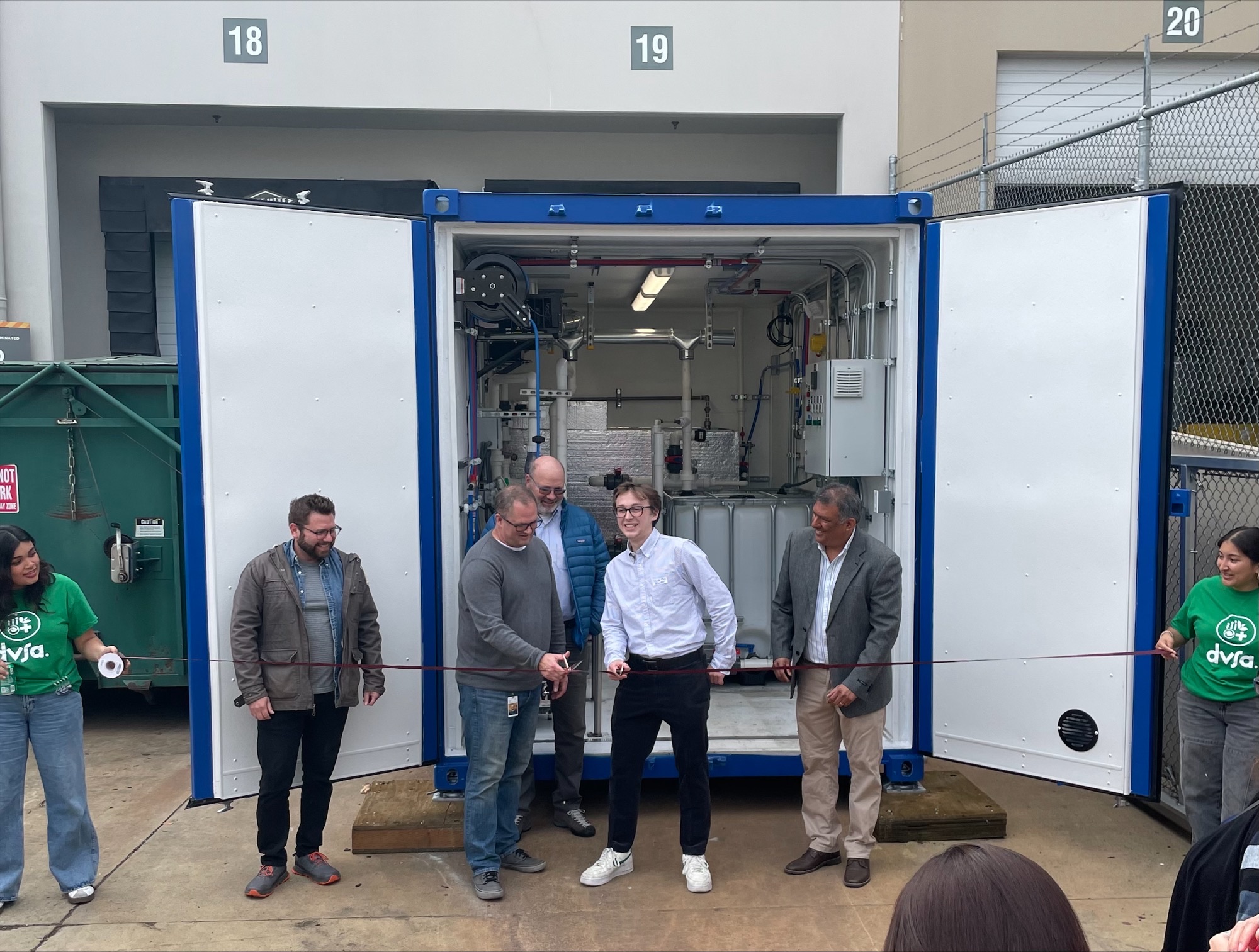
The idea came about with support from an EPA grant and money from the city of Seattle. University of Washington professors helped shape the project’s feasibility study. The coalition subsequently received state support, including being selected to participate in the state’s new sustainable innovation program, NextCycle Washington, as well as seed funding from the Department of Commerce.
Hernandez says the value of the biodigester is how it can turn waste like egg shells and banana peels into a resource that can help grow food locally.
In the United States, more than a third of the food supply is wasted, according to estimates from the United States Department of Agriculture. “There are other, better ways to manage food waste than sending it to our landfill,” said Adrian Tan, policy and market development manager at the King County Solid Waste Division, which supported the project. “Could the food waste in our bins be avoided, donated, composted or used for other beneficial purposes?
While Seattle is in King County — the state’s largest county — the city has its own waste management system, Tan explained. It collects food waste and other organic waste through a composting service, which it sends to two commercial composters. However, trashed food waste is transported by train to a landfill in Oregon. Emissions from traveling across state lines are compounded by the fact that when food waste decomposes in landfills, it releases methanea powerful greenhouse gas.
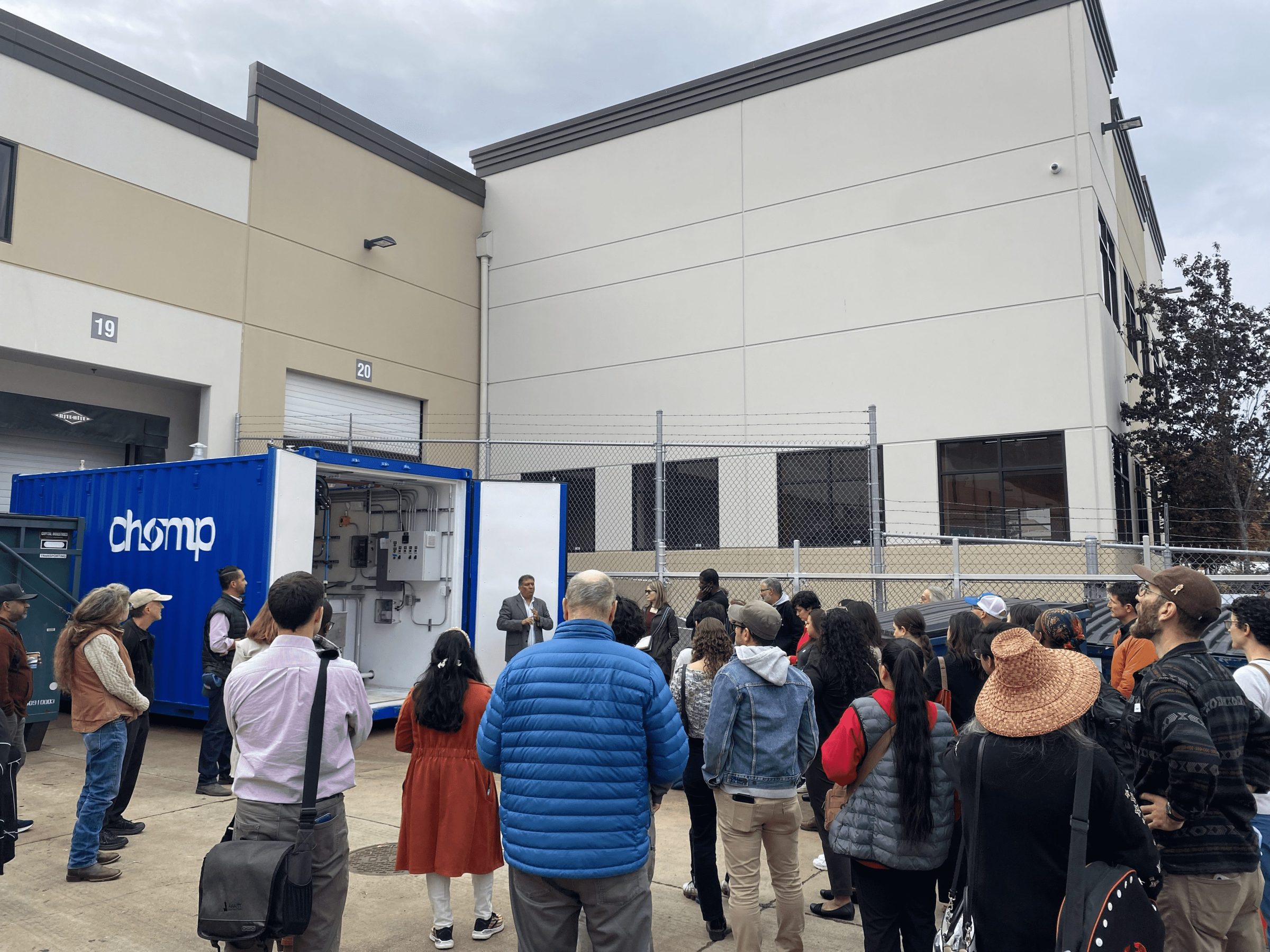
In comparison, biodigesters keep waste local. Jan Allen, CEO of Chomp, came up with the idea of starting a biodigester company because he wanted to eliminate the need for diesel trucks and associated pollution, a common means of transporting waste.
“Chomp is based on the aspiration of eliminating trucking of food into the community and eliminating trucking of waste out of the community,” Allen said. “So we’re really trying to create a circular economy from food, food waste, energy and growing fresh produce locally.”
Allen says working directly with local communities to address common challenges sets his company apart from other technology solutions. Their biodigesters are based on biomimicry and are designed taking inspiration from nature. “We try to keep things as simple as possible, [with] “There are minimal moving parts,” Allen said. “We actually found a way for the microbes to compress the gas for us, so we’re doing innovative things so we don’t have too many machines.”
As project manager, Perez provided training to local restaurants on the biodigester, as well as other waste reduction programs in the city, so they could learn how to turn their waste into resources. Every Tuesday, Perez and the young volunteers divided into groups. “We would weigh the participants’ compost and accumulate the data,” Perez said. Once the biodigesters are finished processing, Perez explained, “we would return the liquid soil amendment to the community.”
DVSA also provided training to local residents in Spanish, English and Khmer, the official and national language of Cambodia. Hernández says the main challenge of the project now is to distribute the liquid soil amendment and “guarantee a free area where we can install more biodigesters,” thereby increasing the amount of biogas that can be created. So far, more than 30 residents and 5 restaurants have signed up to participate in the program. DVSA is eager to enroll more.
Although Perez recently stepped away from the project to focus on her academic studies, she is encouraged by what has been accomplished and is proud to know that it continues to benefit the community.
“I’m glad this happened because a lot of people are now aware of this project and how it affects South Park,” she said. “It brings everyone together.”
This story was produced in partnership with Communities of Opportunity, a growing partnership that believes every community can be a healthy, thriving community. Communities of Opportunity is a unique community, private foundation, and government partnership that invests in the power of communities in King County, Washington.


