Trump seizes Maduro, signals new Latin American dominance strategy


NEWYou can now listen to Fox News articles!
President Donald Trump has adopted an interventionist posture to justify the overthrow of dictator Nicolas Maduro’s regime in Venezuela and has indicated he will take the same approach with other Latin American countries as his administration seeks to assert its dominance in the Western Hemisphere.
Interventionism is a foreign policy approach by which a country intervenes in the affairs of another state. The United States has engaged in several foreign interventions, including launching an invasion of Iraq in 2003 that led to the overthrow of the regime of Iraqi dictator Saddam Hussein.
While Trump has criticized previous administrations for their actions in the Middle East and vowed he would end “endless wars” while ushering in an “America First” agenda that prioritizes U.S. interests, Trump on Saturday approved carrying out a “full-scale strike” against Venezuela and capturing Maduro, sparking concern, mainly from Democrats, of triggering another long-running conflict.
The strikes in Venezuela follow several other major military operations by the Trump administration, including strikes in Nigeria on Christmas Day against Islamic State militants in response to attacks on Christians in the region, strikes in Syria in December against Islamic State members after an ambush on U.S. troops there, and strikes in June against Iran’s Fordow, Natanz and Isfahan nuclear sites.
Trump’s removal of Maduro resets the global chessboard and reaffirms American power
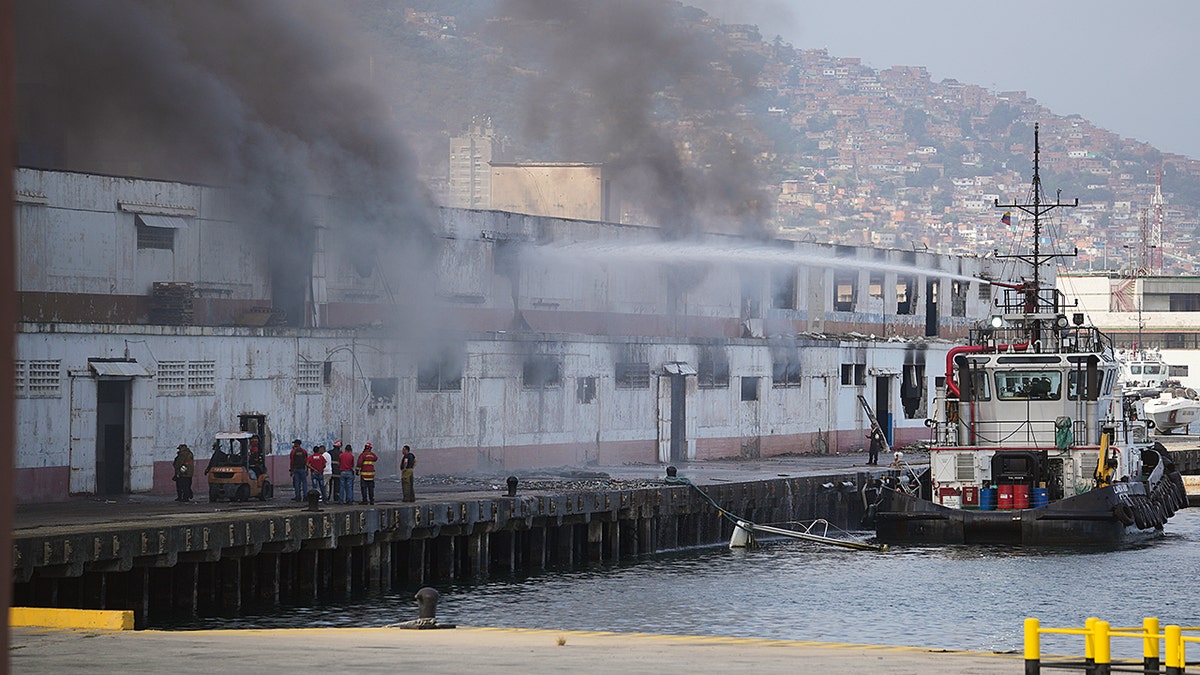
Smoke rises from a dock after explosions were heard in the port of La Guaira, Venezuela, Saturday, January 3, 2026. (Matias Delacroix/Associated Press)
But unlike strikes in the Middle East, operations in Venezuela require additional U.S. participation. Trump said Sunday that the United States would rule Caracas, Venezuela, until a safe transition can take place, pushing the United States into the most significant military intervention of any of Trump’s presidencies as he wages a campaign to “reassert American dominance in the Western Hemisphere.”
“Trump has never been a proponent of regime change, but that’s what he has in his hands now. Unlike the Fordow strikes, where Trump took action and then said, ‘The fight is over,’ he won’t have that luxury here in Venezuela,” retired Rear Adm. Mark Montgomery, now a senior fellow at the Foundation for Defense of Democracies, said Saturday.
Most Republicans have supported Trump’s actions in Venezuela, although some in the more anti-interventionist camp of the Republican Party have expressed skepticism, including incumbent Rep. Marjorie Taylor Greene, R-Ga., who said in a social media post Saturday: “This is what a lot of MAGA members thought they voted to end.” »
Meanwhile, Democrats have warned that the United States could become embroiled in another complicated conflict. For example, Senate Minority Leader Chuck Schumer, D-N.Y., has claimed that the United States is on a path to another “endless war.”
Trump tells Scarborough we’ll keep Venezuela’s oil when Iraq comparisons are pressed
“The American people fear that this will create an endless war,” Schumer said in an interview with ABC News on Sunday. “What Donald Trump has campaigned against again and again is an end to endless wars. And, right now, we are heading straight into war without barriers, without discussion.”
Trump announced Saturday that U.S. special forces had carried out a strike on Caracas, Venezuela, and captured Maduro and his wife, Cilia Flores. The two men were taken to New York and appeared in Manhattan federal court on drug charges on Monday. Both have pleaded not guilty.
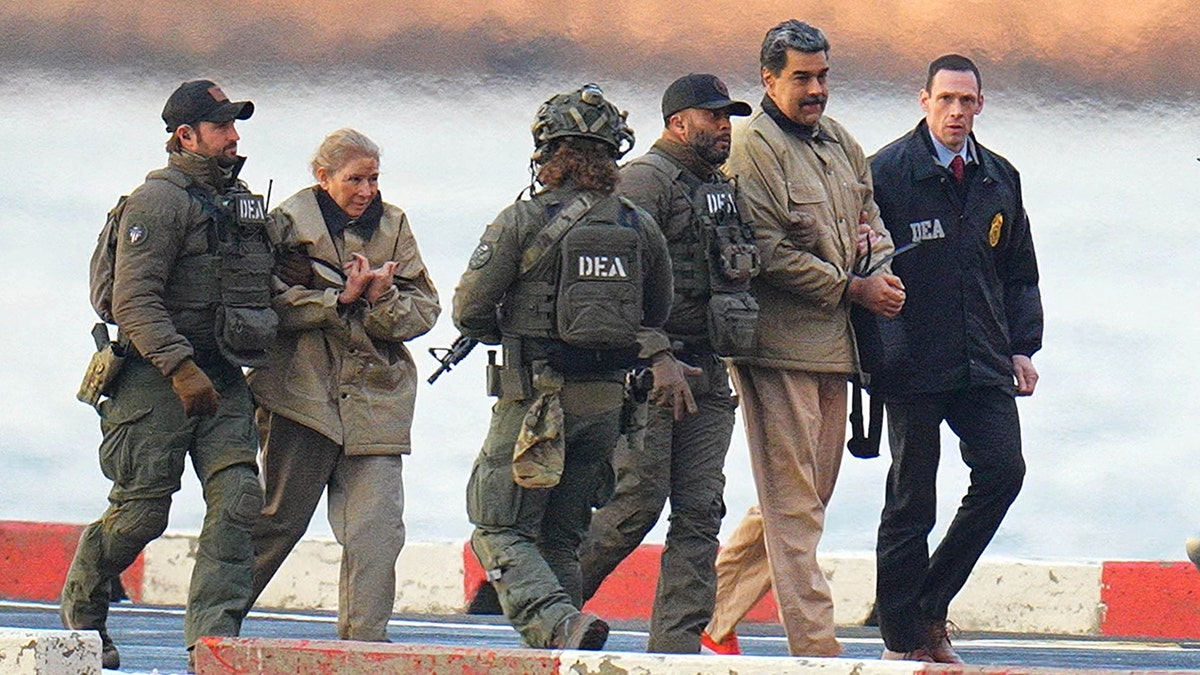
Nicolás Maduro and his wife, Cilia Flores, handcuffed after landing on a Manhattan heliport, escorted by heavily armed federal agents as they walk into an armored vehicle en route to a federal courthouse in Manhattan on January 5, 2026, in New York. (XNY/Star Max/GC Images)
In addition to leading Venezuela, Trump said the United States was “prepared to mount a second, much larger attack” if necessary in Caracas. Likewise, he signaled on Sunday that other Latin American countries could also face regime change, targeting Cuba and issuing a warning to Colombian President Gustavo Petro.
AFTER MADURO, VENEZUELA’S POWERFUL VACUUM EXPOSES BRUTAL INSIDERS AND ENFORCERS
“Cuba only survives because of Venezuela,” Trump said.
“Colombia is also very sick – run by a sick man who likes to make cocaine and send it to the United States, and he’s not going to do that for very long,” Trump said.
Trump’s words and actions come as he revives the Monroe Doctrine, renamed the “Don-roe Doctrine,” which originally aimed to limit European influence in Latin America and protect American influence in the region.
SCHOEN, GREEN: WE SUPPORT TRUMP ON MADURO – AND DEMAND A BETTER PLAN TO GOVERN VENEZUELA
The Monroe Doctrine, first introduced in 1823 by President James Monroe, specifically warned European nations against further colonization in Central and South America. It was later used to justify U.S. actions in the region as an “international police power” under former President Theodore Roosevelt, according to the National Archives.
“The Monroe Doctrine is a big deal. But we’re way past it,” Trump said Saturday. “They now call it the ‘Don-roe Doctrine.’ …We kind of forgot about it. It was very important, but we forgot it. We don’t forget it anymore. Under our new national security strategy, American dominance in the Western Hemisphere will never again be questioned. »
Katherine Thompson, a senior fellow in defense and foreign policy studies at the libertarian think tank Cato Institute, told Fox News Digital on Tuesday that it was too early to tell whether Trump’s future approach to the Western Hemisphere would include more interventionist activities.
“NOT EVEN IN MY MOST OPTIMISTIC FANTASIES”: VENEZUELAN REFUGEE WHO FLEEED PERSECUTION PRAISES MADURO’S CAPTURE
However, she said the “broad” definition of what America’s core interests are “puts the administration at risk of strategic drift away from the ‘America First’ framework, diminishes the principle of prioritization, and allows for greater tolerance of an interventionist approach.”
So far, Trump has asserted that his actions in Venezuela are complementary to his “America First” priorities, as he wants the United States to have “good neighbors.”
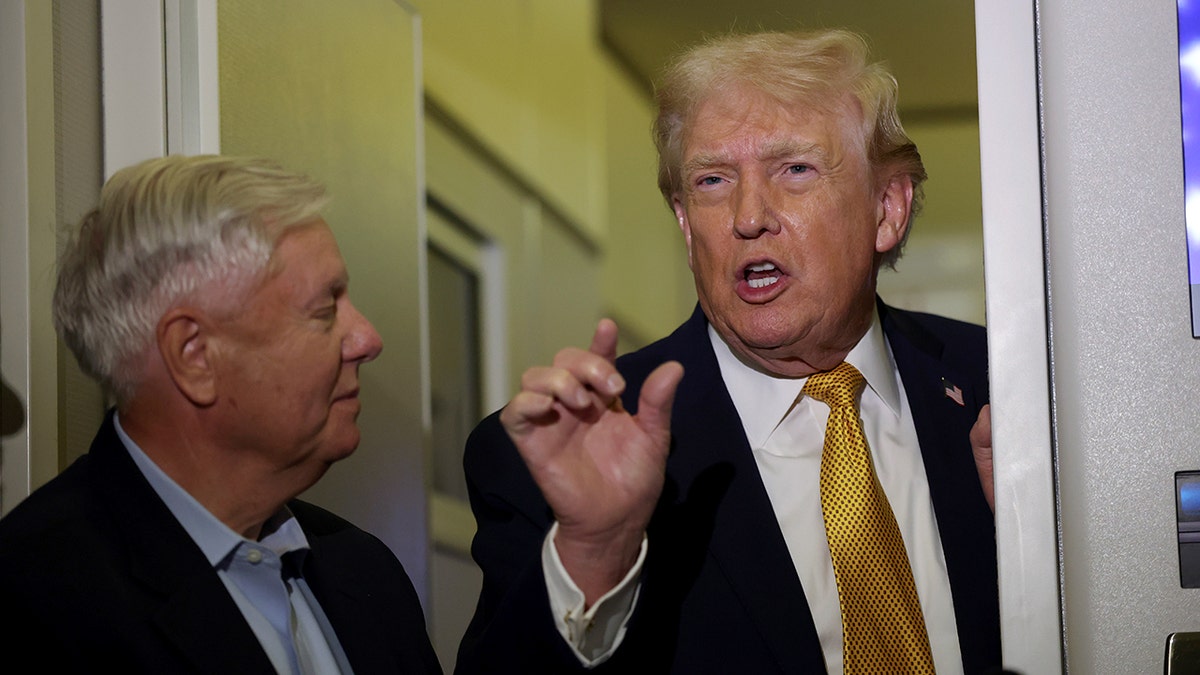
President Donald Trump, right, and Sen. Lindsey Graham, R-S.C., speak to the media aboard Air Force One en route to Washington, D.C., January 4, 2026. (Joe Raedle/Getty Images)
Retired Vice Admiral Robert Harward, a participant in the Jewish Institute for National Security of America’s (JINSA) 2022 General and Admirals Program and a member of JINSA’s Iran Policy Project, said Trump’s actions in Venezuela are on the same wavelength as the president’s “America First” agenda.
SEN TIM KAINE: TRUMP’S VENEZUELA STRIKE TRAMPED ON CONGRESS’ WAR POWERS; CONGRESS MUST STOP IT
That means holding other nations that mistreat their people accountable, for their own sake and that of the American people, he said.
“They’re clearly aligned. That’s exactly what he talked about. … It’s a responsibility for them,” Harward said.
CLICK HERE TO DOWNLOAD THE FOX NEWS APP
For those concerned about the actions of the US military in Venezuela, Vice President JD Vance attempted to allay their fears. Vance leans toward the non-interventionist wing of the Trump administration and has historically supported a foreign policy doctrine that favors minimal interference in the affairs of other countries.
“I understand the concern about the use of military force, but are we just supposed to allow a communist to steal our stuff in our hemisphere and do nothing?” Vance said in a social media post Sunday. “Great powers don’t do that.”
Secretary of State Marco Rubio asserted that the United States did not need congressional approval to carry out the strike since it was not an “invasion” and claimed that the actions in Caracas, Venezuela, were part of a “law enforcement function to capture a drug trafficker.”
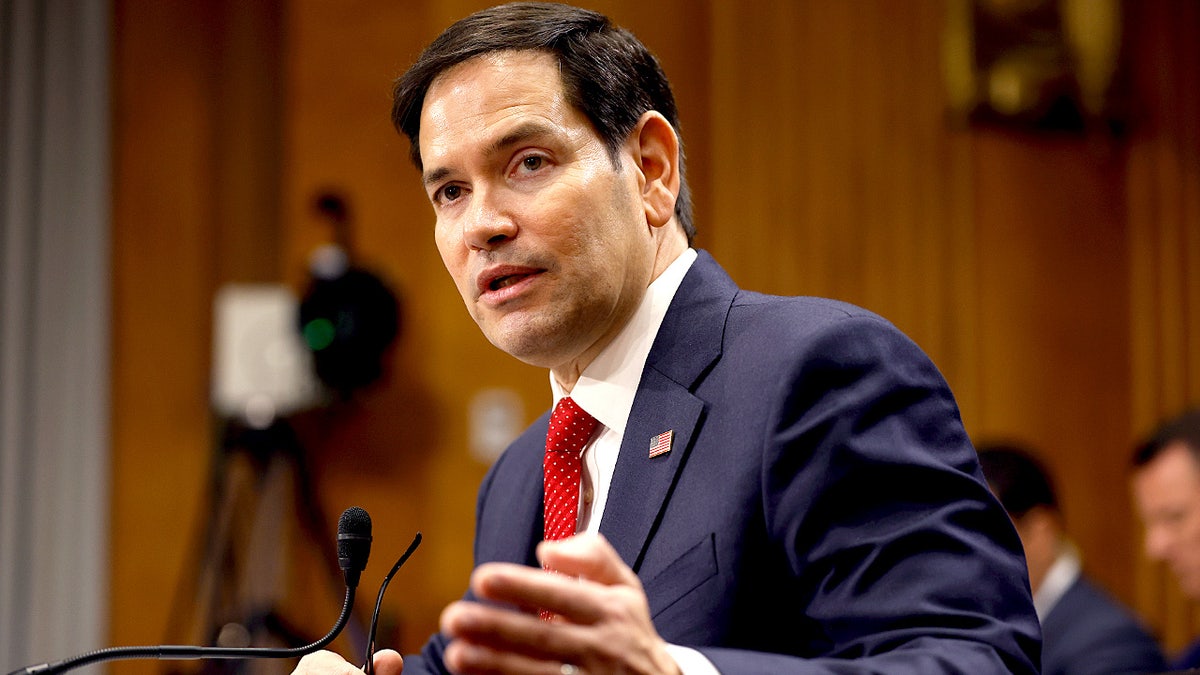
Secretary of State Marco Rubio said the United States did not need congressional approval to carry out the strike because it was not an “invasion.” (Kevin Dietsch/Getty Images)
The Trump administration has repeatedly said it does not recognize Maduro as a legitimate head of state and has insisted he is the leader of a drug cartel.
But lawmakers, including Democrats, have questioned the legality of the Venezuela operation, which was carried out without congressional approval.
“This has been a profound constitutional failure,” the top Democrat on the Senate Armed Services Committee, Sen. Jack Reed, D-R.I., said in a statement Saturday. “Congress – not the President – has the exclusive authority to authorize war. Pursuing regime change without the consent of the American people is a reckless overreach and abuse of power.
“The question is no longer whether Maduro deserved to be removed, but rather what precedent the United States just set and what comes next.”


