
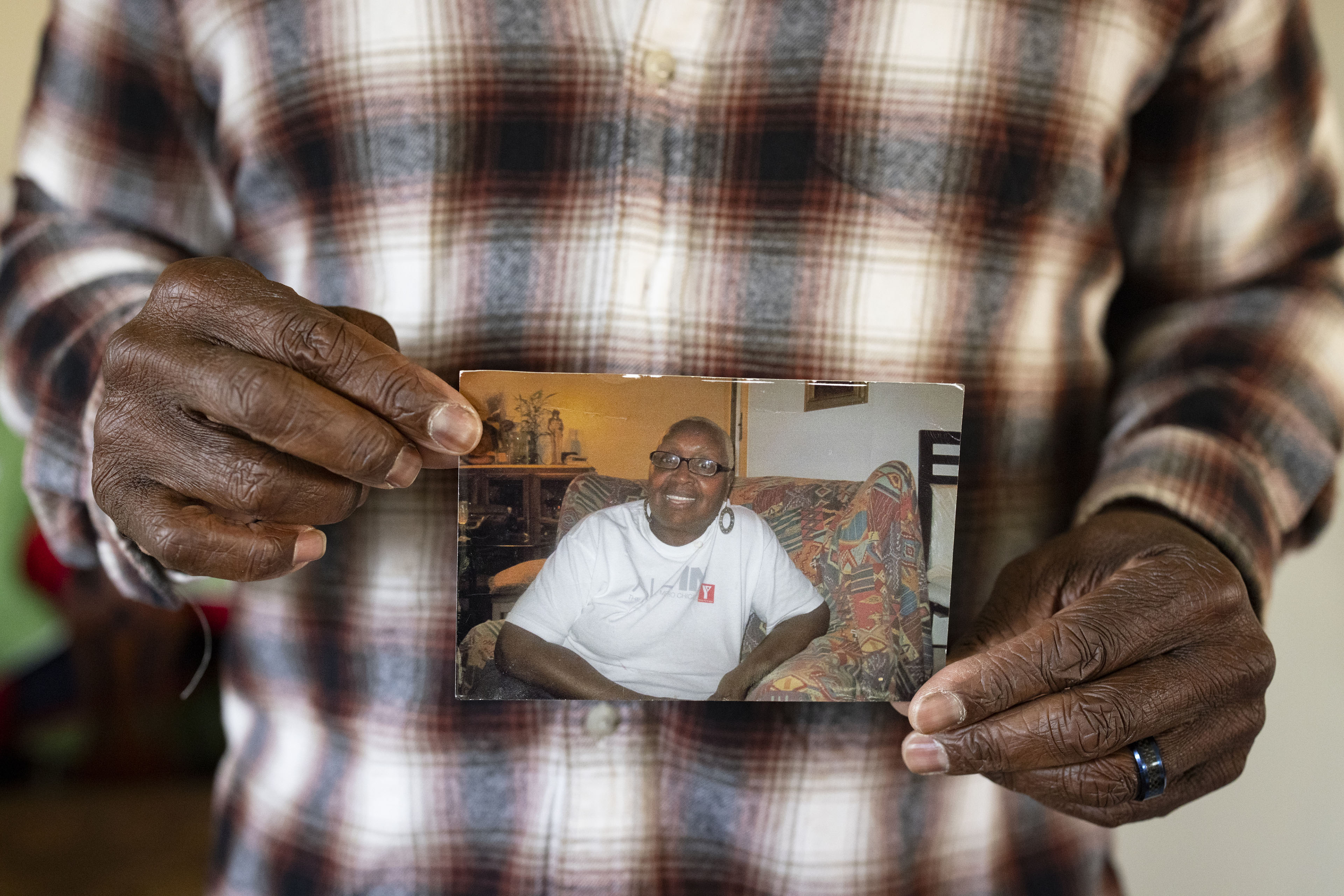
By the time she was hospitalized in 2020, Pearlene Darby, a retired teacher, had suffered open sores on both legs, both hips, and both heels, as well as a five-inch-long gash on her tailbone. She died two weeks later at age 81 from infections and bedsores, according to her death certificate. Her daughter sued the nursing home, alleging it had left Darby sitting in her own feces and urine time and again.
The lawsuit, settled on confidential terms last year, blamed not only the managers of City Creek Post-Acute and Assisted Living but also the building’s owner, a real estate investment trust, or REIT.
In the year Darby died, City Creek paid CareTrust REIT more than $1 million in rent, while the Sacramento, California, nursing home ran a deficit, court records show.
Federal tax rules ban REITs from running health care facilities, but CareTrust was not an absentee landlord either, according to internal records filed in the case. It chose the nursing home’s management company and required through the lease that the home keep at least 80% of beds occupied. CareTrust granularly tracked how well the home kept to its financial plan, down to the money spent monthly on nurses and food, the records said. And the documents showed that the real estate company kept tabs on government safety inspection findings and Medicare quality ratings.

Both CareTrust and the nursing home operator denied liability for Darby’s death. CareTrust officials said in court papers that it is not involved in day-to-day nursing home decisions or patient care, and that it monitors facilities to ensure nothing jeopardizes rent payments. In a written statement, CareTrust Corporate Counsel Joseph Layne told KFF Health News: “We are the property owners, not the operators.”
Landlords With Influence
Over the past decade, real estate investment trusts have bought thousands of buildings that house nursing homes, hospitals, assisted living facilities, and medical offices. A KFF Health News examination of court filings and corporate records shows that these landlords have more influence than the health care facilities publicly acknowledge.
The documents reveal REITs often select the management who oversee the operations and leave them in place even when they are aware of threadbare staffing, floundering governance, repeated safety violations, or other problems that hamper quality of care. A California jury in March awarded $92 million in punitive damages against a former REIT over the death of a 100-year-old resident with dementia who froze to death outside her assisted living facility.
“The REITs are in charge,” said Laraclay Parker, one of the lawyers who represent Darby’s daughter.
Absence of Oversight
Despite their ubiquity, REITs remain invisible to state and federal health regulators. Hospitals and nursing homes are not required to disclose rent payments or landlord identities in the annual reports they submit to Medicare.
Under President Donald Trump, the Centers for Medicare & Medicaid Services indefinitely suspended a Biden-era requirement that nursing homes disclose REIT involvement. Catherine Howden, a CMS spokesperson, said in a statement that the agency does not regulate facilities based on their tax status or corporate form and instead focuses on the quality of the care they provide.
REITs now own a fifth of the nation’s senior housing, which includes assisted living, memory care, and independent living, according to an industry analysis. REITs also hold investments in 1 in 6 nursing homes. Publicly traded REITs that focus on health care are now worth nearly a quarter of a trillion dollars, according to Nareit, an industry association.
While one research study found REIT investments were associated with higher spending on nursing wages, another concluded that after being bought by REITs, nursing homes frequently replaced registered nurses with less skilled nurses and aides. A third analysis concluded that health inspection results were worse after REIT investment.
Researchers also found that investor-owned hospital chains that sold buildings to REITs were more likely to close or go bankrupt, as happened in 2024 with Steward Health Care. Often, private equity investors kept the sale proceeds as profits while the hospitals were burdened with new rent costs. “There were no improvements in clinical outcomes,” said Thomas Tsai, an associate professor at the Harvard T.H. Chan School of Public Health.
REITs are required to distribute most of their income and don’t have to pay the 21% federal corporate income tax on it. There is a catch: A REIT that “directly or indirectly operates or manages” a health care facility loses the tax break for five years. Typically, a REIT leases the property to another company that runs the nursing home or assisted living facility and maintains its tax break. Nareit said health care REITs distributed more than $7 billion in dividends in 2024.
Michael Stroyeck, head of health care analysis at Green Street, a real estate research company, said “there’s definitely a symbiotic relationship” between REITs and facility managers because they have the same goals. He said he has seen REITs replace operators that are having difficulties or go bankrupt.
John Kane, a senior vice president at the American Health Care Association and the National Center for Assisted Living, an industry group that represents nursing homes, said in a statement: “Given government funding often falls short, REITs have been valuable partners in helping to invest in long term care without influencing daily operations.”
Low Staffing at a Chain
Strawberry Fields REIT, which like CareTrust trades on the New York Stock Exchange, owns or controls the buildings of 131 nursing home facilities. The nursing home operations inside 66 of those facilities are owned by Moishe Gubin, Strawberry Fields’ chief executive, and Michael Blisko, one of its directors, according to Strawberry Fields’ annual report for last year.
Gubin and Blisko also jointly own Infinity Healthcare Management, which manages their nursing homes; Blisko is Infinity’s CEO. On average, Infinity-affiliated nursing homes provided an hour and a quarter less nursing care per resident per day than the national average of four hours, a KFF Health News analysis of federal records found.
Infinity and several of its nursing homes have recently settled 30 death and injury lawsuits in Cook County, Illinois, totaling more than $4 million, said Margaret Battersby Black, a Chicago lawyer. A jury last year awarded $12 million in a lawsuit brought against Infinity and one of its Chicago nursing homes over the 2023 death of Shirley Adams. A retired candy factory worker, Adams died after developing infected bedsores at Lakeview Rehabilitation and Nursing Center, according to the lawsuit.
“She had wounds that no one could explain,” one of her adult children, Leslie Adams, testified at trial. Medicare gives Lakeview its lowest quality rating, one star out of five.

Paul Connery, a lawyer for Adams’ family, said they are still trying to collect on the judgment against the nursing home and management company, which now totals $17 million with interest and attorney fees.
“If I get caught speeding and I went to court, they issue me a ticket and I’ve got a fine to pay,” Adams said in an interview. “How are they able to still continue to move on with business like nothing has happened?”
In a phone interview and an email, Gubin said Strawberry Fields, Infinity, and the nursing homes are all legally distinct and that he has not played an active role in Infinity in more than a decade. He said nursing homes get sued all the time but that the verdict against Lakeview is so large that it will force the home to declare bankruptcy or shut down.
“The whole thing is unfortunate,” Gubin said by phone. “For 15 years they were a perfectly good guardian” and “a well-run building,” he said. “You wouldn’t think it was fair to be judged on your worst day.”
Blisko and an Infinity lawyer did not respond to requests for comment.
Strawberry Fields, which owns 10 assisted living facilities and two long-term care hospitals in addition to the nursing homes, earned net income last year of $33 million from $155 million in rent, a 21% profit margin, securities filings show. Gubin said those weren’t excessive returns.

A $110 Million Verdict
Traditionally, REIT leases make the operating companies responsible for paying property taxes, insurance premiums, and maintenance costs. In 2008, Congress gave health care REITs a new option to make money: On top of collecting rents, they could set up subsidiaries and take profits directly from health care businesses. They still must have independent management overseeing care decisions. Many REITs have embraced the role even though the subsidiaries must pay corporate taxes and risk losing money if the businesses do poorly.
Colony Capital was a REIT that through layers of shell corporations owned both the building and the operation of Greenhaven Estates, a Sacramento assisted living and memory care facility. In 2018 Greenhaven paid Colony $1.4 million in rent, nearly a third of its $4.5 million in revenue that year, according to financial records filed in court.
Greenhaven also was on the verge of losing its license, according to a revocation notice filed in November 2018 by the California Department of Social Services. Greenhaven had racked up years of health violations, including from letting untrained workers administer medications, lacking enough employees to care for people with dementia, and neglecting a resident who smeared feces over his body, bed, floor, and bathroom, the notice said.
In February 2019, a few weeks after celebrating her 100th birthday, Mildred Hernandez, a resident with Alzheimer’s, wandered out of Greenhaven in the middle of the night. Her assisted living wing had no exit door alarms even though it housed several residents with dementia, court records showed. Berta Lepe, one of Greenhaven’s caregivers, found Hernandez under a bush, wearing only a shirt and underwear. The temperature was in the 30s.

“She was talking, but I couldn’t understand what she was saying,” Lepe testified at trial over a lawsuit from Hernandez’s family. Hernandez died of hypothermia a few hours later, according to her death certificate.
Frontier Management, the company that Colony had hired to manage Greenhaven, denied liability and settled the lawsuit on undisclosed terms.
Since the lawsuit, Colony has changed its name to DigitalBridge, which no longer owns Greenhaven and gave up its REIT status. At trial earlier this year, DigitalBridge said resident care was the responsibility of Frontier and that Colony “encouraged” Frontier to address problems. Richard Welch, a former Colony executive, testified that replacing management is disruptive. “I viewed it as a last resort,” he said.
In March, a jury awarded Hernandez’s family $110 million: $10 million in compensatory damages, $92 million in punitive damages against DigitalBridge, and $8 million in punitive damages against Formation Capital, an asset management company.
“REIT money is very detached from knowing about or caring about patient or resident outcomes, because it’s not in their business model,” Ed Dudensing, a lawyer for the family, said in an interview. “Their allegiance is to their investors.”
DigitalBridge has asked the judge to delay finalizing the judgment while its legal challenges to the lawsuit and the verdict are evaluated. A DigitalBridge attorney and a corporate spokesperson did not respond to requests for comment, a Formation attorney declined comment, and a Frontier attorney and a spokesperson did not respond to a request for comment.
‘Wet From Head to Toe’
When CareTrust bought City Creek Post-Acute and Assisted Living in 2019, the Sacramento nursing home where Pearlene Darby lived had a one-star Medicare rating and was losing money. CareTrust leased the building to a management company called Kalesta Healthcare Group based on the business plan Kalesta submitted.
While CareTrust was not the operator, it held periodic phone calls with Kalesta, which provided “a full update of what’s happening at the facility,” including changes in leadership, financial progress, and health inspection survey results, according to deposition testimony by Ryan Williams, a Kalesta co-founder.
According to a state inspection report, in 2020, the year Darby died, City Creek left a resident in soiled linens “wet from head to toe lying in bed” for more than eight hours. During a different visit, a health inspector cited the home after watching a nurse put a dirty diaper back onto a resident after caring for a wound. “It was just a small stool and it is far from where the wound is,” the nurse told the inspector, according to the report.
James Callister, CareTrust’s chief investment officer, said in his deposition that CareTrust officials “review results of regulatory surveys provided to us by the tenant. We review the five-star rating.” He said, “We evaluate results of care, but we do not evaluate types of care given or how or when, no.”
Darby had been living in City Creek since 2011 after a stroke left her in a wheelchair. She needed help getting in and out of bed. From September through November 2020, Darby lost 30 pounds, her family’s lawsuit alleged. During those months, employees dropped her three times as one worker rather than the required two operated the mechanical lift, the lawsuit said.
The suit alleged City Creek failed to reposition her every two hours in bed or her wheelchair, which is the clinical standard for people at risk of bedsores, and to promptly order devices to protect her skin.
In November, the nursing home sent Darby to the hospital. A blood test found bacteria had entered her bloodstream from her feces’ touching open skin wounds, according to the lawsuit. The hospital diagnosed her with sepsis. A surgeon said she needed an operation to redirect fecal waste from her intestines but concluded she wasn’t medically stable enough for surgery, the suit said.
Darby began receiving comfort care measures and was sent back to City Creek. She died two weeks later. In court filings, CareTrust and Kalesta denied the allegations.
In a phone interview, Williams, the Kalesta co-founder, said Darby’s death occurred during the most challenging point of the covid pandemic, when California rules required any nurses testing positive for the virus to be sent home and nurses were quitting out of fear for their health. “It was the most herculean of professional efforts to secure enough staff,” he said.
While expressing sympathy for Darby and her family, he said it was “unconscionable” that personal injury lawyers sued nursing homes over care failures during “the worst of times.”
In court, CareTrust petitioned Judge Richard Miadich to dismiss it from the lawsuit before trial. “This case does not concern a property condition,” CareTrust’s lawyers wrote. “CareTrust is simply a landlord.” But the judge ruled last year a jury should decide whether CareTrust “exercised actual control over City Creek.”
The case was settled out of court a few months later. All parties declined to reveal the settlement terms.
A 67% Profit
As recently as November 2023 — four years after its acquisition — City Creek earned one star from Medicare. It was cited for failing to have the minimum nursing home staffing required by California law during five of 24 randomly selected days in 2022, according to an inspection report. Williams said in the interview that Kalesta had increased spending on nursing over the course of its ownership, including boosting wages, but that it takes a year or two to turn around a troubled nursing home. He said the home’s star rating in 2023 was dragged down by its poor inspection history from before Kalesta took over.
City Creek’s rating has climbed in the past two years, and it now has the top overall rating of five, according to Medicare. Medicare rates City Creek’s current staffing levels as average. That’s better than most nursing homes in more than 200 buildings CareTrust bought before 2025, according to a KFF Health News analysis of federal data. On average, CareTrust nursing homes provided a half hour less nursing care per resident per day than the national average of four hours.
In its statement to KFF Health News, CareTrust’s counsel Layne said the REIT worked to “identify quality operators as tenants,” and that the homes the REIT rents out have more nurses and aides than the minimum required for nursing homes by their state governments. “The operators are licensed by state regulators and retain sole responsibility for operations,” the statement said.
CareTrust, which now owns more than 500 senior housing and nursing home buildings, reported net income last year of $320 million from $476 million in rents and other revenue — a 67% profit margin. By comparison, HCA Healthcare, one of the nation’s largest for-profit hospital and health care chains, reported a 10% profit margin for last year.
Lesley Ann Clement, one of Darby’s lawyers, said cases like hers show the nursing home industry is wrong to complain it lacks financial resources for more staffing.
“There’s plenty of money,” Clement said. “They’re just not spending it on patient care.”


