Apple’s first mini-LED ProMotion monitor has a nice price


Summary created by Smart Answers AI
In summary:
- Apple introduced a new Studio Display XDR with mini-LED technology and ProMotion up to 120Hz, starting at $3,299 with an adjustable stand included.
- Macworld reports that the
- Both new monitors include Thunderbolt 5 connectivity and pro features like Adobe RGB presets, with pre-orders starting March 11.
On Tuesday, Apple finally announced major updates to its display lineup. In addition to an updated version of the Studio Display, the company also introduced a more premium Studio Display XDR, featuring a mini-LED panel.
As previously noted, there are now two new versions of Studio Display. The first is a simple update of the original model introduced in 2022. It retains the same general design and 27-inch 5K LCD panel, but it gets significant updates under the hood.
According to Apple’s press release, the new version of Studio Display has an improved 12 MP webcam. The built-in webcam now supports Desk View to display what’s on the user’s desktop and offers better image quality, despite being the same resolution as before.
Sound quality is also better on the new Studio Display, thanks to a new speaker layout with four force-cancelling woofers and two high-performance tweeters that deliver 30% more bass than the previous generation.
Apple has also made some improvements to port technology. While the original Studio Display came with a single Thunderbolt 3 port and three additional USB-C ports, the new version has two Thunderbolt 5 ports and two additional USB-C ports.
This means users will have more bandwidth to connect high-speed accessories, such as external SSDs or even another Studio Display. Apple says users can also daisy chain up to four Studio displays.
The Studio Display comes with a tilt-adjustable stand, and users can upgrade to a more advanced stand with tilt and height adjustment or a VESA mount adapter.
However, what really stands out is the new Studio Display XDR, which is the version that brings all the technologies that professional users have been dreaming of.
Unlike the regular Studio Display, the XDR version comes with a much better mini-LED panel that supports HDR with a peak brightness of up to 2,000 nits. The Studio Display XDR also supports ProMotion with a refresh rate of up to 120Hz, making animations and games smoother with lower latency.
The more expensive monitor adds support for the Adobe RGB color gamut, ideal for print and design professionals. It even supports DICOM medical imaging presets that can be used to calibrate the Studio Display XDR to accurately display radiology diagnoses.
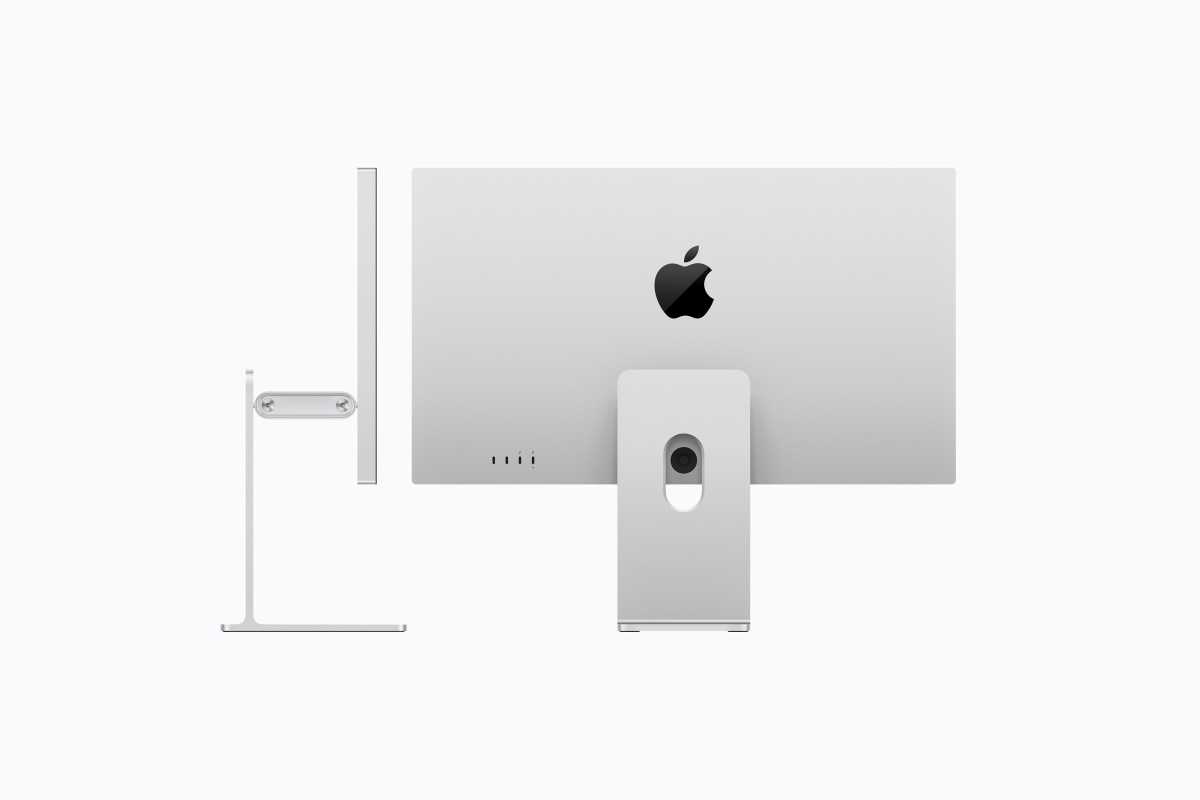
The Studio Display XDR comes with a stand!
Apple
Of course, Studio Display
Although it’s smaller than the discontinued 32-inch Pro Display XDR, the Studio Display XDR includes many of the same reference modes, including P3 and P3 + Adobe RGB.
Interestingly, the Studio Display XDR comes with a height and tilt adjustable stand by default, with an option for a VESA mount adapter. On the Pro Display XDR, it costs an additional $999 on top of its $4,999 price tag.
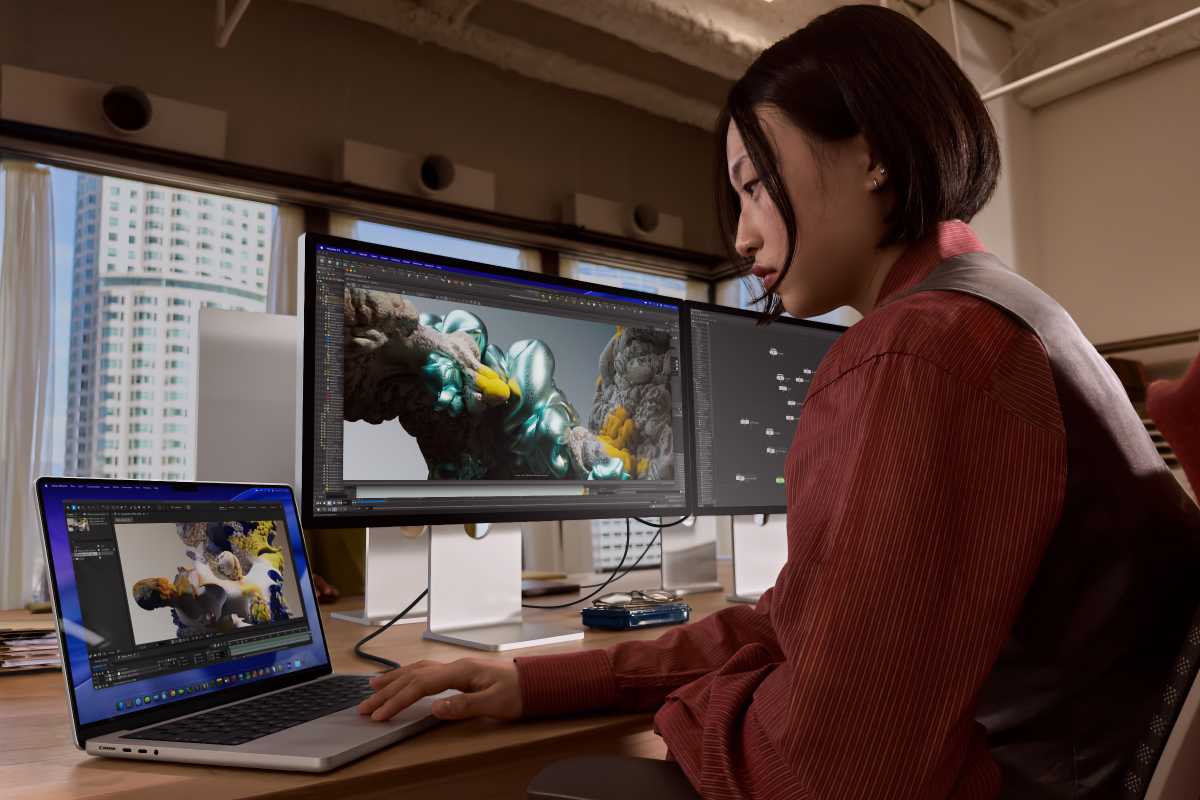
The new Studio Display has the same starting price of $1,599.
Apple
A much lower premium price
Apple has kept the same starting price of $1,599 for the base Studio Display model. However, the more advanced Studio Display XDR starts at $3,299.
With the new lineup, Apple has discontinued the old Studio Display as well as the Pro Display XDR, which featured a 32-inch 6K panel. The Pro Display XDR costs $4,999, with an additional $999 for the Pro Stand. Undeniably, the new Studio Display XDR seems like a much better deal, despite a slightly smaller panel.
Apple is positioning the standard Studio Display as a worthwhile upgrade for users who want better connectivity and camera performance without straying from the established Retina experience. The Studio Display XDR, on the other hand, sits in the premium tier where extreme brightness, HDR capability and high refresh rates are differentiators for creative professionals.
Pre-orders for the new monitors begin tomorrow at 6:15 a.m. PT, with the official launch scheduled for March 11.


