Trump wants to bring Japan’s ‘cute’ tiny cars to America — but it may not be easy


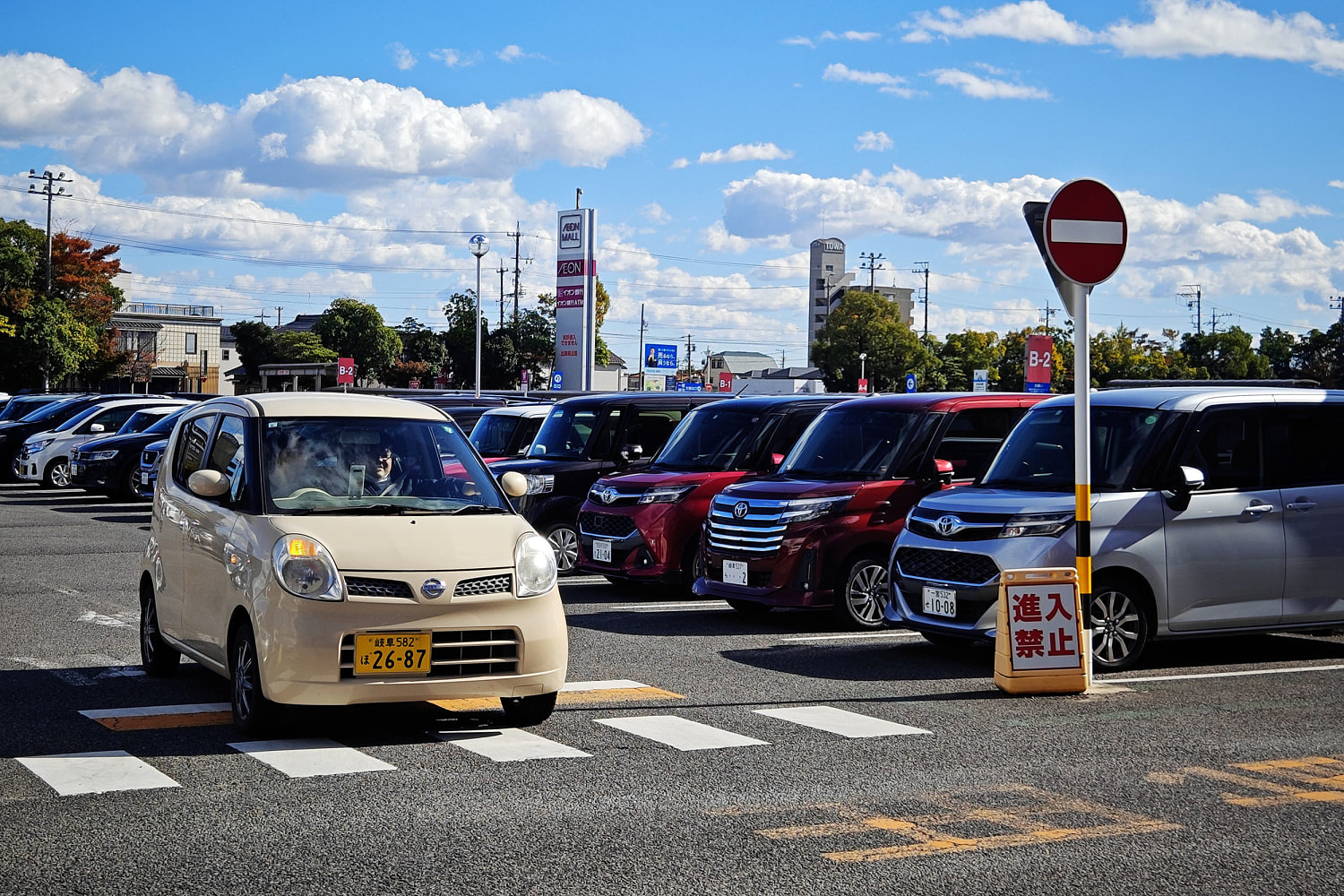
“It’s easy to want to drive one of those cute kei cars. It’s another thing to put your family in it and drive down the highway at 70 mph between a Suburban and an F-150,” said Tifani Sadek, director of the Law and Mobility Program at the University of Michigan Law School.
Taking their name from the Japanese word “kei-jidōsha”, meaning light truck, kei cars were developed after World War II to boost the Japanese automobile industry and encourage car ownership, with vehicles qualifying for reduced road taxes and insurance premiums.
It is not a brand per se, but rather a category of vehicles – limited by size and power – manufactured by several Japanese companies, including Honda, Suzuki and Daihatsu. Gas and electric variants are available.
“The Japanese government has actively promoted kei cars as part of its national policy,” said Shigeru Matsumoto, an economics professor at Aoyama Gakuin University in Tokyo. “Although kei cars are not suitable for long-distance driving, they are frequently used for daily errands.”
In rural areas of Japan, where roads are narrow, these compact cars are often purchased as a second vehicle and are particularly popular with women, Matsumoto said.
They remain rare in the United States, but demand for imports has steadily increased, according to Japanese export data, in part because of cheaper maintenance and lower operating costs.
McChristian said he bought his for $900 at an auction in Japan almost three years ago. Even after paying an extra $2,500 in shipping costs, he said, “you won’t find anything on the new or used American market that has this much utility and reliability for this low a price.”
But there are bigger obstacles than just consumer behavior to hoping to see kei cars enter the U.S. market. The cars do not meet federal vehicle safety standards, with many even lacking airbags. This means it is difficult to obtain one, with imports only allowed under an exemption for cars over 25 years old.
Even so, a patchwork of state laws take different approaches to their use, with some states banning them from public roads or limiting them to low-speed neighborhood streets. Lone Star Kei, an advocacy group of which McChristian is president, has fought for legal changes in Texas and elsewhere.
Trump’s interest in kei cars appears to be about manufacturing similar smaller cars in the United States. rather than facilitating the process of importing from Japan.
Few of the major kei automakers have large-scale automobile manufacturing operations in the United States.
Mike Smitka, professor emeritus of economics at Washington and Lee University, noted the decline in sales of existing small cars in the United States, adding that there was a “real barrier on the cost side of manufacturers.”
“You would have to make a car from scratch, at the assembly plant level, that would meet U.S. specifications, because retrofitting is extremely expensive,” he said.
A kei-style car made in the United States would easily exceed the typical $10,000 price in Japan, Smitka and others say.
Legal obstacles to a kei-style revolution could theoretically be swept away if Congress amends the security law or passes new legislation encouraging their use.
“I’m not holding my breath on this,” Sadek said.
Another path would be for the federal government to update safety standards, but Sadek said “changing a federal rule just takes time.”
Even if these changes were made, the hope of seeing American cities filled with kei cars seems distant. “The reality is that this type of car would in almost all cases be the second or third car that an American family would own,” said Thomas Prusa, an economics professor at Rutgers University.
It could be helpful for dense cities like New York or Chicago or retirement communities in Florida, which have already adopted golf carts, to use such cars, Prusa said.
“You can imagine how much easier transportation in New York would be if all New Yorkers drove much smaller vehicles,” he said. “I just don’t see in the United States that it fits American culture right now.”


