Trump’s beef trade deal is a lose-lose gamble that won’t lower prices


Last week, President Donald Trump announced that the United States would temporarily increase the amount of beef imported from Argentina, by an additional 80,000 tons this calendar year.
In an executive order, the president declared that these beef imports would not be subject to tariffs and that he made this decision after discussions with Brooke Rollins, US Secretary of Agriculture. The White House described the move as part of its efforts to reduce grocery store beef prices for U.S. consumers. But almost as soon as the trade deal was announced, Trump faced backlash from key allies and voters, including ranchers who say buying more beef from Argentina hurts U.S. producers.
“The National Cattlemen’s Beef Association and its members cannot support the president as he jeopardizes the future of family farmers and ranchers by importing beef from Argentina in an effort to influence prices,” Colin Woodall, head of the trade group, said in a statement. Deb Fischer, a Republican senator from Nebraska, also said the trade deal “marginalizes[s]” Cattle ranchers in the United States
Trade groups, lawmakers and economists agree that increased imports from Argentina are unlikely to depress record U.S. beef prices. Part of the reason is that Americans already eat a lot of beef, according to David Ortega, a professor in the department of agricultural, food and resource economics at Michigan State University.
“The additional volume is rather small compared to what Americans consume each year, less than 1% of the total supply,” Ortega said in an email, adding that it “probably won’t move retail prices much.”
But as unpopular as it is, this trade deal will certainly cause problems for the environment, particularly in Latin America.
“I don’t see how Argentina can meet its climate commitments by increasing its beef production for the United States,” said Stephanie Feldstein, director of population and sustainability at the Center for Biological Diversity.
Raising cattle – a ruminant that emits methane as part of its digestive process – because human consumption has a huge climate footprint, both in terms of land use and greenhouse gas emissions. Whether the additional livestock Trump seeks are raised in North America or South America, it will still result in more methane and other emissions into the atmosphere. “By importing Argentine beef into the United States, this administration is exporting its contempt for the climate crisis,” Feldstein said.
Around the world, climate change has disrupted the economics of food production and livestock farming. In Argentina, as in the United States, livestock farms have been hit hard by unprecedented droughts and rising temperatures. These factors, along with producers facing higher prices for inputs such as fertilizer, labor and machinery, have caused the U.S. livestock supply to fall to its lowest level in 70 years.
Javier Milei, Argentina’s far-right president, praised the trade deal, saying it demonstrated the nation’s reliability as a trading partner. But increasing beef production in Argentina to meet the new quota imposed by Trump will force ranchers in the Latin American country to make difficult decisions.
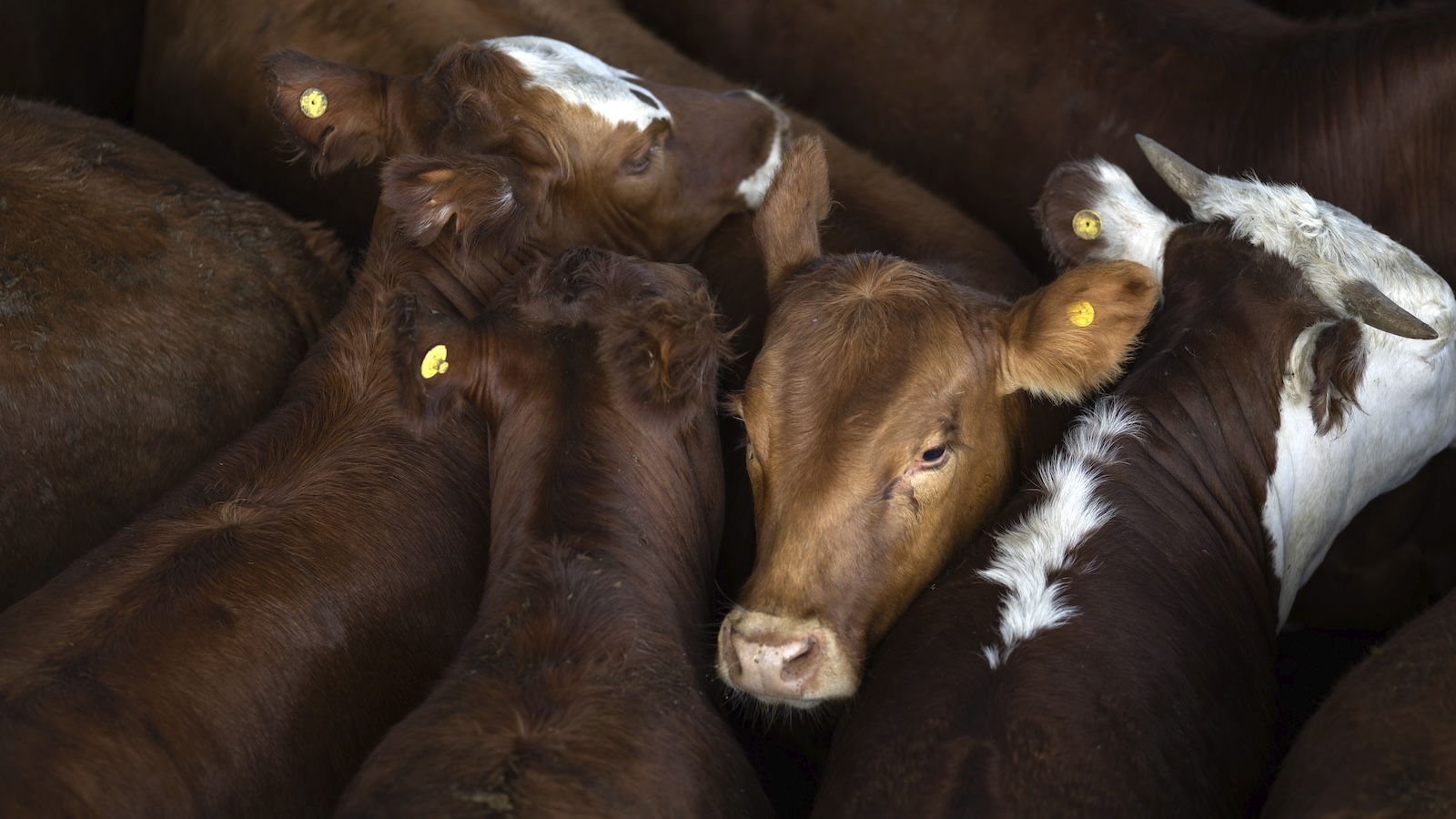
Tobias Skarlovnik/Getty Images
Currently, Argentina devotes a huge amount of land to raising livestock in pasture-based systems. Unlike confined animal feeding operations, or CAFOs, found in the United States and other parts of the world, these grazing-based systems allow cattle to graze on a variety of grasses until the “finishing” stage, when they are fed corn and soybean feeds before being slaughtered.
Even despite the role it plays in deforestation, raising livestock on pasture is often considered a more sustainable practice than feedlots. But Silvia Secchi, a natural resource economist and professor at the University of Iowa, pointed out that how you measure sustainability depends on how you define it — and that when it comes to beef, pasture-based systems and CAFOs have downsides for the planet.
CAFOs, also called factory farms because of the limited space available to livestock, pollute the air and nearby waterways; local communities often report runoff of manure and fertilizer, as well as foul odors. These feeding operations are terrible for both the farm animals and the workers who work there. However, CAFOs are sometimes touted as being climate effective – primarily because livestock have such a short lifespan before slaughter that they emit less methane than livestock that live longer on pasture.
Essentially, producing more beef means choosing between two flawed systems, Secchi noted. “For me, the only answer is we need to eat less beef,” she said.
The evolving trade relationship between the United States and Argentina reveals some uncomfortable truths about animal agriculture and our food systems more broadly. First, it shows how agriculture and livestock are sectors both on the front line of the climate crisis and contributing to it.
Second, it reflects the detrimental consequences of meeting the growing demand for animal protein on critical ecosystems. In addition to its impact on ranchers, the drought in Argentina has also reduced soybean production. Feldstein added that this has forced Argentine farmers to import soybeans from Brazil, where such production is a driver of deforestation, particularly in the Cerrado, a savannah known for its biodiversity.
These ripple effects have implications for the planet as a whole, as areas like the Cerrado serve as significant carbon sinks.
As the Trump administration and MAHA leaders prepare to promote even higher animal protein consumption in the United States, Feldstein shares Secchi’s view that consumers should actually strive to do the opposite. “No form of beef production can be considered sustainable at our current consumption levels,” she said.


