Trump’s ‘get-out-of-jail-free card’ for polluters faces its latest test


Last spring, the EPA made a surprise announcement: President Trump would consider granting certain polluters exemptions from certain Clean Air Act rules. To get the ball rolling, all it took was an email from a company making its case. The EPA set up a special inbox to receive these requests and gave companies about three weeks in late March to submit their presidential exemption requests. Hundreds of companies wrote, including coal-fired power plants, iron and steel manufacturers, limestone producers and chemical refiners.
One industry was particularly eager to obtain an exemption: that of sterilizers for medical devices. About 40 of the roughly 90 device sterilization plants operating nationwide, along with their trade association, wrote, arguing that they should not have to comply with an air quality rule limiting the amount of toxic materials they could emit. In fact, these facilities sterilize medical equipment with ethylene oxide, a powerful carcinogen that studies have linked to breast and lymph node cancers.
In 2024, the Biden administration issued regulations requiring sterilizers to reduce their emissions by approximately 90%. Businesses were given two years to comply, and many had begun installing new monitoring equipment and pollution controls to meet the standard. But last year, after President Trump took office, the EPA gave these companies a way out; they could request a presidential exemption. About forty establishments, many of which are located in residential neighborhoods near schools and daycares, took advantage of this offer and obtained the exemption by presidential proclamation last summer.
Now, a coalition of national environmental groups and community nonprofits is suing Trump and the EPA, seeking to overturn the current exemptions. Maurice Carter, president of the Georgia-based environmental advocacy group Sustainable Newton, which signed the lawsuit, told Grist that the financial interests of sterilization companies should not outweigh public health concerns about ethylene oxide. Any policy change should take this into account, he argued.
“You have to do it in a way that doesn’t harm the people who live here and the planet that our children are going to inherit,” he said. Carter lives about a mile from one of the exempt facilities.
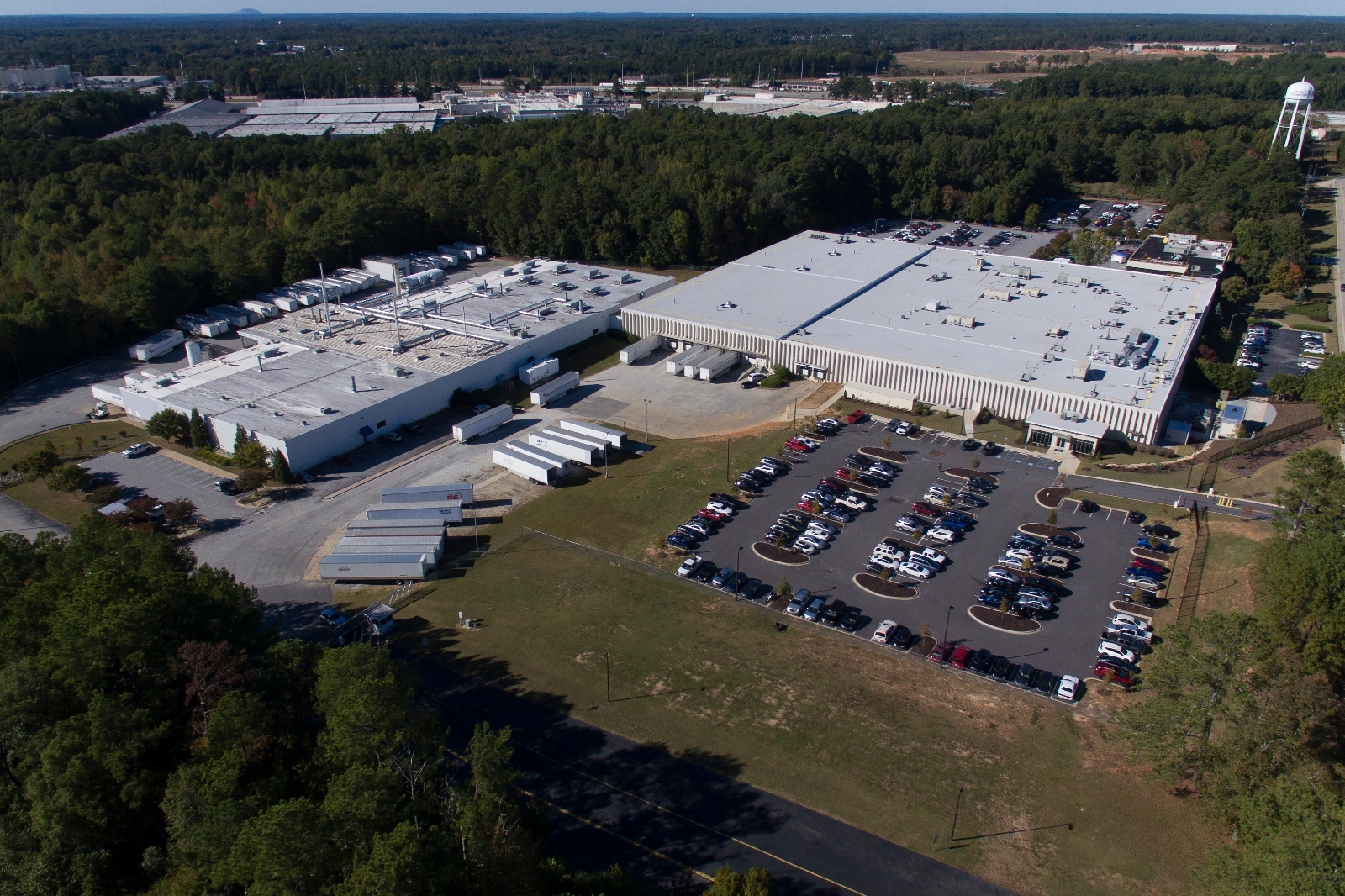
Georgia sterilization plants using toxic gases among those exempt from new rules
The suit was filed last week in the U.S. District Court for the District of Columbia in Washington, D.C., and assigned to Judge Christopher R. Cooper, an Obama appointee. Trump’s Justice Department, which represents federal agencies in court, has 60 days to respond.
Taylor Rogers, a White House spokesperson, told Grist that the president used “his legal authority under the Clean Air Act to provide relief to certain commercial sterilization facilities that use ethylene oxide to sterilize critical medical equipment and combat disease transmission.” The Biden-era rule would have forced the closure of facilities, Rogers argued, “seriously disrupting the supply of medical equipment and compromising our national security.” An EPA spokesperson said the agency does not comment on pending litigation.
A provision of the Clean Air Act authorizes the president to grant facilities narrow exemptions from one section of the law. But presidents can only grant an exemption if the technology to meet the standard is not available and the exemption is in the country’s national interest. The sterilization facilities claimed they met both criteria. In a letter to the president, the Ethylene Oxide Sterilization Association, the industry’s trade organization, said companies would not be able to meet the 2024 rule “due to the limited number of equipment manufacturers and lack of labor.” Supply chain constraints and the time it would take to install and validate the equipment meant that the necessary control technology “is not functionally available within the required time frame”, the group said.
When the EPA finalized the rule in 2024, it determined that only 7 of the 88 sterilization facilities “already met emission standards and would not need to install additional emission controls.” Several others met one or more requirements of the rule. Nearly 30 installations would be needed to install permanent total enclosures, which are among the most expensive pollution control technologies, and sealing facilities to trap and burn ethylene oxide.
Georgia has the highest concentration of exempt sterilization plants; all five state facilities received exemptions. For comparison, only two of California’s facilities, which have the largest number of sterilizers in the country, received exemptions. According to records submitted to the state’s environmental agency, almost all California facilities already meet the vast majority of the requirements outlined in the 2024 rule. One facility in Atlanta met the standards as early as 2022 — but it nonetheless received an exemption.
“These are facilities that have made changes to their processes to comply, and yet they still received exemptions,” said Sarah Buckley, senior attorney for the Natural Resources Defense Council, one of the environmental groups suing. (Editor’s Note: The Natural Resources Defense Council is an advertiser of Grist. Advertisers have no role in Grist’s editorial decisions.)
“It shows that the president was not making any decisions in good faith, that he was not basing his decision on a real assessment of the facts on the ground and the capabilities of these facilities, but was just looking for excuses to essentially hand out free passes to get around the rules,” Buckley added, calling the exemptions a “get out of jail free card.”
Are you exposed to EtO? Read and download our guide.
James Boylan, chief of the air protection branch of the Georgia Environmental Protection Division, said the agency worked with companies to install improved monitoring equipment and revise permits to comply with the 2024 rule before President Trump announced that Georgia sterilization facilities would be exempt. Some of those updates have since been delayed due to the exemption, Boylan told Grist in an email.
If companies exceeded the Clean Air Act’s emissions limits and faced state action or lawsuits from community groups, they could use the exemption to claim the rules don’t apply to them. Exempted businesses will also be relieved of the costs of complying with the regulations. The EPA estimated that it would cost $313 million for all of the approximately 90 sterilizers to meet the new standards. But even those already in compliance could benefit from an exemption, because pollution monitoring and control equipment requires regular maintenance and monitoring.
“There is a financial incentive not to use equipment even if you already have it,” Buckley said.
Sterilizers are not the only industry to benefit from these exemptions. Last year, President Trump issued a series of proclamations exempting more than 150 facilities, including dozens of coal-fired power plants and chemical manufacturers. Environmental groups have sued over several of these exemptions, claiming Trump exceeded his statutory authority. Many of these cases are making their way to court.


