The technology that reveals what happens in 0.00000000000000000000001 second | Science


People have the feeling that everything is happening very quickly. But normal things in our daily lives happen extraordinarily slowly compared to the speed of events in the microscopic world. It is a world beyond the limits of human perception, where matter is determined, where combinations of particles constitute all substances in the universe. Some events occur in attoseconds (as), one trillionth of a second. An attosecond is equal to 0.000000000000000000001 second or 1×10-18 of a second and corresponds, approximately, to the time it takes for light to pass through an atom and to the natural scale of electronic motion in matter. The Institute of Photonic Sciences (ICFO) also obtained a soft X-ray pulse of just 19.2 attoseconds.
Hungarian Ferenc Krausz, Frenchwoman Anne L’Huillier and Frenchman Pierre Agostini were awarded the Nobel Prize in Physics in 2023 for developing extremely brief pulses of light to measure the previously immeasurable process of movement or energy exchange of electrons. They received it eight months after this research won the Frontiers of Knowledge award from the BBVA Foundation in the Basic Sciences category.
The BBVA Foundation and the Royal Spanish Physical Society (RSEF) have once again awarded a prize to a researcher in this almost unexplored field whose map, which until this century could only be drawn by theories on paper. The Young Investigator Prize in Experimental Physics was awarded to Allan Johnson, Ramón y Cajal scientist at the IMDEA Nanoscience Institute, for his experiments generating ultrafast pulses of light – the compass for discovering a world where what we know begins to take shape, enabling the study of materials, the understanding of the quantum universe and even the observation of the body’s cells in an unprecedented dimension.
Johnson was born 35 years ago in Ottawa, Canada, where he studied physics and mathematics. After obtaining his doctorate at Imperial College London, he came to Spain thanks to his wife, with whom he has two children. “Elsewhere, I have the feeling that life is synonymous with suffering, that the present is worse than the past. In Spain, I have the feeling that there is a better future. It is a country where life is good,” he says.
He received the prize for his work on so-called overdrive, a technology that uses extremely powerful lasers to generate attosecond X-ray pulses with which he can measure complex materials. “We used a very high-power laser and focused it to such a high intensity that, in the hottest focus, it could reach temperatures higher than those outside the Sun. You get a superheated plasma that strips electrons from atoms and breaks up matter,” he explains.
Johnson’s team’s technology is key to further research. “When we generate plasma with a very powerful laser, it emits an attosecond X-ray pulse and it is this emitted pulse that we use for other experiments. The supercharged regime is a way to generate attosecond pulses with X-ray energies in the laboratory. All downstream applications use ultrafast X-rays, but they are not specific to the supercharged regime.”
Among the applications is the understanding of electron dynamics, fundamental in the quantum field, which, according to physics, explains nature: “The correlations between electrons are very important. In a normal material, like a piece of aluminum or glass, we imagine that each electron works independently. This is not entirely true, even though we have built all the semiconductors in the world and all the computers on this idea. But in quantum materials the model does not work like that and This is why we need to understand how electrons interact.”
To illustrate the importance of these surveys, Johnson explains that 10% of the electricity produced is lost along the way. “Reducing these losses can greatly contribute to the fight against climate change or to Europe’s energy independence,” he explains.
Supercharged technologies are also fundamental in metrology and have practical applications in building microprocessors or, as Johnson explains, “looking at cells at a higher resolution than any existing optical microscope.”
Another field opened up by these attosecond pulses is materials science. But the field is vast: “At the nanoscale, we can take materials and turn them into something magnetic or vice versa. Some work suggests that we can actually convert a material that is not a superconductor into a superconductor. We can trap materials in states very different from those achieved by other means.”
The dream, Johnson says, would be to create materials on demand that don’t exist in nature and with unique properties. But he recognizes that we are still far from there. However, he believes that the way is open and that there are already feasible applications in information processing, sensors, space technology and neuromorphic computing, which mimic the human brain.
ICFO registration
In the same field, a group of researchers from the Institute of Photonic Sciences (ICFO) set a new record by generating the soft X-ray pulse of just 19.2 attoseconds, considered the shortest to date. This is the fastest flash of light, even faster than the atomic unit of time (24.2 attoseconds), which corresponds to the time required for an electron to complete an orbit around the hydrogen atom: the “atomic year”, reports the ICFO in a note based on research published in Ultrafast science.
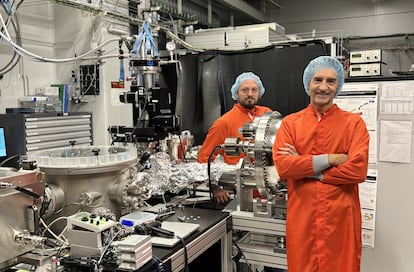
“This new capability paves the way for advances in physics, chemistry, biology and quantum science, enabling direct observation of the processes that drive photovoltaics, catalysis, correlated materials and emerging quantum devices,” says ICFO German physicist Jens Biegert.
The institute explains that the key to these discoveries is understanding how matter behaves and interacts on atomic and subatomic scales: “Electrons determine everything: how chemical reactions develop, how materials conduct electricity, how biological molecules transfer energy, and how quantum technologies work. But electronic dynamics occur on attosecond time scales, too fast for conventional measurement tools.”
“Our results demonstrate the remarkable capabilities of attosecond technology and lay the foundation for its widespread use in basic and applied sciences,” the scientists conclude in their study, where they note a similar achievement – although in a different range – published in the journal arXiv.
Register for our weekly newsletter to get more English media coverage from EL PAÍS USA Edition


