Trump’s tariff deadline delay brings hope, confusion to trade partners, businesses


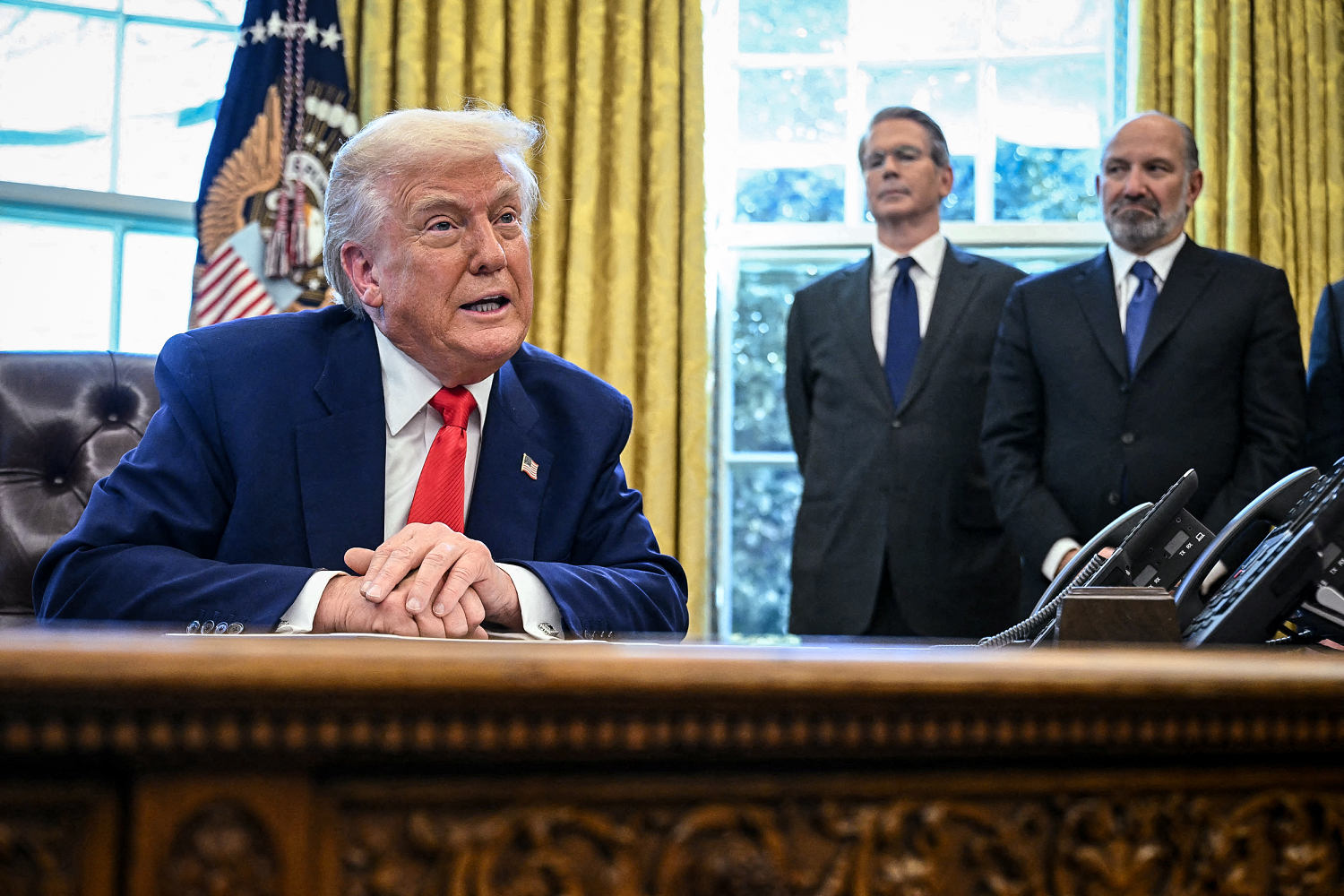
Washington, (Reuters) – The latest price delay by American President Donald Trump gave some hope to the main trade partners in Japan, South Korea and the European Union who take care of facilitating tasks could still be reached, while confusing certain small exporters such as South Africa and leaving companies without clarity on the track.
Trump’s form letters to 14 countries informing them of the priced rates of 25% to 40% provided what he called a final warning on his “reciprocal” prices, while postponing the previous deadline on Wednesday August 1, a date on which he declared on Tuesday was final, “no extension will be granted.”
This decision reflects Trump’s frustration with regard to commercial negotiations which are longer and more complicated than the “90 transactions in 90 days” which he expected, according to commercial experts and administration officials.
The president, who announced on Tuesday a 50% rate on imported copper and said that long-term samples from semiconductors and pharmaceutical products came soon, said that he has long favored simple prices compared to tedious commercial negotiations which often involve red lines for certain countries and their own requests for American concessions.
Japanese Prime Minister Shigeru Ishiba focused on the positive, saying that his government would continue with negotiations to an agreement that “benefits the two countries, while protecting the national interest of Japan”.
Faced with a general price of the United States of 25%, Japan wants relief for its automotive industry dependent on exports from distinct car rates of Trump at 25%. He also resisted increased purchasing requests for American rice.
Japan, formerly considered a first favorite for an agreement, faces an election in the upper Chamber on July 20 and too many concessions could endanger the Liberal Democratic Party of Ishiba.
“These countries do not comply. They do not give him what he wants, so he added another threat,” said William Reinsch, a former head of the US trade department who is a main sales advisor at the Center for Strategic and International Studies. “He put a new number there and extended the deadline.”
South Korea, where President Lee Jae Myung has been in office for less than a month, has also been committed to intensifying talks for “a mutually beneficial result” while analysts have warned that it would not be “a pushover” for Trump or put in South Korea in a disadvantage for Japan.
Stephen Miran, president of the Blank House economic advisers, said Fox News was possible on Tuesday before the end of this week as long as the countries made concessions deemed worthy by Trump.
India, in particular, looked closely at an agreement, but the prospects were less clear for small countries such as South Africa, Thailand and Malaysia, which are respectively confronted at prices of 30%, 36%and 25%.
South African President Cyril Ramaphosa pushed the rate rate of 30% of Trump, calling it synchronized with a South African rate rate on average of 7.6%. But he asked his negotiators to “get involved” with the Trump team on a executive submitted for the first time by the South African team on May 20.
The Trump administration’s negotiation time can be consumed with larger partners, such as the EU, which has not obtained a warning letter or a modification of its price of 20% prescribed, double the base line of 10%.
Familiar sources with EU talks told Reuters that an agreement could involve sculptures for planes and parts, medical equipment and alcoholic spirits. They say that the EU also wants certain car manufacturers to export to the United States at rates lower than the 25%automotive rate.
Such an agreement would be similar to a framework agreement with the United Kingdom which had races for cars, steel and airplane engines.
Final compression
After announcing his global prices of “release day” from 11% to 50% in early April, Trump quickly made them at 10% for most countries in the midst of bond market disorders to buy time for negotiations to reduce foreign prices and commercial barriers.
Ryan Majerus, another former US trade official, said the three -month break break had not produced the desired results, and now the president was looking to maximize his negotiation lever effect.
“They will test the pressure and see how far they can go, especially for the countries where there has been no movement in the talks,” said Majerus, partner of the Kington’s King and Spalding Away Firm.
The more stable markets and the solid economic data give Trump a certain place to maneuver, but the weather is short and “the more granules you get by negotiating these things, the more difficult toboggan,” he added.
The expansion of the deadline does not relieve companies that try to follow Trump’s prices. The leaders say that the quickly changing tariff landscape has paralyzed decision -making while trying to adjust their supply chains and their cost structures to avoid price increases induced by prices.
“No company can really prepare for it,” said Hubertus Breier, technology director for Lapp Holdings in Germany, a family manufacturer of cables, wires and robotics for factories. “We are already undergoing losses simply because of the uncertainty of the daily evolution of the situation.”
LAPP has difficult choices – absorb additional costs or transmit them to customers. However, assuming higher prices and costs, could threaten its long -term existence, added Breier.
Demejico, a family business in Valencia, California, with a factory in Mexico that builds traditional Spanish and Mexican furniture, has trouble adapting to 50% of Trump on imported steel. Robert Luna, the president of the company, said that the company imports heavy steel locks, depends on the parts separately to simplify the process for calculating prices and installing them in its exhibition hall in the Los Angeles region.
Higher American wage tariffs and costs are already inflating prices, and Demejico faces new cost increases on furniture if Trump strikes Mexico with a reciprocal rate, Luna said.
“It is difficult to do anything on this subject as the owner of a small business, so I just try to be stoic and see what is happening,” said Luna, adding: “My biggest concern is to keep the business alive.”
Luna said he thought the Trump administration “set up the foundation to train people to pay prices.”
(Reuters reporting by David Lawder and Andrea Shalal in Washington, Timothy Aeppel in New York and Max Schwarz and Tilman Blasshofer in Francfurt; additional report from Doina Chiacu to Washington; writing by David Lawder; edition by Paul Simao)


