Turkey’s intel chief lays out country’s vision for Middle East, world

In the Middle East, Turkey seeks to play a key role if and when the Iranian conflict ends. Ankara will seek to increase its influence as Iran’s declines.
Turkey is positioning itself to play a key role when the Iranian conflict ends. The conflict has led to chaos in the region, and it remains to be seen whether the United States and Israel will be able to develop a strategy for dealing with Iran or what comes next.
Turkey is also considering its next steps. Not getting involved in the conflict allows Ankara to work with both sides.
Turkey is a NATO ally and has also maintained friendly relations with Iran in the past.
It also plays a key role in Syria and northern Iraq. Turkey’s National Intelligence Organization (MIT) Director İbrahim Kalin delivered important remarks at the Stratcom Summit this week.
Some were cut for videos that appeared online. Kalin has been a key member of President Recep Tayyip Erdogan’s team over the years. The Stratcom Summit focused on “The Disruption of the International System: Crises, Narratives, and the Search for Order.”

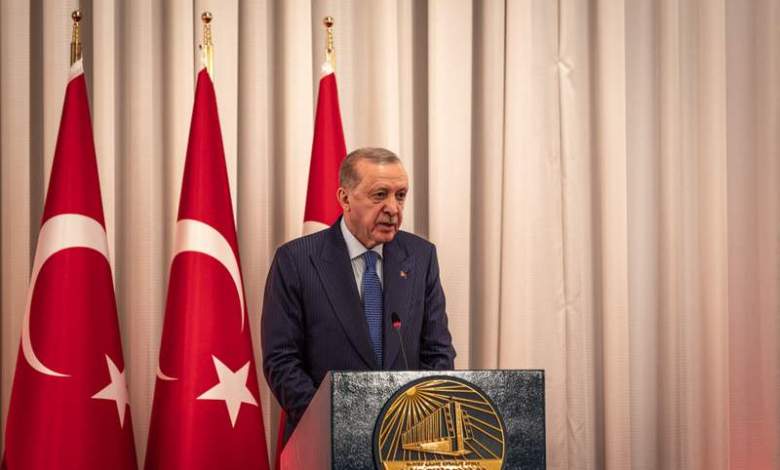
Turkish President Recep Tayyip Erdogan watches as Greek Prime Minister Kyriakos Mitsotakis (not pictured) speaks to the media during a joint press conference at the presidential complex in Ankara, February 11, 2026. (credit: Adem ALTAN/AFP via Getty Images)
This can be seen through the prism of the Iranian and other conflicts.
Kalin noted that since the pandemic, the world has gone through multiple critical thresholds, crises and ruptures, according to a Turkish reading of his speech.
The war between Russia and Ukraine is one aspect of the crisis. The conflicts in Gaza and Iran are others.
“The 12-day Israel-Iran war that took place in June last year had a character that both tested and revealed the real conditions of the conflict we currently face,” he said, adding that Ankara had tried to prevent the outbreak of the current war in Iran.
“At every opportunity, we have emphasized that a global system based on unpredictability, fragility and the arbitrary use of power can only generate new crises and wars, and we have done everything possible to prevent such conflicts and destruction.
“Today, as we find ourselves in the midst of this war, we have made intensive efforts over the past month, both to end it and to ensure that Turkey stays out of this conflict. »
Turkey considers Israel guilty of regional war
Turkey wants to prevent the Iranian conflict from spreading. Ankara considers Israel one of the main culprits for the wars in the region. This includes the current war between Israel and Hezbollah in Lebanon, in which more than a million people have been displaced.
Ankara has positioned itself over the years as one of the main critics of Israeli policy. He supported Gaza and hosted Hamas. In 2010, this also allowed a flotilla, led by the Mavi Marmara, to sail to Gaza.
This led to an Israeli raid on the ship in which 10 Turkish citizens were killed. Relations between Turkey and Israel have fallen into a downward spiral since this incident and the 2009 Gaza war. There was a brief warming of relations in 2022, but this quickly faded with the recent war in Gaza.
Ankara’s foreign policy has changed over the past two years. It has moved from a more aggressive stance in the region, including frequent controversies with Greece and Egypt, as well as public battles with Saudi Arabia and the United Arab Emirates, to reconciliation.
Today, Turkey has excellent relations with Saudi Arabia and has also arranged relations with Egypt. It also works with Pakistan and other Muslim countries.
Thus, Turkey returned to the roots of the AKP’s “zero problems” party, which dominated foreign policy from 2003 to 2014. The Syrian civil war, the rise of ISIS and fighting with the PKK, as well as an attempted coup in Turkey, led to a radicalization of foreign policy.
Kalin described the war in Iran as an example of “fitna” or regional discord.
This reference will be considered important among Muslims. Ankara says the war in Iran is an attempt to divide Islamic countries and the Islamic community, or umma.
It is worth noting that Kalin speaks in Islamic terms to an audience who understands his references. It is not aimed at a Western audience. This is important because the translation of his speech can seem more banal when he speaks of “discord”.
He said: “I must also point out that a great fire of discord [fitna] is igniting in our region,” adding that the war “lays the foundations for fratricidal conflict – a prolonged cycle of hostility between the region’s founding peoples, namely the Turks, Kurds, Arabs and Persians, that could last for decades.
“As Türkiye, I would like to emphasize that we will remain on alert and resolutely oppose such attempts.”
Ankara claims, or at least insinuates, that Israel’s decision to go to war with Iran and the United States’ decision to join the conflict could lead to further civil strife in the region.
This comes at a time when the region was moving toward stability following the war against ISIS, which ended in 2019, and the tragic war between Israel and Hamas, which began with the Hamas attack in 2023 but led to a ceasefire in 2025.
The ceasefire was followed by an immediate campaign of war with Iran. Turkey considers this extremely damaging for the Middle East.
“However, we are fully aware that those who launched this war do not intend to limit it to Iran alone. Through faits accomplis in Lebanon, Syria, the Palestinian territories and elsewhere, they seek to create new realities on the ground and pursue policies of destruction, annexation and occupation,” Kalin said.
He also referred to changes on the Syria-Israel border, during which Israel took advantage of the fall of the Assad regime to seize the summit of Mount Hermon, as well as some areas along the buffer zone of the 1974 ceasefire lines.
Israel claims it is simply a defensive measure aimed at preempting threats. Ankara sees this as a sort of expansionist policy linked to the fact that Israel also seeks to seize part of southern Lebanon and half of Gaza as a buffer.
Ankara’s complaints in this regard may be ironic. Turkey itself has staked huge claims on its Mediterranean “blue homeland,” where it seeks to assert control over part of the eastern Mediterranean through a deal it signed with Libya.
Ankara has sent troops to Syria since 2016 and also has troops in the Kurdistan region of northern Iraq.
Turkey claims to be fighting terrorism. Israel claims to be fighting terrorism.
The Turkish government has become more religious and right-wing, as has Israel’s. In many ways, countries share policies. Kalin’s argument is that today Ankara seeks to be a peaceful manager of the region, and Israel is like a proverbial bull in a china shop.
“In all our engagements and consultations with our friends and sister countries in the Gulf, we emphasize the need to pursue an approach rooted in the region’s own dynamics in order to end this war as quickly as possible,” Kalin said.
“While Iran’s attacks on Gulf countries are undoubtedly unacceptable, we must never lose sight of who started this war.
“Therefore, pressure must be increased on Israel and efforts must be focused on the actor who started the war in order to prevent it from escalating into a broader regional conflict and global crisis,” he continued.
Turkey seeks to “manage” what happens next by coordinating with countries in the region. “In light of these lessons, we are strengthening our country’s security architecture and improving our resilience. »
Like Israel, Turkey has a strong defense industrial complex. It wants to position itself as a leader in an increasingly multipolar world. Kalin’s speech is part of this dynamic in favor of a new world order.
Of particular interest, the statement regarding his speech states that “Kalin stated that, since the 1970s, postmodernist thinkers have argued that the era of grand narratives – such as reason, science, Enlightenment, progress, religion and society – has ended, suggesting instead that the course of humanity would continue through more microscopic relationships and stories centered on identity, gender, ethnicity and social class. »
This shows that Ankara’s views are not only about the region but also about broader global trends.
“None of these have made the world more rational, freer, or more just. Rather, we have entered a darker period in which irrational, darker, anti-freedom forces have emerged – almost confirming Freud’s projections of the subconscious. We have reached a point where some now call it a ‘dark enlightenment’.”
Kalin went on to say, referring to our digital age, that “merely producing information is not enough for humanity to achieve its goals. Knowledge alone is not enough; knowing is not enough – we must also possess wisdom.”
Turkey, he said, “in the face of the anti-realist tendencies of postmodernism that deny truth and reality, and against today’s post-truth inclinations, will continue to defend the truth.
“Against irrationalism, we will defend a reason based on solid foundations; against attempts to enslave reason, we will defend freedom; against mechanization, we will defend the human being; and against the darkness of Enlightenment, we will advocate a deeper illumination.
“We will insist that these are not relative, arbitrary, contextual, class or political constructions, but absolute, binding and universal values. »
This quest for truth generally reflects a conservative normative mentality in the West. Turkey thus positions itself as a conservative state in the world order.
In the Middle East, it seeks to play a key role if and when the Iranian conflict ends. It is likely that the Iranian conflict will lead to new years of crises. Ankara will seek to increase its influence as Iran’s declines.

:max_bytes(150000):strip_icc()/Health-GettyImages-1589040464-fef5896febed4fcda49cdea9757df1e5.jpg?w=390&resize=390,220&ssl=1 "7 Health Trends We Are Absolutely Loving Right Now")


