Ancient Roman Roads Mapped in Detail from Great Britain to North Africa


November 6, 2025
2 min reading
A new map just added 60,000 miles to the roads of ancient Rome
New discoveries increase the known length of the Roman Empire’s road network by more than 60,000 miles

The central street of the ancient Roman city of Scythopolis, in what is now Israel.
A new high-resolution map of the roads that ran through the Roman Empire traces the ancient network from Britain to North Africa and has added more than 60,000 miles of routes that had never been recorded before. “For the first time we have a good Empire-wide overview of almost the entire Roman road network with main and secondary roads,” says archaeologist Adam Pañón of the Autonomous University of Barcelona, co-lead author of a new study describing the research published Thursday in Scientific data.
The new map – an online database called Itiner-e – was compiled from several sources, including previous databases, satellite photographs and archaeological reports. It reveals the true extent of the crucial road network as it was in 150 CE, a time of prosperity in the Roman Empire, including highways between colonies, military roads for Roman soldiers, and local roads that had been overlooked in earlier research. The map will help scientists better understand issues such as mobility, trade and the spread of disease, the study authors say.
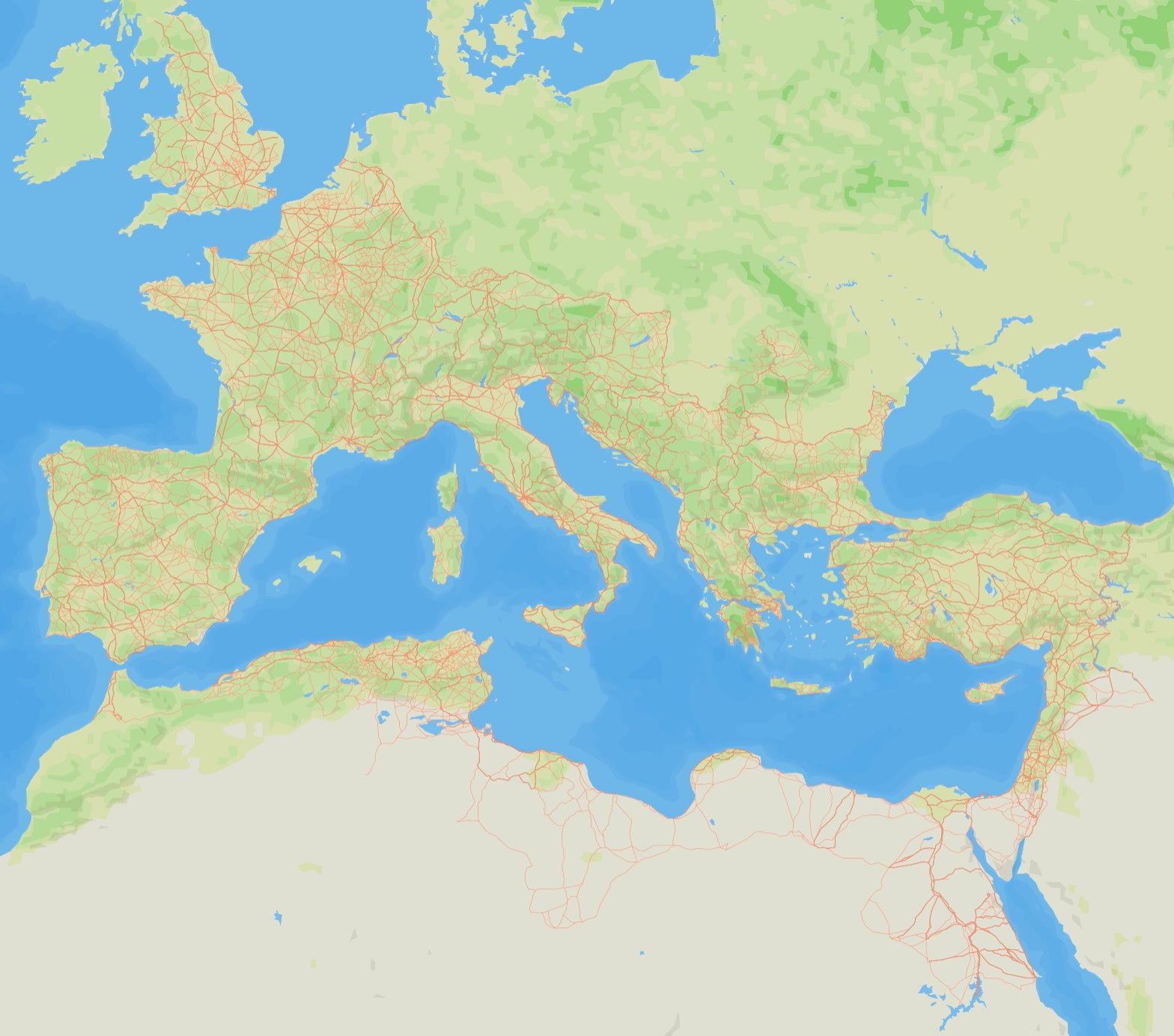
The map of the ancient Roman road network created by Itiner-e.
On supporting science journalism
If you enjoy this article, please consider supporting our award-winning journalism by subscription. By purchasing a subscription, you are helping to ensure the future of impactful stories about the discoveries and ideas shaping our world today.
Many Roman roads are now modern roads between cities, such as the section of the United Kingdom’s A5 motorway between London and Wroxeter, England, near the Welsh border, which was built along the route of a major Roman road that was later called Watling Street. But others were only local. “Roads are found everywhere the Romans walked,” says archaeologist and co-lead author Tom Brughmans of Aarhus University in Denmark. “There were villas, towns and farms all over the Roman Empire, and each of them was accessible by a road. »
The largest Roman roads, such as the Appian Way, which led south from Rome, were well constructed with layers of sand, gravel, and stone. Italy, and then territories further from Rome, were transformed by a network of roads connecting colonies and allowing Roman armies to move where they were needed, says historian Ray Laurence of Macquarie University in Australia, who was not involved in the study. “Fundamentally, the road system contributed to the development of a Roman empire,” he says.
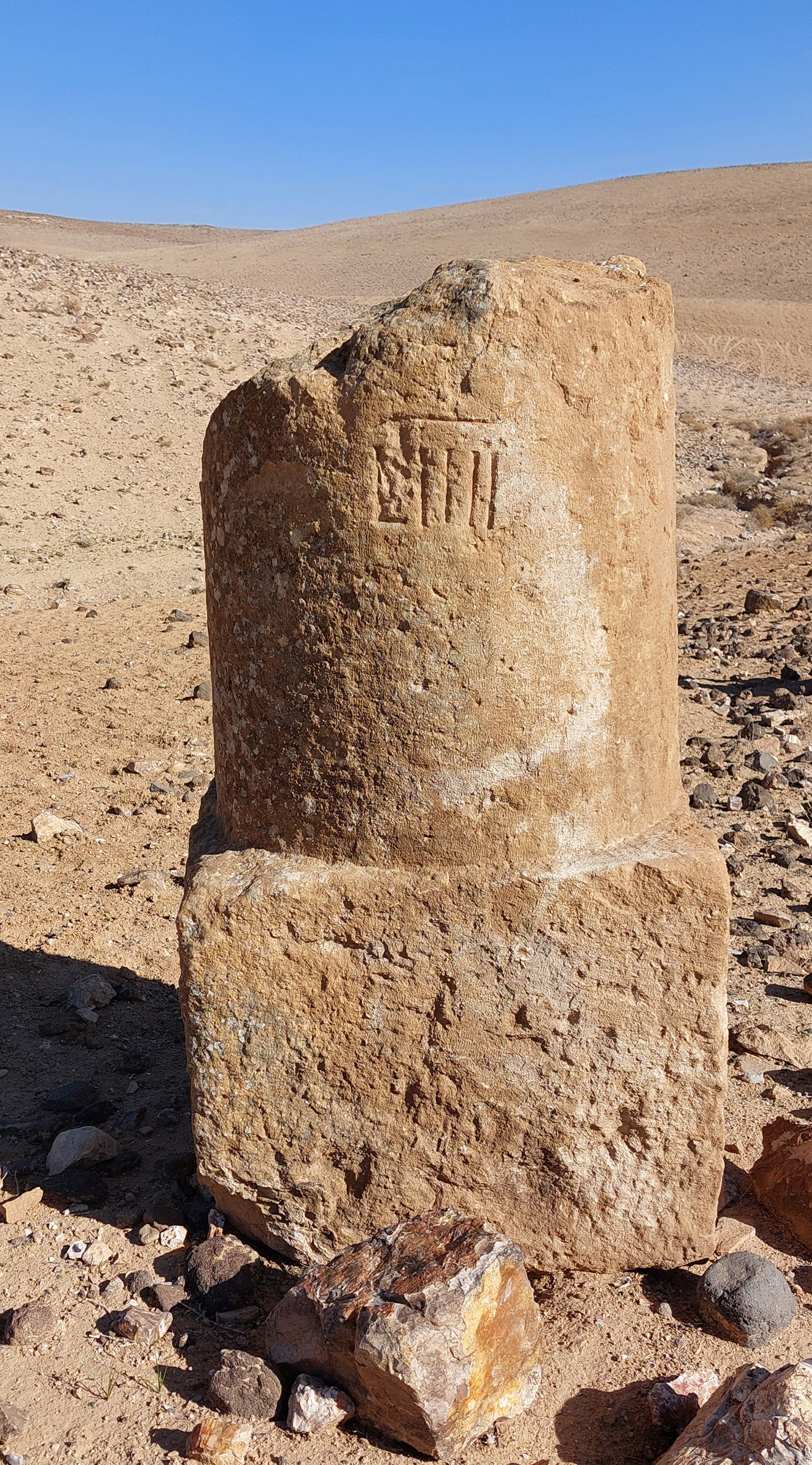
The fragment of an ancient Roman milestone erected along the Via Nova road in modern-day Jordan.
Adam Pažout, Itiner-e
The Itiner-e dataset details more than 185,000 miles of Roman roads, nearly double the length reported by previous studies. But Brughmans cautions that only a few percent of this length is known with certainty, while nearly 90 percent is “guesswork” based on hard evidence. For example, in what is now Israel, a road connecting the coast to a military camp appears in Roman records. And about 7 percent of the more than 185,000 miles of roads are “hypothetical,” that is, they represent places where roads are believed to have existed but where there is no solid evidence of their exact location. “Through our work, we know that the precise location of Roman roads requires more research attention,” says Brughmans. “It’s a ‘call to action’ that gives us an accurate confidence map of what we don’t know and where to look next.”
It’s time to defend science
If you enjoyed this article, I would like to ask for your support. Scientific American has been defending science and industry for 180 years, and we are currently experiencing perhaps the most critical moment in these two centuries of history.
I was a Scientific American subscriber since the age of 12, and it helped shape the way I see the world. SciAm always educates and delights me, and inspires a sense of respect for our vast and magnificent universe. I hope this is the case for you too.
If you subscribe to Scientific Americanyou help ensure our coverage centers on meaningful research and discoveries; that we have the resources to account for decisions that threaten laboratories across the United States; and that we support budding and working scientists at a time when the value of science itself too often goes unrecognized.
In exchange, you receive essential information, captivating podcasts, brilliant infographics, newsletters not to be missed, unmissable videos, stimulating games and the best writings and reports from the scientific world. You can even offer a subscription to someone.
There has never been a more important time for us to stand up and show why science matters. I hope you will support us in this mission.


