UN climate summit drops mention of fossil fuels from draft deal


Georgina RannardClimate and science correspondent, in Belém, Brazil

 Getty Images
Any mention of fossil fuels, by far the biggest contributor to climate change, has been removed from the draft deal being negotiated as the UN’s COP30 climate negotiations in Belém, Brazil, enter their home stretch.
Draft agreements at the meeting of nearly 200 countries typically undergo multiple revisions, as all parties must agree for a deal to be adopted.
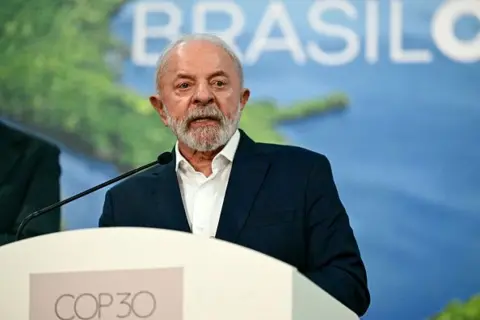
Brazilian President Luiz Inácio Lula da Silva and some countries, including the United Kingdom, want the summit to commit countries to take stronger and faster action to reduce their use of fossil fuels.
An earlier text included three possible paths to achieve this, but this wording was abandoned following opposition from oil-producing countries.
A group of countries, including the United Kingdom, issued a letter rejecting the new draft agreement.
“We express our deep concern about the take-it-or-leave-it proposal currently under consideration,” he said.
“We cannot support an outcome that does not include a roadmap to implement a just, orderly and equitable transition away from fossil fuels.”
A source close to the negotiations said Saudi Arabia and other Arab countries are blocking the fossil fuel deal. The BBC has contacted Saudi Arabia for comment.
French Environment Minister Monique Barbut said the deal was blocked by “oil-producing countries – Russia, India, Saudi Arabia, but joined by many emerging countries.”
She suggested that small island countries could accept a looser deal on fossil fuels if they got more funding to adapt to changes in their countries caused by rising temperatures.
Regarding France’s position, she said: “At this stage, even if we don’t have a road map, but at least a mention of fossil fuels, I think we would accept it. But in the current state of things, we have nothing left.”
Dropping the language will likely be a negotiating tactic aimed at raising the temperature in negotiations and forcing countries to reach an agreement.
The meeting is a difficult and delicate diplomatic process as countries scramble to protect their national interests, while trying to resolve the issue of climate change.
Some observers question the value of the complex, legalistic talks that almost always boil over.
But others point to the significant progress made in recent years in measures to combat climate change, including renewable energy, electric vehicles and nature protection, linked to the COP agreements.
Other issues discussed at the COP include the gap in climate finance promised by wealthier countries to developing countries most affected by climate change.
The new draft agreement calls for global efforts to triple the funding available to countries by 2030.
But he did not specify whether these funds should come from richer countries or other sources, such as the private sector.
That could anger poorer countries who want stronger support from richer countries and who sharply criticized the deal reached at last year’s COP29 in Baku, Azerbaijan, as paltry.
 getty
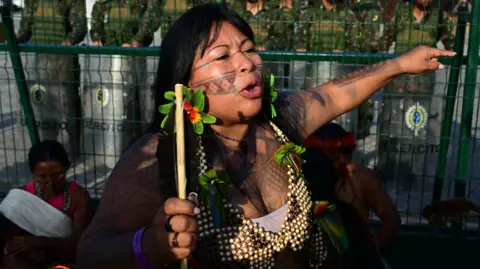
gettyDeforestation was a sensitive topic at the meeting, which is taking place in the far reaches of the Brazilian Amazon.
The new draft also weakened language regarding combating deforestation.
“For a COP held in the Amazon, it is upsetting that deforestation takes a back seat,” said Kelly Dent, director of external engagement for Global Animal Protection.
“The wildlife and indigenous people who live in the forest deserve better than this.”
The two-week meeting was interrupted by two evacuations.
Last week, a group of protesters broke into the COP venue in Belém holding signs reading “Our forests are not for sale.”
On Thursday, a fire broke out, burning a hole in the tarpaulins covering the room and causing 13 injuries from smoke inhalation. The summit was evacuated and closed for at least six hours.
The summit was hailed for bringing together the largest number of delegates from indigenous groups to date.