UN talks with rival leaders of Cyprus fail to reach deal on new border crossings

United Nations (AP) – The United Nations said on Thursday that he would have liked more results of his meetings with the rival chiefs of divided Cyprus, while the Turkish Cypriot chief said that he was “very, very upset” that there was no agreement on the opening of four new border crossings.
Secretary General Antonio Guterres qualified “constructive” meetings and underlined the progress of four of the six initiatives that leaders agreed in March. However, he warned that “there is a long road to come”.
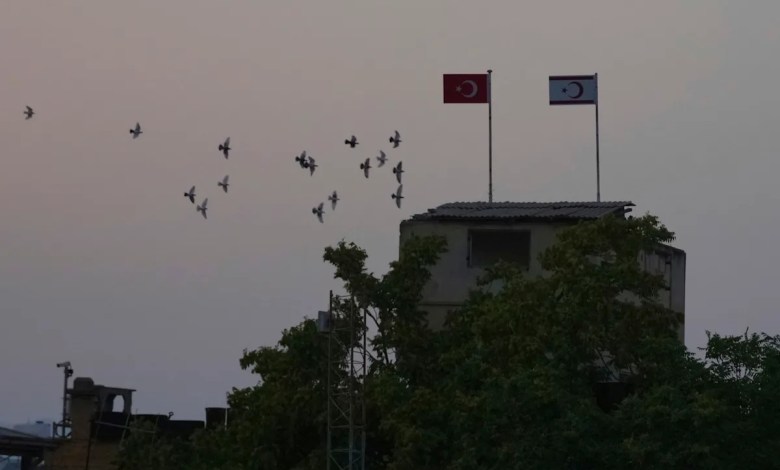
The Mediterranean Island was divided in 1974 when Turkey invaded after a coup d’etat by supporters supported by Athens Junta to unite the island with Greece. Only Turkey recognizes a declaration of Turkish Cypriot independence, and it maintains more than 35,000 soldiers in the third north of the island.
The negotiations between the rivals have been blocked since 2017. When he was asked if he entered a new round, Guterres replied that there was no more to do before any negotiation. Current talks are “complex,” he said, highlighting the very different opinions of Greek Cypriots and Turkish Cypriots on a solution.
“I think we are building, step by step, confidence and create the conditions for doing concrete things for the benefit of the Cypriot people,” said the secretary general.
The agreed and not endorsed framework for a peace agreement has been a reunited Cyprus as a federation made up of Cypriot and Turkish Cypriot Cypriot areas.
Turkish Cypriot chef, Ersin Tatar, has required two-state agreement since his election in 2020. He faces a re-election in October and says that he runs on the same two-state platform with the full support of Ankara.
Tatar told journalists after the meeting that “unless our sovereign equality and our equal international status are reaffirmed, we will not resume official negotiations for the resolution of the Cyprus problem.”
Greek Cypriots reject any agreement that would formalize the partition, fearing that Turkey seeks to control the whole island in the light of its request to maintain a presence of permanent troops and military intervention rights in Cyprus. Turkey also insists that minority Turkish Cypriots should have veto rights on all decisions of the federal government.
The Cypriot President Greek Nikos Christdoulides did not speak to journalists after the meeting, which included the foreign ministers of the guaranteed countries of Turkey and Greece and an assistant minister of the United Kingdom.
Despite the differences in the future of Cyprus, the rivals have made progress on measures to strengthen confidence.
Guterres told journalists that four initiatives had been carried out: the creation of a technical committee on young people; Environmental and climate change initiatives, including the impact on mining areas; restoration of cemeteries; And an agreement on demining, where technical details must still be finalized.
He said discussions would continue to open four new crossings between the Greek and Turkish sides of the island and on solar energy in the buffer area between them, which is patrolled by a United Nations peacekeeping force.
Tatar accused Christdoulides of having prevented the announcement of the four border passages on Thursday by insisting that one of them goes through the buffer zone, which he called unacceptable for Turkish Cypriots.
He also brutally criticized the Greek Cypriots for continuing a legal action for the sale of properties in the North Cypriot Turkish, affirming that the movements “are certainly harmful to the relations of the two peoples and aim to harm our economy and our tourism”.
Property rights are a deeply controversial issue in Cyprus. A recent boom in the construction of luxury villas and apartments in the North prompted the Cypriot judicial authorities to adopt a more assertive position towards real estate agents and developers to discourage what they say is “illegal usurpation” on a large scale of Greek Cypriot.
Guterres said that Reunion has also produced an understanding of an advisory body for civil society engagement, the exchange of cultural artefacts, an initiative on air quality monitoring and the fight against microplastic pollution.
The Secretary -General said that Tatar and Christdoulides agreed to meet him at the end of September at the annual rally of world leaders at the General Assembly and to hold another informal meeting later in the year.


