Unsuspecting sea creature has Earth’s hardest teeth


The humble molluscs on the planet have teeth that means business. Researchers are now studying how one of the hardest and strongest biological materials on the earth has become so difficult and looks at a tiny marine molluscic called chitons. Their chompres are harder and more rigid than human dental enamel and stainless steel, but also resistant to wear and magnetic.
“The Chiton pushes new teeth every few days superior to the materials used in industrial cutting tools, the grinding media, dental implants, surgical implants and protective coatings, but they are made at room temperature and with precision on a nanometric scale,” said David Kisailus, professor of science of materials and engineering of the University of California, in a press release. “We can learn a lot from these biological conceptions and processes.”
Kisailus is co-author of a study recently published in the journal Science. Using a large species of chiton that is mainly found in the Pacific inter -drug areas near the UC Irvine campus. Mollusck teeth are mainly made of magnetite nanorodes (a magnetic mineral and an iron oxide type) and an organic matter found on the northwest coast of the United States and off the coast of Hokkaido, Japan. Kisailus and his colleagues specifically studied how RTMP1 – Iron and Chiton binding proteins – put themselves in their teeth in formation.
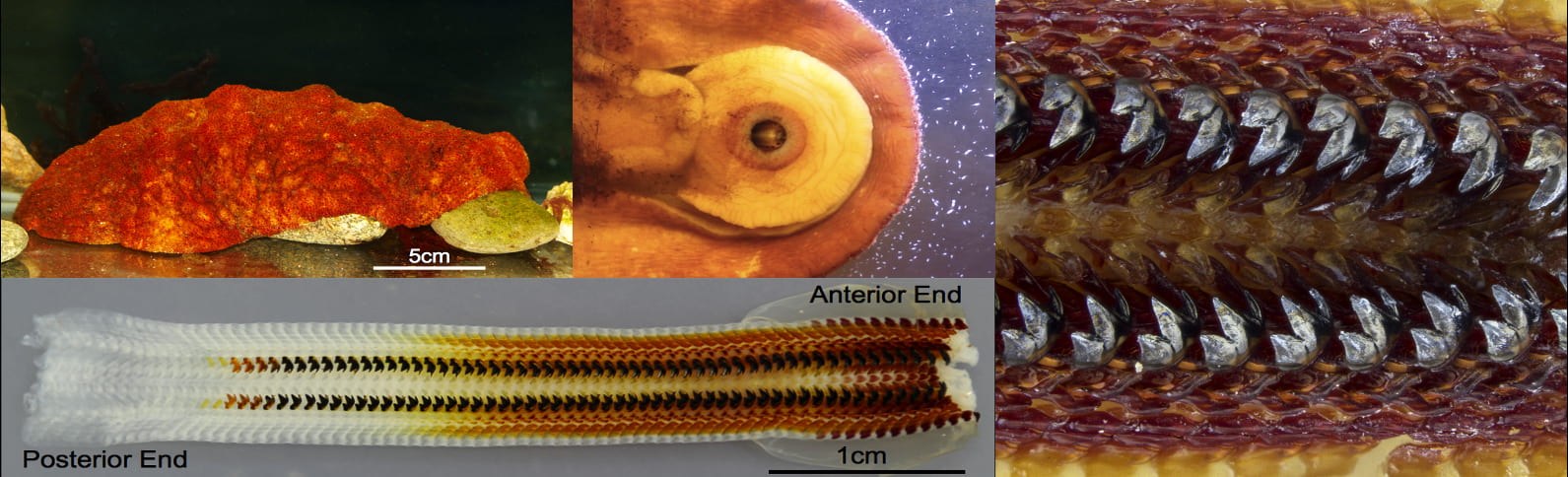
The team revealed that iron binding proteins in the teeth use small nanoscopic tubules called microvillis to move tissues around immature and non -mineralized teeth in more mature and mineralized teeth. Once inside, proteins bind to chitine nanofiber scaffolding, the large molecules that dictate how the nanorods that make up the teeth are built. At the same time, iron of the surrounding fabric also enters the teeth, where it is attached to the RTMP1 protein. This allows iron oxide that forms nanorods of magnetite to accumulate and finally develop in the hard teeth signature of the Chiton.
[ Related: This ‘wandering meatloaf’ has teeth made from rare minerals. ]
According to the team, the chitons in different regions of the world have RTMP1 proteins, indicating that “a convergent biological design in the control of the iron oxide deposit”, explained Kisailus. In the end, the team’s survey on Chiton teeth formation has important implications for the production of other advanced materials.
“The fact that these organisms form new sets of teeth every few days allow us not only to study the mechanisms of the formation of precise nanometric minerals in the teeth, but also presents new opportunities towards the spatial and temporal synthesis of other materials for a wide range of applications, such as batteries, catalysts of fuel piles and semiconductors,” he added. “This includes new approaches to additive manufacturing – 3D printing and synthetic methods which are much more respectful of the environment and sustainable.”

More offers, reviews and purchasing guides


