‘Being prescribed time at the coast helped me back into work’



 BBC
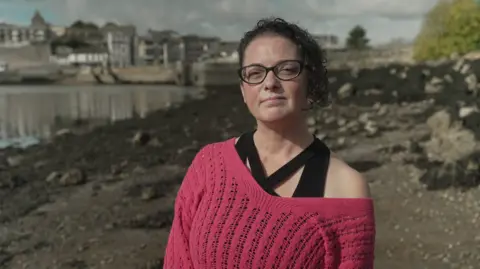
BBCKelly Pardy was born with juvenile macular degeneration, a visual impairment that affects her central vision.
The consequences of this illness became particularly difficult when she found herself unemployed for a period of time.
However, a referral to a “blue” social prescribing scheme in 2023 run by the Ocean Conservation Trust has helped it get through this difficult period.
The eight-week nature prescription included snorkelling, rock swimming and time spent at the National Marine Aquarium in Plymouth.
She said: “I ended up getting quite depressed because of the difficulties I was having and then I didn’t work for a little while; but I’m delighted to say I’m working again.
“It gives you a moment where your brain can calm down and then you can just relax, and then it almost clears your mind – kind of like exercise, releasing the endorphins.”
Kelly later volunteered for the Ocean Conservation Trust and credited the whole experience with helping her return to her profession as a chef with a new employer.
In the NHS, these programs are officially known as “green social prescribing”.
GPs and healthcare professionals refer patients to organizations that offer nature-based activities such as hiking, bird watching, swimming or gardening.
An uncertain future
It is meant to complement other, more common treatments and therapies and is a key part of the government’s 10-year plan for the NHS in England.
But the future of green social prescribing is uncertain.
Although a four-year national pilot project that ended in March was judged a success by an independent evaluation of its first two years, there are concerns that responsibility for funding such programs will be left to charities.
Organizations including the Ocean Conservation Trust are calling on the government to commit more funding and roll it out beyond their initial seven trial areas.
The charity has spent £25,000 over the past three years on its ‘blue mind’ social prescribing program in the South West of England.
The service has already helped 45 people locally.
Freyja Thomson-Alberts, engagement manager for the Ocean Conservation Trust, said: “We know it works. This complements services and can provide prevention benefits. »
The national pilot saw almost 8,500 people take up nature activities in its first two years, with more than half living in socio-economically deprived areas.
Professor Chris Dayson, of Sheffield Hallam University, who was part of the team that evaluated the program, said it brought “a really statistically significant increase in well-being” for patients.
The evaluation also found that the program delivered an economic and social return – including putting people back into work – of £2.42 for every £1 invested.
The government made no comment on the future of the green social requirements, but said the evaluation of the second two years of the trial program would be published “in due course”.
Kelly acknowledged that these programs may not work for everyone, but said that, for her, the benefits were significant.
“It’s something that is surprisingly useful and, unless you try it, you wouldn’t know it,” she said.


