As NASA eyes lunar base, there’s still much to learn about landing on the Moon


“What we’re seeing in CLPS 1.0 is this potential for multi-mission block purchases,” Seyffert said. “So we’re excited to see that in CLPS 2.0.”
Blue Origin is a player in the CLPS and Human Landing System programs, with a Pathfinder cargo lander named Endurance is expected to fly to the Moon later this year. This will help pave the way for a crewed lander to be used by NASA on future Artemis missions.
“The development (of the cargo lander) is complete,” Seyffert said. “We have great test data. We’re going to fly it later this year, and then we’re going to build and print dozens of landers to help NASA achieve its goals.”
Astrobotic, which failed on its first mission to the Moon and is currently making a larger lander for its second attempt, also supports the idea of bulk purchases.
“I’m really excited to now be able to take a finished product and be able to use it over and over again,” said Dan Hendrickson, vice president of business development at Astrobotic. “I think one of the challenges we’ve faced is the bespoke nature, sometimes, from mission to mission. If we can try to sustain some of these types of vehicles over and over again, I think we’ll reap the rewards of all the blood, sweat and tears that have been invested in getting our supply chain to be able to operate and overcome some pretty significant technical challenges.”
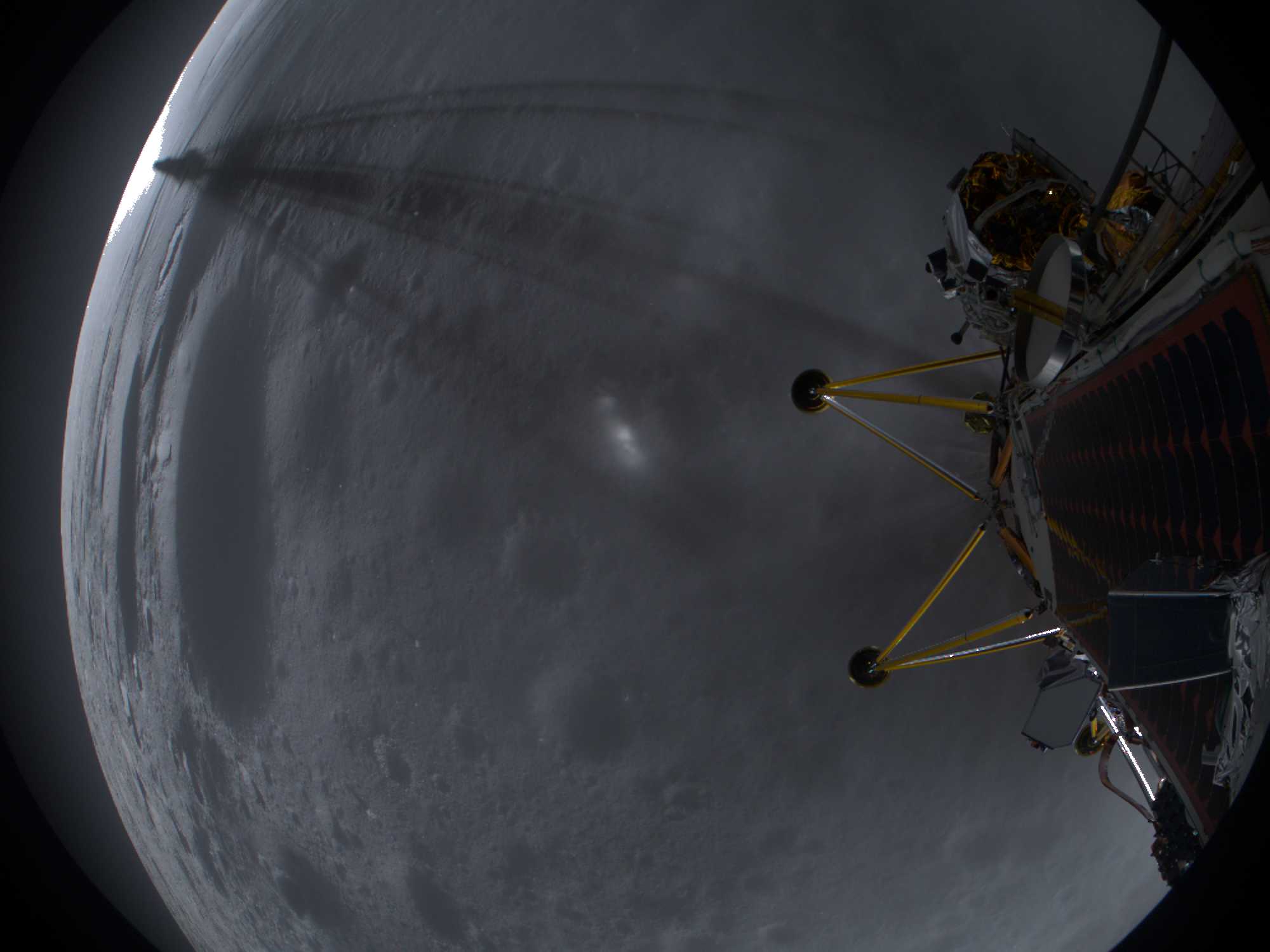
Intuitive Machines’ Athena lander descends toward the lunar surface on March 6, 2025. The spacecraft overturned upon landing.
Intuitive Machines’ Athena lander descends toward the lunar surface on March 6, 2025. The spacecraft overturned upon landing.
Like Astrobotic, Intuitive Machines is planning a heavier lander after flying a smaller vehicle on its first missions to the Moon. Its next mission, IM-3, is expected to launch late this year in tandem with the first node of a constellation of lunar data relay satellites. Intuitive Machines aims to bounce back from its first two CLPS missions, in which the company’s landers rolled over after landing.
“I think what you’ll see is the lander design slightly modified to essentially look like a Model T Ford,” said Ben Bussey, chief scientist at Intuitive Machines.
Firefly Aerospace successfully completed its first attempt to land on the Moon last year. Its Blue Ghost lander returned scientific data from the lunar surface for 14 days before succumbing to the dark lunar night. Firefly’s second Blue Ghost lander is expected to launch later this year, using the same basic design as the first, but accompanied by a pair of data relay satellites to enable a landing on the far side of the Moon.
Firefly is expanding capacity at its Texas factory to produce more landers and transfer vehicles. The first trip to the Moon with the Blue Ghost lander was launched in January 2025, less than four years after NASA awarded the contract to Firefly, a “record schedule” for a commercial lunar mission, said Farah Zuberi, the company’s director of spacecraft mission management.
“The takeaway is that with this mission, NASA’s CLPS model did what it was supposed to do, which was provide reliable access to the Moon at a fraction of the cost and schedule,” Zuberi said.
Now it’s up to NASA’s other CLPS providers to show they can reach the Moon, and all—including Firefly…must prove they can do it repeatedly. NASA and its contractors must cut Firefly’s four-year timeline in half to a monthly cadence over the next two years.
NASA will take a more paternalistic approach with the next round of CLPS orders. “When you’re building, we need to hear the things that are slowing you down, and we’re going to try to help you with those things,” Carlos Garcia-Galan, NASA’s lunar base program manager, told CLPS company representatives at last week’s LSIC meeting.


