UV light can fight indoor allergens


Although ultraviolet (UV) light is harmful to human skin, it could be a new tool in the fight against airborne allergies. A study recently published in the journal ACS ES & T have found that UV light can disarm common interior allergens in just 30 minutes.
“We have found that we can use a passive and generally safe ultraviolet light treatment to quickly inactivate airborne allergens,” said a microbiologist at the University of Colorado Boulder in a statement. “We think this could be another tool to help people fight against allergens in their house, their schools or other places where allergens accumulate inside.”
Why allergens cannot die
A simple sniff of cats, molds, mites or trees is sufficient to trigger the symptoms of the inflated eyes to the skin that itchy and even to altered breathing. Inner allergens can persist for months, even if the original source has disappeared. Repeated exposure can cause or exacerbate the symptoms of asthma.
If a person allergic to cats enters a room and sneezes, it is not the cat itself to which they are allergic. Instead, these are probably small bits suspended in the air of a protein called Fel D1 which is produced in cat saliva. This protein spreads when it licks and it ends in microscopic flakes of dead skin floating in the air that we call sannes.
When humans inhale these particles of threads, our immune system creates antibodies that stick to the unique 3D structure of the protein. This then triggers an allergic reaction. According to the Cleveland Clinic, the immune system for allergic suffering creates a special antibody called immunoglobulin E (IGE) the first time they meet an allergen. Each of these antibodies is sensitive to a specific type of allergen. Some people may have several IgE antibodies that are sensitive to several types of allergens. If you are not allergic to cats, your immune system does not make any IgE when exposed to cat dashings.
Plants, mice, dogs and mites emit all their own unique proteins. Each with distinct structures. Although we can kill viruses and bacteria with cleaning agents and antibiotics, allergens cannot be killed simply because they have never been alive to start. They are only a by-product of many living beings.
“After these mites have disappeared for a long time, the allergen is still there,” said Eidem. “This is why, if you shake a carpet, you can have a reaction for years later.”
Washing the walls, vacuum cleaner, air filters and pets regularly can only go so far and are difficult to maintain in the long term. EIDEM and the co-authors of the study, the environmental engineer Mark Hernandez and the microbiologist Kristin Rugh, sought a easier way to get rid of allergens. Instead of eliminating proteins that cause allergens, the team has explored the change in the protein structure so that the immune system does not recognize the allergen. They compare this process to the deployment of an origami animal.
“If your immune system is used to a swan and you unfold the protein so that it no longer looks like a swan, you will not go up an allergic response,” said Eidem.
How UV light can eradicate allergens
UV light could be the answer. Previous studies have shown that UV light can kill airborne microorganisms, including the COVVI-19 virus (SARS-COV-2). UV light is also used to disinfect equipment in hospitals and airports. However, light is generally incredibly strong at a wavelength of 254 nanometers. At this level, users must wear protective equipment to avoid damaging the skin and eyes.
Instead, EIDEM used wavelength 222 nanometers. This less intense alternative of UV light is considered safer because it does not penetrate deep into the cells. However, it is not completely without risk. Certain risks include ozone pollution if it is not used in a well -ventilated space and used too frequently, so its use must be limited.
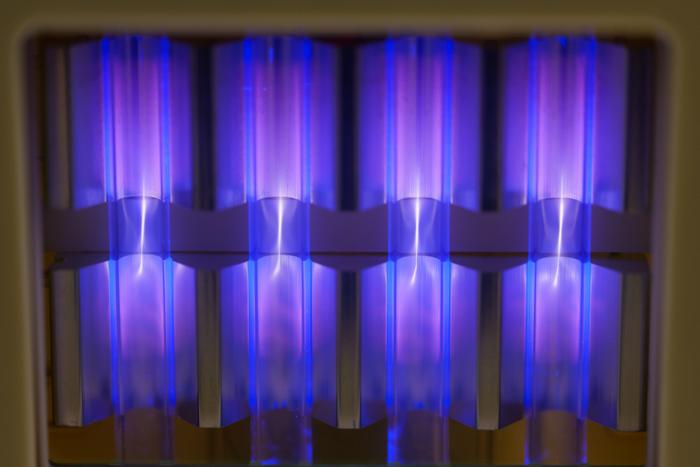
EIDEM and the team pumped microscopic aerosolized allergens for mites, animal scales, mold and pollen in an unoccupied and 350 -foot chamber in one of the campus laboratories. Then they lit four UV222 lamps on the size of a lunch box, placed on the ceiling and the floor of the bedroom.
They sampered the air at 10 -minute intervals and compared it to the untreated air filled with allergens and saw significant differences. In treated samples, antibodies no longer recognized many proteins, which means that the immune system has struggled to recognize them. After only 30 minutes, airborne allergens actually decreased by around 20 to 25% on average.
“These are fairly fast discounts when you compare them to months of cleaning, tear the carpet and bathe your cat,” said Eidem.
Help for millions of allergic people
Although UV222 lights are already available commercially for use, EIDEM envisages portable versions so that people can light up when they visit a friend with a pet or clean a dusty basement in the future.
In addition, UV222 systems could potentially protect workers who are frequently exposed to allergens, including those working around living animals. Since one in three adults and one in four children in the United States have allergies, Eidem hopes that future research could even save lives.
“Asthma attacks kill about 10 people a day in the United States, and they are often triggered by airborne allergies,” said EIDEM. “It is really important to try to develop new ways to prevent this exhibition.”
More offers, reviews and purchasing guides


