Vaccinations rise when states button up religious loopholes


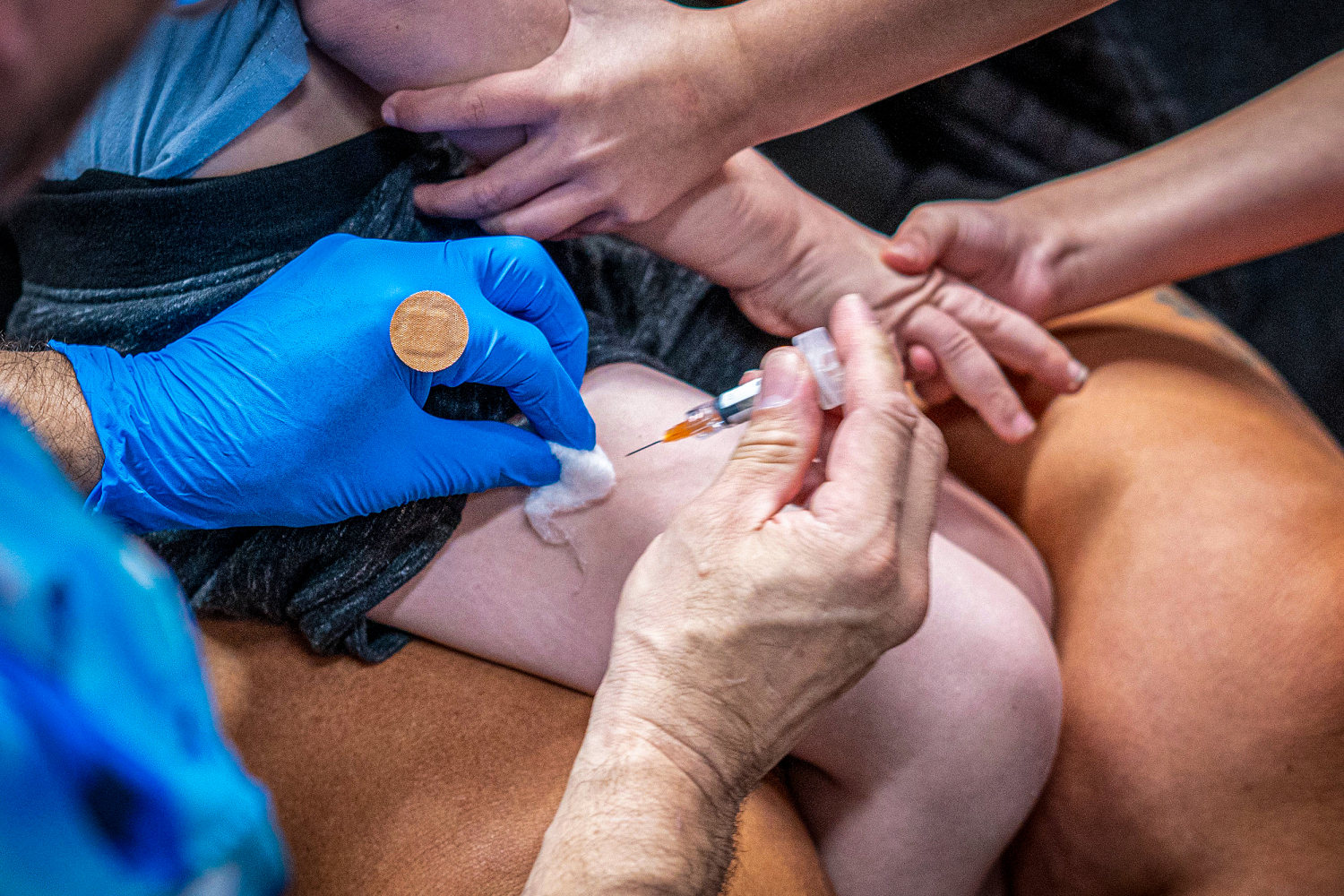
Unlike other children from Massachusetts, students living in a suburbs of Boston will not be able to return to school next month unless they have their chickenpox and measles, as well as other routine vaccinations on childhood.
“Any student who is not fully vaccinated without exemption will be excluded from school,” wrote the superintendent of Newton’s public schools, Anna Nolin, in a memo last month. The directive followed a chickenpox epidemic among students, as well as growing measles, said Nolin.
But not vaccinated students without medical reasons to give up gunshots can always get a pass to attend the class in the Massachusetts: a religious exemption.
According to state vaccination data, vaccination rates among children’s gardens in the Massachusetts fell – from 95.9% in 2020 to 94.3% in the past school year – because the proportion of students exposed to religious exemptions increased: 0.93% in 2020 to 1.33% currently.
Massachusetts schools have loosened the rules of vaccination requirements during the pandemic, allowing non -vaccinated students to attend courses without exemptions. In certain regions of the State, the proportion of students who are authorized to jump shots due to exemptions reach 12.8%, according to state data.
There are “a lot of concerns about what is happening with children and protect them from vaccine preventable diseases,” said Northe Saunders, Executive Director of the Safe Communities, an organization that supports pro-vaccination policies. “People are fed up.”
A bill making its way through the Massachusetts Statehouse offers the abolition of non -medical exemptions – including religious and philosophical beliefs – for vaccination requirements to attend public schools.
“The excessive use of the current escape from religious exemption in Massachusetts policy has led to kindergarten classes in our state with terribly low vaccination rates,” said Logan Beyer, a student of the Harvard Medical School, during a hearing on legislation last month.
Beyer, who studies the health of children and equity of children’s health, said that she had a conversation with a woman who said she would use the escape of religious exemption to delay the vaccination of her child. “” We are not really going to church, but you have nothing to prove, “said the woman, according to Beyer.
Massachusetts is not alone. Vaccination rates have been falling in the United States for years.
Reduction of vaccination exemptions increases rates
Over the past decade, California, Connecticut, Maine and New York have removed these exemptions in order to raise vaccination rates.
It seems to work. Maine, for example, had one of the highest vaccination unsubscription rates in 2017, at 5.3%. Two years later, in 2019, he adopted a law that eliminated religious and philosophical exemptions from vaccinations.
Since then, the MMR vaccination rate of Maine’s kindergarten has increased from less than 94% to almost 98%.
When California adopted a law in 2016 by eliminating personal beliefs and religious exemptions after an epidemic of measles that started in Disneyland, Ror coverage increased by 3% in 2019. It remained high, to 96.2%, according to California Department of Public Health.
Actions occur at a critical moment in the history of American vaccination. The country has been on the right track to have the largest measles epidemic in decades, with 1,267 cases already recorded this year.
While the majority of parents support vaccination, the secretary of health and social services, Robert F. Kennedy Jr.
Infantile immunization rates fell during the pandemic for several reasons. Children were less likely to obtain their annual wells during locking. And a disinformation about the couples coasted has rekindled fears concerning vaccines in general.
The percentage of students with religious exemptions in Hawaii doubled during this period, by 2% before the Pandemic at 4% last year, according to the State Health Department.
Hawaii legislators proposed a bill to end the exemptions according to religion, but he blocked after a massive public reaction.
Meanwhile, Kennedy has doubled the distrust of vaccines. In June, he suddenly dismissed all the members of the group of non-partisan experts from the federal government and not a supporter responsible for advising the administration on vaccines, rather appointing several known anti-vaccine activists.
Religious concerns about vaccination?
Most states and Washington, DC, allow parents to withdraw from vaccination requirements based on religious or philosophical opinions.
Mississippi legislators added a religious vaccination exemption in 2023.
In Texas, where an epidemic of measles underway in southwest Texas killed two children, legislation before state legislators would facilitate the notification of parents and obtain exemptions from vaccination.
However, there is no indication that one of the main religions in the world are opposed to vaccination.
Catholic popes, for example, have a long history of support for vaccinations. In a video message in 2021, Pope Francis urged people to get stuck, calling him “an act of love”.
“Getting vaccinated is a simple but deep way to deal with each other, especially the most vulnerable,” he said.
Jewish law supports vaccination. Islamic law does it too. The Dalai Lama, the greatest spiritual leader in Tibetan Buddhism, has personally gave vaccinations on polio to children.
A possible bonding point in certain religions is a concern that vaccines contain fetal cells.
The concern is not founded, according to the American Academy of Pediatrics. “Some vaccines involve virus growth in human cell cultures, originally developed from two aborted fetuses in the 1960s. These cell lines always go, so no new abandoned fetus is never necessary,” writes the group on its website. “The purification processes filter the vaccine during production, and no fetal fabric remains.”
However, the number of children whose caregivers abolish them from children’s routine vaccines have reached a record level, according to the centers for Disease Control and Prevention. Experts said the results reflect the growing discomfort of Americans about medicine in general.
Dr. Sean O’Leary, pediatrician of the Colorado children’s hospital and spokesperson for the Pediatrics Academy, said that the group’s official policy “is that there should be no non-medical exemptions for vaccines”, including religion. (Some children have weakened immune systems due to cancer treatments or organ transplantation and cannot be vaccinated.)
Otherwise, “there is no legitimate reason not to be vaccinated,” he said. “The advantages of vaccines clearly prevail over risks.”


