Confused by the new COVID vaccine guidelines? Here’s what you need to know.

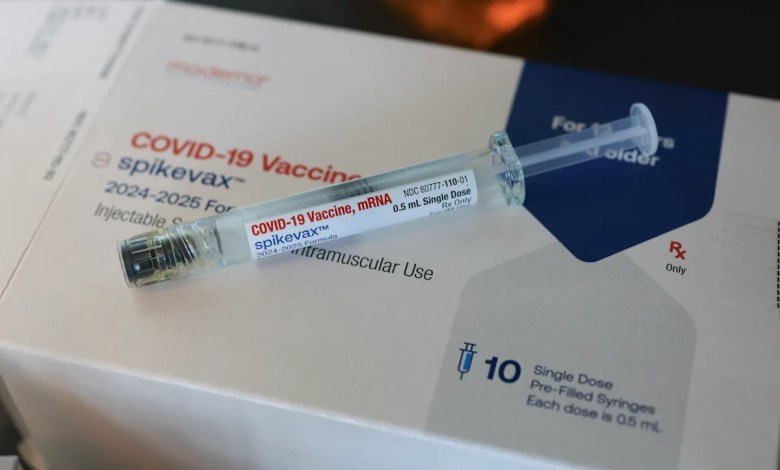
The Food and Drug Administration announced new federal guidelines for COVID-19 vaccinations Wednesday that place new restrictions on how millions of Americans will be able to access vaccines as several states face a surge in coronavirus cases in late summer.
Health and Human Services Secretary Robert F. Kennedy Jr., a longtime vaccine skeptic, outlined the new rules in a social media post Wednesday. The department officially revoked the emergency use authorization that has allowed the vaccines to be widely available since they first hit the market in late 2020. At the same time, HHS issued new non-emergency approvals for four updated vaccines formulated to protect against strains of the virus currently circulating in the United States.
“The American people demanded science, safety and common sense. This framework meets all three criteria,” Kennedy wrote.
Some public health experts strongly disagree with the move, arguing that it will make it harder for people to defend themselves against a virus that continues to cause more than 100 deaths each week in the United States.
Who can get vaccinated now?
The most important takeaway from the new guidelines is that most people who want a COVID vaccine can still get one. But there are important new protocols that mean different groups of Americans will have different rules for how they can access vaccines for the first time since they became widely available. Here are the specific rules for different groups.
Elderly people: For anyone aged 65 or over, the rules have not changed. They can still get any of the available vaccines in the same places they got them in the past.
Adults and children aged 5 to 64: The most significant change made by the new guidelines is that non-elderly people are now separated into high-risk and non-high-risk categories when it comes to how they can access vaccines.
Anyone with an underlying health condition that increases their risk of serious infection or death from COVID can still get vaccinated at a pharmacy, doctor’s office or other vaccination site. The list of conditions that place a person in the high-risk category includes chronic lung disease, heart disease, diabetes, chronic kidney disease, immunocompromised conditions, and obesity.
Those who do not have an underlying health condition can now only get vaccinated after consulting their doctor. Pharmacies and other vaccination sites can no longer administer the vaccine to anyone who is not in the high-risk group.
Young children: The end of emergency authorization means only one shot, Moderna’s Spikevax vaccine, is available for children under 5 years old. Spikevax is only approved for children with an underlying health condition. There is no longer an authorized COVID vaccine for children under 5 who are not at high risk, although doctors may choose to provide the vaccine “off-label” in some cases.
How did medical experts react?
Some of the nation’s most prominent medical groups have criticized the new vaccine guidelines for creating what they see as unnecessary barriers to accessing life-saving preventative care.
“The FDA has made a decision that completely contradicts the evidence, seriously undermines confidence in science-based policies, and dangerously limits access to vaccines, removing the choice of millions of Americans to be protected and increasing the risk of serious outcomes from COVID,” the Infectious Diseases Society of America (IDSA) wrote Wednesday.
The president of the American Academy of Pediatrics called the new rules “deeply troubling” and argued that “any barrier to COVID-19 vaccination creates a dangerous vulnerability for children and their families.”
Kennedy said that, despite the new restrictions, vaccines “are available to all patients who choose them after consulting their doctor.”
But critics say that may not be entirely true. More than 100 million Americans do not have access to a primary health care provider, whom they would need to see to get vaccinated if they are not considered high risk. It is also not guaranteed that all doctors will choose to provide the vaccine “off-label” to healthy patients or that insurance will cover vaccine costs in those cases, IDSA said. There are also questions about how other vaccination sites will confirm that a person has a high-risk condition that qualifies them to receive the vaccine outside of a doctor’s office.
What is happening right now with COVID?
The FDA said it chose to update its vaccine guidance because the threat of the virus has been significantly reduced and COVID has become a “manageable” public health challenge.
It’s true that the worst days of the pandemic are long gone, but the virus still poses a threat, especially to the medically vulnerable. More than 14,000 people have died from COVID-related illnesses in 2025 so far, according to data from the Centers for Disease Control and Prevention. The number of COVID cases across the country has increased in recent weeks, driven by the new “stratus” variant of the virus.
Experts at the FDA and other health organizations continue to maintain that vaccines provide strong protection against the virus.


