How your brain can tell squishy ‘stuff’ from hard ‘things’


Without even noting it, our brains are the ultimate multitasking. The prefrontal cortex of the brain can tell us when it is sure to cross the street, while the cerebellum helps to control the great motor skills necessary so that we can pass. The Oblongata medulla means that we do not have to think of breathing or for our hearts to beat.
Brain also have different regions to process visual information on physical matter and objects. For example, a rock jumping on a pond behaves differently from a cascade cascade and our brain can say it. Now, neuroscientists have identified the parts of the visual cortex of the brain which react more when we look things (rigid objects like a jumping stone or a bouncing ball) vs thing (liquids or something more granular like sand). Understanding this distinction can help our brain better plan how to interact with various materials. The discovery is detailed in a study published last week in the journal Current biology.
“When you look at fluid or sticky stuff, you get involved with [a] A different way from that of you with a rigid object. With a rigid object, you could pick it up or grasp it, while with fluid or sticky stuff, you will probably need to use a tool to deal with it, “said Nancy Kanwisher, the author and neuroscientist of the MIT study, in a press release.
Look at things against things
Sometimes called the “What” region, the ventral visual path of our brain helps us to recognize 3D forms and objects. Previous studies of brain imaging have revealed regions in the ventral visual route which are involved in this important function. A critical area of this route is called the lateral occipital complex (LOC).
The back visual path of the brain helps us to compare what we see in tandem with our other senses. A region in the dorsal visual route, known as the Frontoparietal physics network (FPN), is what analyzes the physical properties of materials, such as its size or stable.
Although scientists have learned a lot how the dorsal and ventral visual routes react to different characteristics of objects, most of these studies have been carried out using solid objects – AKA things – and not things.
“No one asked how we perceive what we call” things “-that is to say liquids or sand, honey, water, all kinds of sticky things. And we therefore decided to study this, “added the co-author of the study and cognitive neuroscientist of the MIT, Vivian Paulun.
The sticky materials behave very differently from the solids. Instead of bouncing like a ball, something like water or syrup flows and interacting with them generally requires a type of container and tools such as spoons. The team of this study was curious if these physical characteristics require that the brain devote specialized regions to interpret things.

Slip around
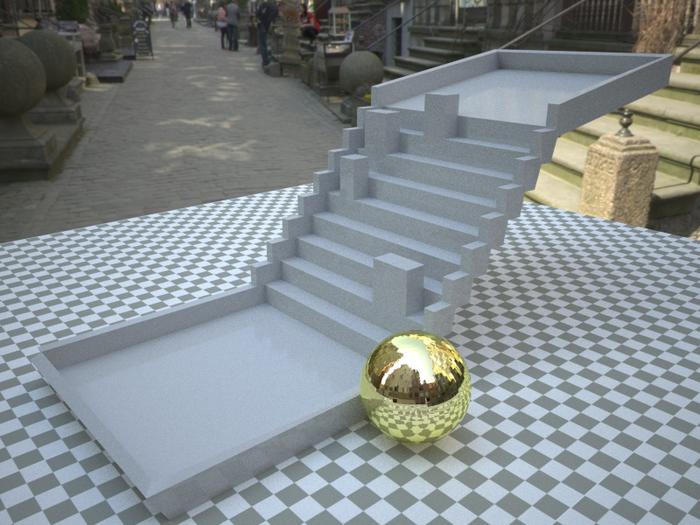
To explore how the brain treats stuff, Paulun used visual effects software to create more than 100 video clips. The videos have shown different types of things or things that interact with the physical environment. The materials slipped or fell inside a transparent box, were deposited directly on another object, or bounced or flowed on a staircase.
While people were watching the videos, the team used functional magnetic resonance imaging (irmf) to scan their visual cortex. They found that the loc for the ventral visual route and the FPN regions of the back visual way respond to things and all that. However, each path has distinctive sub-regions which will respond more strongly to one against the other.
“The ventral visual path and the dorsal visual path seem to have this subdivision, a part responding more strongly to” things “, and the other more strongly responding to” stuff “, explains Paulun. “We have not already seen this before because no one has already asked for it.”
[ Related: How does your brain know something is real? ]
How the brain is like a video game
According to the team, this suggests that our brain could have different ways to represent these two categories of material. This process is similar to artificial physics engines that are used to create graphics in video games. These engines generally represent a 3D object as a mesh, while fluids are represented as sets of particles which can be reorganized.
“The interesting hypothesis that we can draw from it is that perhaps the brain, similar to artificial game engines, has separate calculations to represent and simulate” stuff “and” things “. And that would be something to test in the future, ”explains Paulun.
The team also hypothesizes that these regions may have evolved to help the brain better understand the important distinctions that allow them to plan how to interact with the physical world. In future studies, the team plans to examine whether the areas involved in the treatment of rigid objects are also stimulated when a cerebral circuit involved in planning to enter objects is also active.
They also hope to seek whether one of the FPN areas is correlated with the treatment of the more specific characteristics of materials, such as the bounce of the ball or the apparent thickness of the water. As for the loc, they plan to take a closer look at how the brain represents changes in the form of fluids and more elastic objects.

More offers, reviews and purchasing guides


