Virginia’s rules on felon voting rights will soon change : NPR

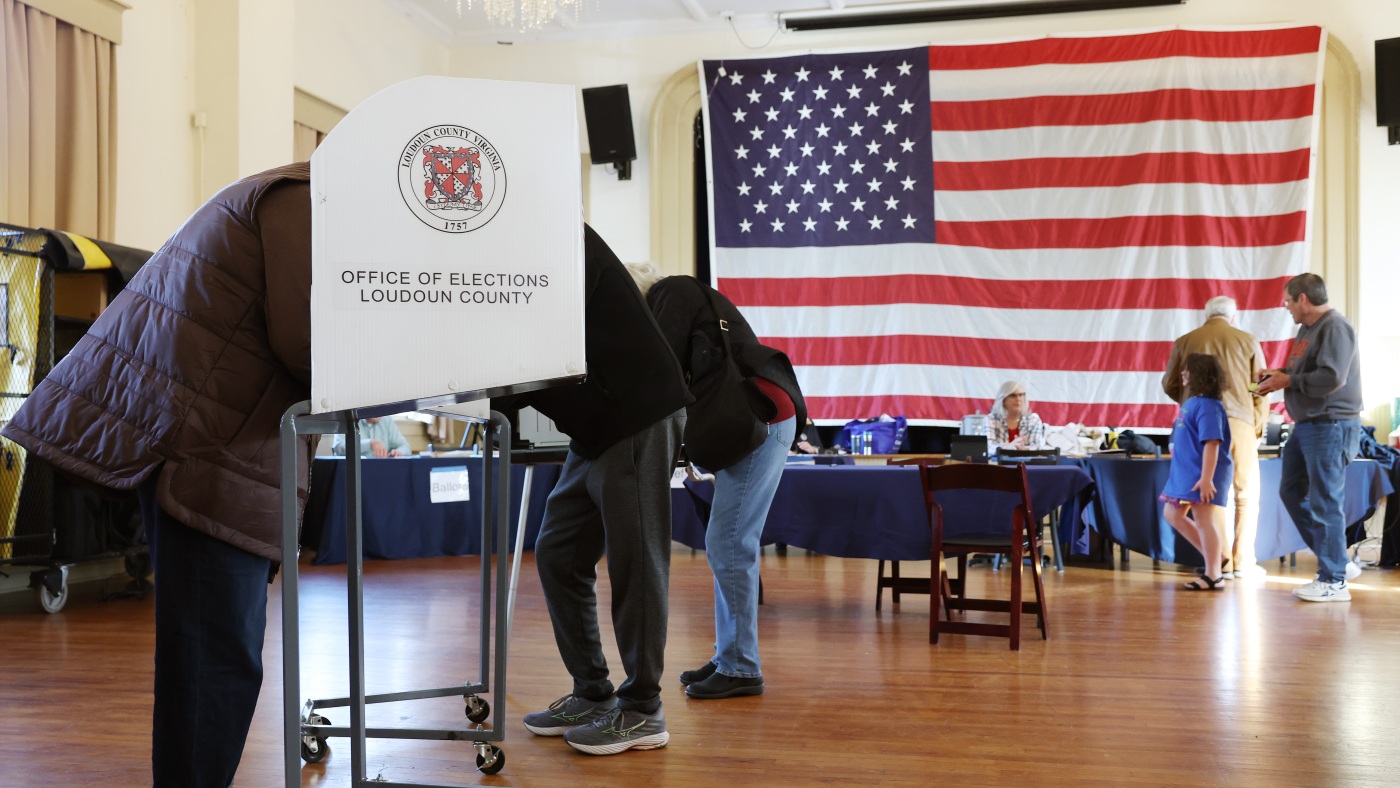

Voters fill out their ballots on November 4 at a polling station in Hillsboro, Virginia. Virginia is one of three states where only the governor can restore voting rights to people with felony convictions.
Anna Moneymaker/Getty Images
hide caption
toggle caption
Anna Moneymaker/Getty Images
RICHMOND, Va. — Tati King says he wants to set an example for his grandchildren that it’s important to make sure their voices are heard.
That’s why King, a 54-year-old living in Alexandria, Virginia, is suing Virginia election officials in federal court to get his voting rights restored.
“I want them to see that their grandfather was on the good side for once in his life,” he said.
King lost his ability to vote in the state due to a drug possession conviction in 2018. He served 11 months in prison and is now challenging Virginia’s constitutional rule that automatically disenfranchises anyone convicted of a felony. The constitution gives the governor sole authority to restore these rights.
More than 300,000 Virginians currently can’t vote because of the policy, according to documents filed in King’s legal challenge — which is just one way Virginia’s voter restoration system could soon change.
Virginia’s new governor, Democrat Abigail Spanberger, is expected to implement changes and a proposed constitutional amendment could make the restoration process automatic once someone has served their sentence.
How Virginie stands out
Virginia is one of three states where only the governor can restore voting rights to people with felony convictions.
And the governors of the other two states, Iowa and Kentucky, signed orders to make the process automatic for most people with felony convictions, according to the Brennan Center for Justice, which tracks voting rules.
Virginia’s current governor, Republican Glenn Youngkin, reversed the efforts of his last three predecessors – one Republican and two Democrats – who made the restoration process automatic in most cases. He implemented a case-by-case review system that allowed far fewer people to regain their right to vote.
Youngkin’s protocol has sparked lawsuits and questions about the criteria he uses to make decisions. It also raised questions of transparency.

“In the current administration, it’s been difficult because we’ve tried in the past to help people understand the process and figure out what their status is and what they can do to get the right to vote again,” said Rebecca Green, a law professor at William and Mary. “But the information environment is very weak.”
Youngkin’s office said it was appropriate to review each application individually. They said Youngkin’s decisions are made after a review of all information, including the nature of the felony conviction, whether a gun was used and whether court costs were paid.
The King’s Case
King’s lawsuit argues that the state’s disenfranchisement policy violates the Virginia Readmission Act of 1870, which allowed Virginia to regain representation in Congress after the Civil War.
In exchange for Virginia’s readmission, the state was prohibited from adding laws that took away citizens’ voting rights, with the sole exception of those convicted of a crime considered at the time a common crime.
These 1870 crimes include crimes like murder and manslaughter, but not drug-related ones like the one King was convicted of.
“Virginia is one of the only states where we still have to jump through hoops and hoops for someone to tell you, ‘OK, now we see you,’” King said. “I think the laws are draconian, I think they’re archaic and they should be changed.”

“I Voted” stickers are seen at a polling place on November 4 in Alexandria, Virginia.
Alex Wong/Getty Images
hide caption
toggle caption
Alex Wong/Getty Images
The American Civil Liberties Union of Virginia and other groups helped King move the case forward.
Vishal Agraharkar, a senior supervising attorney with the ACLU of Virginia who is working on King’s case, said thousands of Virginians with felony convictions could get their voting rights restored if the case is successful.
“Virginia illegally disenfranchised people, disproportionately Black people, who were targeted by this post-Civil War disenfranchisement for over 100 years,” Agraharkar said. “We hope we can leave this legacy of Jim Crow behind us.”
Civil liberties advocates have often pointed out the disproportionate impact of felon disenfranchisement on black people.
A 2024 report from the Sentencing Project – which advocates for responses to crime that minimize imprisonment – indicates that approximately 4 million Americans have lost their right to vote due to a felony conviction. This included one in 22 eligible black voters, more than triple the rate of other voters.
Big changes are on the horizon
While King awaits a ruling that could change Virginia’s practice of disenfranchising voters, Spanberger is expected to change the disenfranchisement process used by Youngkin once she takes office in January.
The governor-elect is committed to ensuring that all eligible Virginians who have completed their prison sentences will regain their right to vote.
Voters could completely strip that power from the governor if they approve a proposed constitutional amendment that would automatically restore citizens’ voting rights once they are released from prison.
For the amendment to be placed on voters’ ballots, the state legislature must pass the proposal in consecutive legislative sessions.
The Democratic-led General Assembly has already passed the measure once, and after Democrats expanded their majority in the House of Delegates earlier this month, the proposal is expected to appear on the state’s ballot in next November’s midterm elections.
Agraharkar, the ACLU attorney, said he hoped King’s legal challenge and constitutional amendment would usher in a new era of voter access.
“These two efforts can work together to really make a big dent, hopefully this coming year, make a huge dent in disenfranchisement in Virginia, and hopefully it becomes a relic of the past,” he said.


