Still using these outdated GPUs? It’s time to upgrade now!


Some graphics cards and graphics card families have so much durability that you can use them for years. I used the same NVIDIA 8800GT for a decade without the need to upgrade, thanks to the long life of the Xbox 360 and PlayStation 3 and multiplatform ports.
However, no matter how good a GPU is, there will come a time when it’s not worth hanging on to it, unless you’re not interested in playing something new, of course. So if you’re still using one of these cards, it’s time to buy something new.
Any Maxwell GPU

To give you some context, NVIDIA’s Maxwell architecture is the basis of the SoC that powers the original Nintendo Switch and even at that time it was already considered quite old. On the graphics card side, we’re talking about the 900 series of cards from Big Green, and models like the GTX 980 are legendary.
While there are plenty of older games that run great on Maxwell cards, the lack of VRAM (4GB at most) and driver support means that even between 720p and 1080p, a modern game is likely to choke on something like a GTX 980, although that card’s performance is in line with the GPU in an Xbox Series S or GTX 1660.
Any Pascal GPU

NVIDIA’s Pascal GPU line, especially the 10 series, has been a literal game changer. Delivering a huge boost in performance, but an even bigger increase in energy efficiency. This is in my opinion when gaming laptops got good. My old Alienware laptop with a GTX 1070 Ti absolutely ripped compared to previous generation desktop PCs.
As for the desktop versions of these cards, the GTX 1060, 1070, and 1080 cards and their variants still have a notable presence in the Steam Hardware Survey, and in terms of performance, they have been viable so far. However, VRAM is limited on some of the lower-end models in the series, and in October 2025 NVIDIA removed Pascal (via Tom’s Hardware) from its Game Ready Driver support, so the cards are being phased out.
The 1080 and 1080 Ti were released in 2016 and 2017 respectively, and if you bought them at launch and are still using them today, you’ve had an absolutely phenomenal experience comparable to the glory days of the 8800GT. I think it’s unlikely that NVIDIA will give us a flagship product that will remain relevant for almost a decade.
Radeon RX 500 series
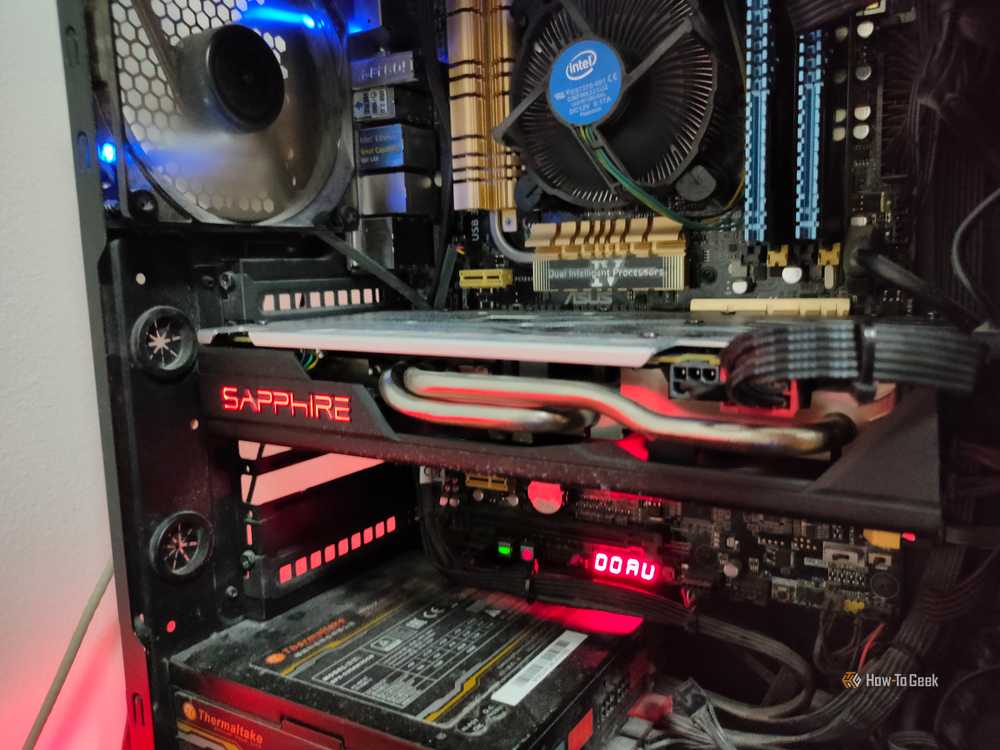
Don’t think that NVIDIA is the only company capable of creating an epic, long-lasting generation of GPUs. RX 500 series cards like the RX 580 and RX 570 still offer raw performance relevant for 1080p gaming today, but with only basic driver support and a lack of crucial performance multiplier features that newer games take advantage of with the RDNA family of cards, the experience is suboptimal.
Since AMD even puts RDNA and RDNA 2 GPUs on notice for end of support, the RX 500 cards are finished.
Any card with 8 GB or less VRAM

If you currently have a GPU with exactly 8GB of VRAM, you’re probably still OK for 1080p gaming and even 1440p if you’re willing to lower the settings, but these cards are savvy and cards under 8GB are already not viable in some modern games.
It’s a real shame, because 8GB cards like the RTX 3070 Ti or RX 6700 are absolutely spot-on in terms of raw performance and features, but with engines like Unreal Engine 5 becoming VRAM monopolizers, they’re probably nowhere near the useful lifespan of the 10-series or RX 500 cards.
RTX 20 series for RT specifically

The RTX 20 series of cards were the first to offer real-time ray tracing and AI-powered frame scaling, which instantly made the PlayStation 5 and Xbox Series consoles look dated and completely changed the trajectory of the GPU industry.
If you own one of these cards and it’s a model with enough VRAM for your needs, it’s still great for non-RT games and applications, but some games are starting to require RT support and cards like the RTX 2060 and RTX 2070 simply don’t have good enough ray tracing performance to run those games smoothly. Even cards like the RTX 2080 Ti have raw performance closer to entry-level or mid-range 40 and 50 series cards for non-RT gaming, but far less performance once you enable these ray tracing features.
I would say that the current generation of NVIDIA and AMD cards can finally be considered mature when it comes to ray tracing, which means that for 20 series owners who originally purchased these cards for this feature, the right time to upgrade has finally arrived.
Of course, you don’t have to upgrade your GPU just because I say so or because its manufacturer says so, or even because game developers say so in their system requirements. If your GPU still does what you need it to do, why not just run it until the fans seize up and the solder dries and cracks. There’s nothing wrong with getting what you pay for!