Washington’s Dangerous China Consensus | The Nation


Morbid symptoms
/ /
August 13, 2025
The fantasies of national unity lead the bipartite thrust for a new cold war.
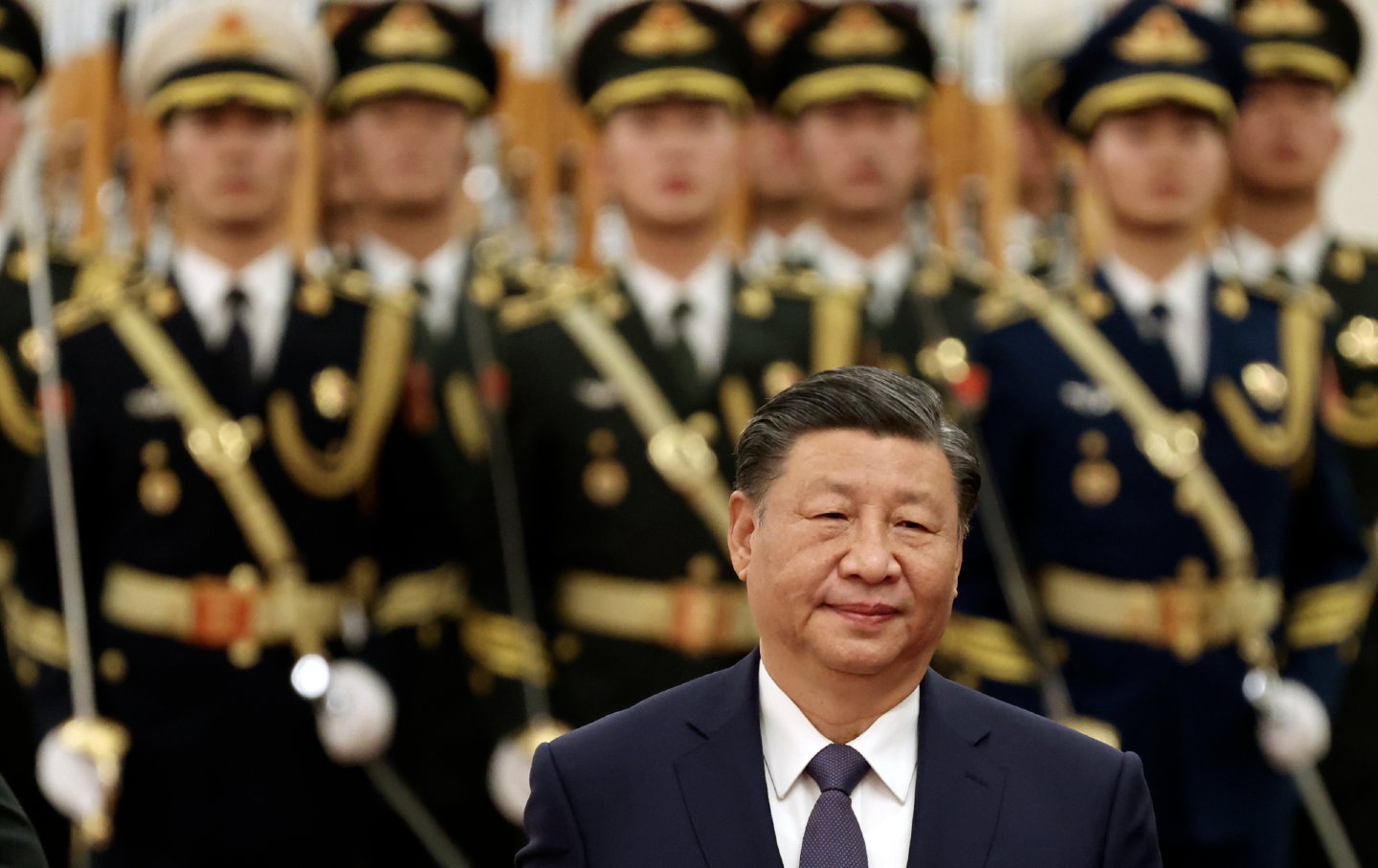
The United States is so polarized that it often seems on the verge of civic rupture, if not civil war. But a problem still has the power to unite the political elite: the desire shared between the Democrats and the Republicans to participate in high power competition against China.
The internal division and the external heat frequently go hand in hand. Indeed, the alleged threat to China offers political decision -makers a very practical enemy – that which must be rejected not only for geopolitical reasons, but because the only way to prevent America from collapsing is to mobilize for war. In 2019, Steve Bannon frankly reflected that “in such a divided country … The thing that brings him together is China”. In 2023, Joe Biden echoes this feeling by saying that “winning competition with China should unite us all”. Or as Randolph Bourne pointed out over a century ago, “war is the health of the state”.
Although Donald Trump has collected the greatest advantages of being a basher in China, the current change in policy began in the decreasing days of the administration of Barack Obama. In 2016, the Secretary of Defense Ash Carter announced the “return to high -power competition” between the United States and China – a reversal of the rapprochement between the two nations which began under Richard Nixon in 1972. However, many things differ on other questions, Donald Trump and Joe Biden maintained and intensified this framework of world rivalry.
Current number
For Trump, being anti-China is a way to raise the salience of its signature problems: economic protectionism, xenophobia and a foreign policy unilateralism. Also repugnant this political cocktail may be, it turned out to be more political success than the Biden administration’s attempt to revive military Keynesianism using anti-china rhetoric to strengthen bipartite support for a new era of spending in domestic reconstruction.
In 2022, Stephanie Murphy (D-FL), at the time, reflected the problems of this new consensus, noting that “no politician, republican or democrat, can be considered gentle on China, so that this pushes us in the direction of not [discussing] intelligent, but political political. If you want to free yourself from this intellectually suffocated consensus, you must turn to voices without reflection or a traditional policy. The danger of rivalry: how competition for great power threatens peace and weakens democracy, by specialists in international relations van Jackson and Michael Brenes.
The United States and China are the two most powerful countries in the world and, without surprise, have many areas of dispute. From the point of view of the United States, China is militarily aggressive for its neighbors, an attacker of human rights at the national level and a sparkled economic rival. For China, the United States is a world class hypocrite that speaks of the liberal international order while repeatedly ignoring the principle of free trade and putting or supporting the wars of choice several times. The two parties have one point, but these are all problems that can be resolved by diplomacy.
Transforming these political disputes into a great power competition has the same effect as the Cold War, which increases the challenges of each disagreement via the risk of rapid climbing.
Jackson and Brenes convincingly demonstrate that the push to make rivalry with China the foundation of a unified national and foreign policy is based on a badly informed nostalgia for the Cold War. For many in the political elite, the Cold War was a blessed period of national cohesion and goal during which a common enemy allowed the United States to unite behind robust social spending, technological progress and civil rights. It was the era of the interstate highway and the Moshot, expanding universities and consensual policy – all led under the auspices of a Cold War which was indeed a long peace.
This vision of Halcyon of America in the middle of the century found the expression in 2020 in the establishment journal Foreign affairs. In a test entitled “China Challenge can help America to avoid decline”, Kurt Mr. Campbell and Rush Doshi – who become the major forms of politics in Asia in Biden’s administration – said that “the arrival of an external competitor has often prompted the United States to become its best self”.
Jackson and Brenes do us all a service by reminding their readers that real Cold War – who saw 20 million dead in proxy wars as well as intense domestic repression under the McCarthysm – were not, in fact, a happy period. Military Keynesianism has only increased economic inequalities, because it has favored highly educated white workers and diverted the economy from a broader redistribution. Civil rights activists were constantly as a siege by a state of surveillance authorized by anti-communist ideology.
In 21st century America, the new cold war also fueled domestic repression and increased the risk of foreign wars, without creating progressive consensus in favor of internal expenditure.
The wars give a license to xenophobia. It is hardly an accident that Trump, quick to blame China for everything, from the fentanyl crisis to the cocovio pandemic, is the dominant politician of the time. The current attack on pro-Palestinian students has its model in the fierce purge of Chinese students that Trump launched in 2020. Xenophobia is not exclusively a vice from the GOP. At the beginning of last year, Nancy Pelosi told Pink code demonstrators calling a cease-fire in Gaza to “return to China where your head office is located”. The first cold war was a disaster. The second cold war, which delays efforts to combat the true existential threat of climate change, could be really apocalyptic.
At this time of crisis, we need a unified and progressive opposition to Donald Trump.
We are starting to see a form in the streets and in the ballot boxes across the country: from the campaign of the candidate for the town hall of New York, Zohran Mamdani, affordable, to communities protecting their neighbors from ice, to senators opposed to arms expeditions to Israel.
The Democratic Party has an urgent choice to make: will he embrace a policy that is principles and popular, or will it continue to insist on losing elections with the elites and the outside contact consultants that brought us here?
HAS The nationWe know which side we are on. Each day, we assert a more democratic and equal world by defending progressive leaders, lifting movements fighting for justice and by exposing oligarchs and societies benefiting at the expense of all of us. Our independent journalism informs and empowers progressives across the country and helps to bring this policy to new readers ready to join the fight.
We need your help to continue this work. Are you going to make a donation to support The nationIndependent journalism? Each contribution goes to our reports, our award -winning analyzes and comments.
Thank you for helping us face Trump and building the right company we know is possible.
Sincerely,
Bhaskar Sunkara
President, The nation
No more Jeet Heer 
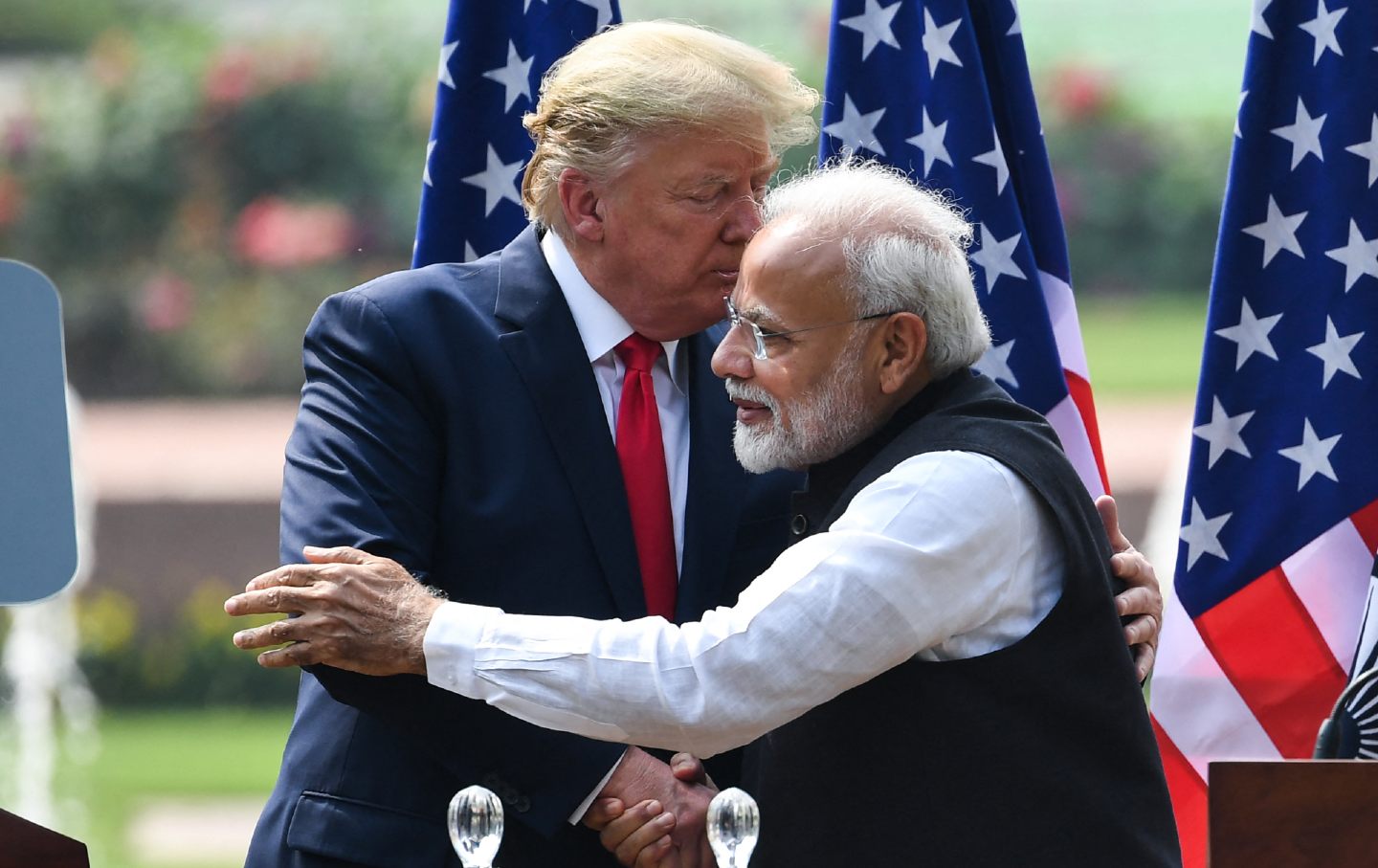
The Indian Prime Minister discovers that the largest tyrant in the world considers that weakness.
Jeet Heer

The United States and its allies play with the liberation of Iran with the help of certain not recommendable friends.
Jeet Heer

The public is massively opposed to the genocide, but the political elites help to advance it. Something should give.
Jeet Heer
If the planet has to survive, the future should be green. China seems to get this, but the United States blows it.
Jeet Heer
The Democratic Party obsessed with the conviction remains as unpopular as ever – but there is another path.
Jeet Heer
The real steel man was not awake, but he was radical.
Jeet Heer


