Solar flares as you’ve never seen them before


Solar lighting rockets are an excellent reminder of the really immense power of our sun. Although the central star of our solar system is around 93.955 million kilometers from the earth, its light rockets have enough energy to cause breakdowns and play with radio communications. The study of the subtleties of solar eruptions and other spatial times could help us improve disaster plans when excessive energy of the sun goes towards us.
Now, the Daniel K. Inouye solar telescope of the National Science Foundation (DKIST) has captured incredibly detailed images of a solar rash. These new images can help us better understand the magnetic field of the sun and improve the weather forecast for space in the future. The results are detailed in a study published on August 25 Astrophysical newspaper letters.
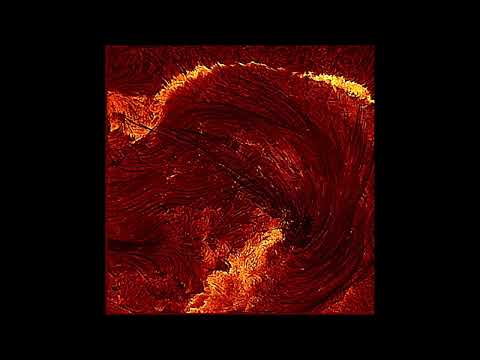
On August 8, 2024, the sun emitted a class X1.3 solar push highly energy. Class X light rockets as this one is incredibly powerful and can even interfere with technology here on earth. Around 4:12 p.m., the study team used the DKIST to observe and image the solar rocket during its decay phase towards the end of the event.
“This is the first time that the Solar Telescope Inouye has observed a class X thrust,” said Cole Tamburri, co-author of the study and astrophysicist at the University of Colorado Boulder. “These enlightening rockets are among the most energetic events that our star produced, and we were lucky to catch it in perfect observation conditions.”
Astronomers using this sophisticated telescope observed these special solar characteristics with a very small wavelength called H-Alpha wavelength (approximately 656.28 nanometers). The observation of the activity of the sun in detail can show aspects of the behavior of our star that other solar telescopes cannot pick up.
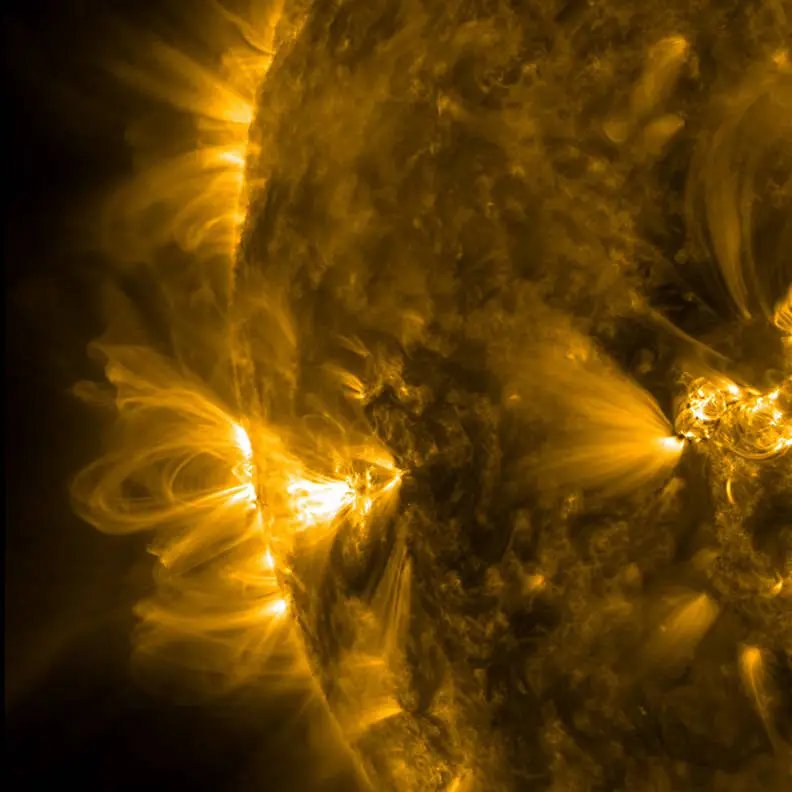
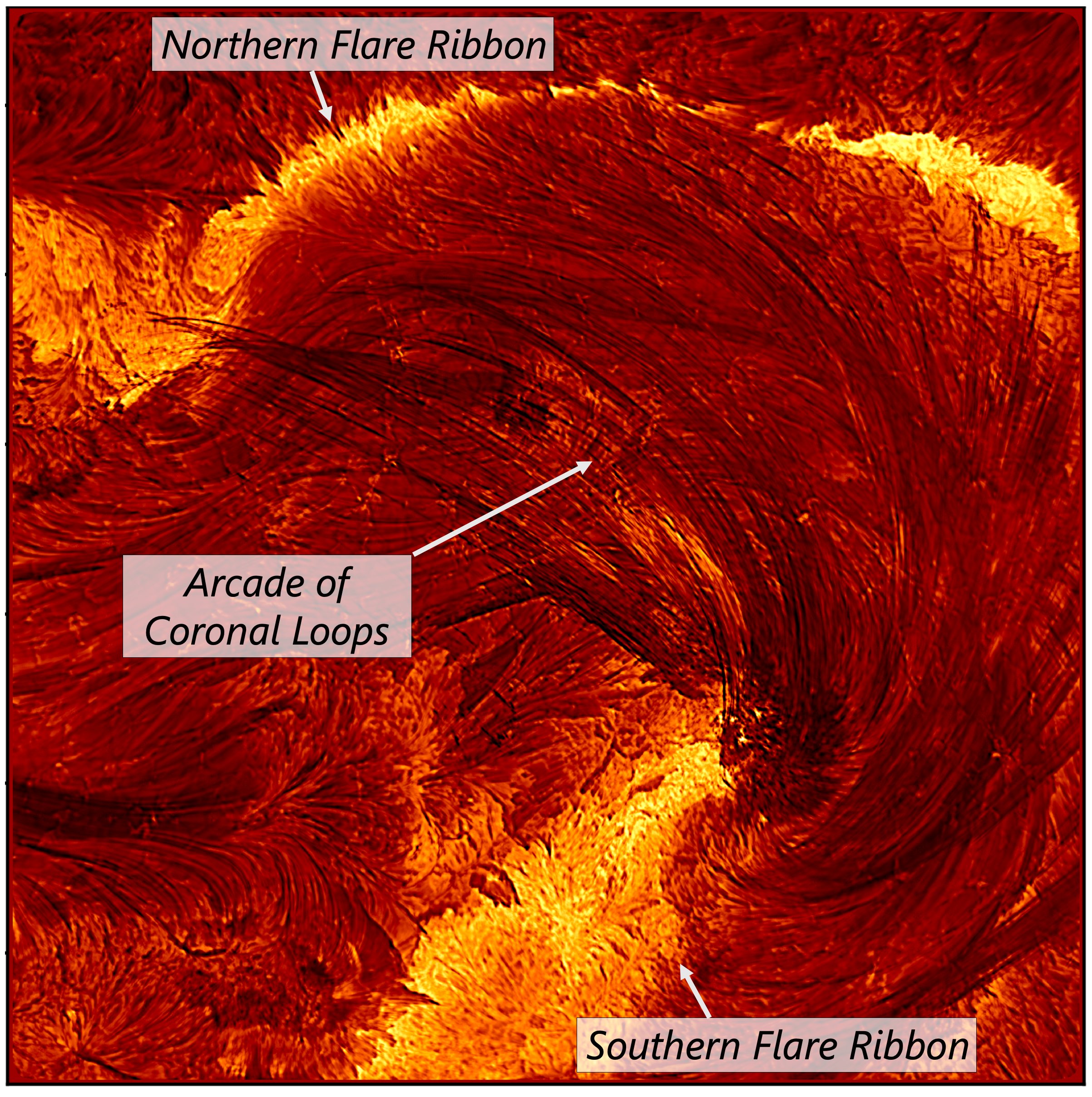
They captured solar characteristics called coronal loops – plasma arcs which follow the magnetic field of the sun. Coronal loops often occur just before the start of a solar rash and persist throughout. The coronal loops themselves can trigger the energy explosions often seen spitting magnetic fields of the sun. They are also very hot – with certain coronal loops exceeding a million degrees Fahrenheit.
The team focused on hundreds of these coronal magnetic fields with thin razor fields above the solar shine ribbons. On average, the curls were about 30 miles in diameter, but some were just at the resolution of the 15 miles telescope.
“Knowing a telescope can theoretically do something is one,” added Maria Kazhenko, co-author and solar astrophysicist. “In fact, watching it occur at this limit is exhilarating.”
Astronomical theories have suggested that coronal loops can range from six to 62 miles wide and that the disc makes the confirmation possible of this beach.
“This opens the door to study not only their size, but their forms, their evolution and even the scales where the magnetic reconnection – the engine behind [solar] Flares – arises, “said Tamburri.
One of the most attractive theories is the idea that coronal loops can be the fundamental constituent elements of the way in which solar enlightening rockets are formed.
“If this is the case, we do not only solve the beams of [coronal] loops; We resolve the individual loops for the first time, “adds Tamburri.” It’s like going from a forest suddenly to see each tree. “”

More offers, reviews and purchasing guides


