Water Bears Struggle in Simulated Martian Soil, But a Simple Rinse Changes Everything


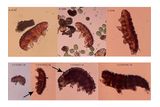
Tardigrades, also known as water bears or moss piglets, are known for surviving almost anything. In their dormant state, the microscopic animals endured the vacuum of space, extreme cold, and intense radiation. But when researchers placed active tardigrades in simulated Martian regolith – the dusty material that covers the surface of Mars – their movement quickly slowed.
Over two days, activity decreased significantly in one version of the simulated soil. However, when the researchers rinsed this same material with water before introducing the animals, most of the damage disappeared. The results, published in the International Journal of Astrobiologyindicate that the soil may contain something harmful to living organisms, but that the problem may be manageable. This matters if humans ever hope to grow food on Mars and if they want to avoid accidentally contaminating the planet with Earth life.
“When we consider sending people into non-terrestrial environments, we need to understand two things: how the environment will impact people and how people will impact the environment,” Corien Bakermans, who co-led the international research team, said in a press release.
Learn more: Unique protein that helps tardigrades cope with deadly radiation could help us fight cancer
Testing the surface of Mars on tardigrades
The team focused on simulated Martian regolith, a laboratory-made material designed to match the mineral and chemical composition of soil sampled by NASA’s Curiosity rover at Gale Crater.
The researchers tested two versions: one intended to represent Martian regolith broadly and another designed to more closely mimic the specific chemistry of the Rocknest deposit. They mixed active and hydrated tardigrades into samples of each simulant and monitored their movements under a microscope for several days.
In the simulant known as MGS-1, tardigrade activity was significantly reduced within 48 hours. In the second simulant, OUCM-1, activity also decreased, but to a lesser extent. This is important given that whether animals move, eat and function is a key measure of their health.
Is Martian soil toxic to life or is it a natural defense?
Tardigrades can survive extreme conditions when they enter a dehydrated, dormant state. However, once rehydrated and active, they are more sensitive, while remaining resilient, compared to most animals.
In this case, the MGS-1 simulator proved particularly harsh towards them.
The researchers suspected that something specific in the material might be responsible. When they flushed MGS-1 with water and then introduced new tardigrades, activity levels were largely restored.
This discovery raises the possibility that if Martian regolith naturally inhibits biological activity, it could act as a kind of built-in defense against contamination from Earth, a major concern in planetary protection. At the same time, anything hard enough to slow down the tardigrades could also complicate efforts to use Martian soil to grow food or support human habitats.
What this means for life beyond Earth
Planetary protection aims to prevent Earth’s microbes from contaminating other worlds, while also protecting Earth from potential extraterrestrial materials. Understanding how regolith interacts with living organisms is part of this equation.
Water is scarce on Mars, so flushing the soil is not a simple solution. But knowing that harmful components can be soluble in water provides insight into how extraterrestrial materials might be handled.
The study also highlights how little is known about how Martian-like environments affect even microscopic animals. Most previous research has focused on bacteria and fungi.
“Regolith is of course not the only component,” Bakermans said. “But we’re starting to separate the components of this overall system, each part of which could be a detriment or benefit to a broader understanding of planetary protection.”
Future work will examine other stressors, including temperature and atmospheric pressure, to better understand how life – human or otherwise – might interact with Martian terrain.
For now, even one of Earth’s toughest microscopic survivors has revealed that Mars’ dusty surface may be more complicated than it seems.
Learn more: Tardigrades could still live on the Moon after the lunar lander crash
Article sources
Our Discovermagazine.com editors use peer-reviewed research and high-quality sources for our articles, and our editors review the articles for scientific accuracy and editorial standards. See the sources used below for this article:


