‘We do not know of a similar case’: 4,000-year-old burial in little-known African kingdom mystifies archaeologists


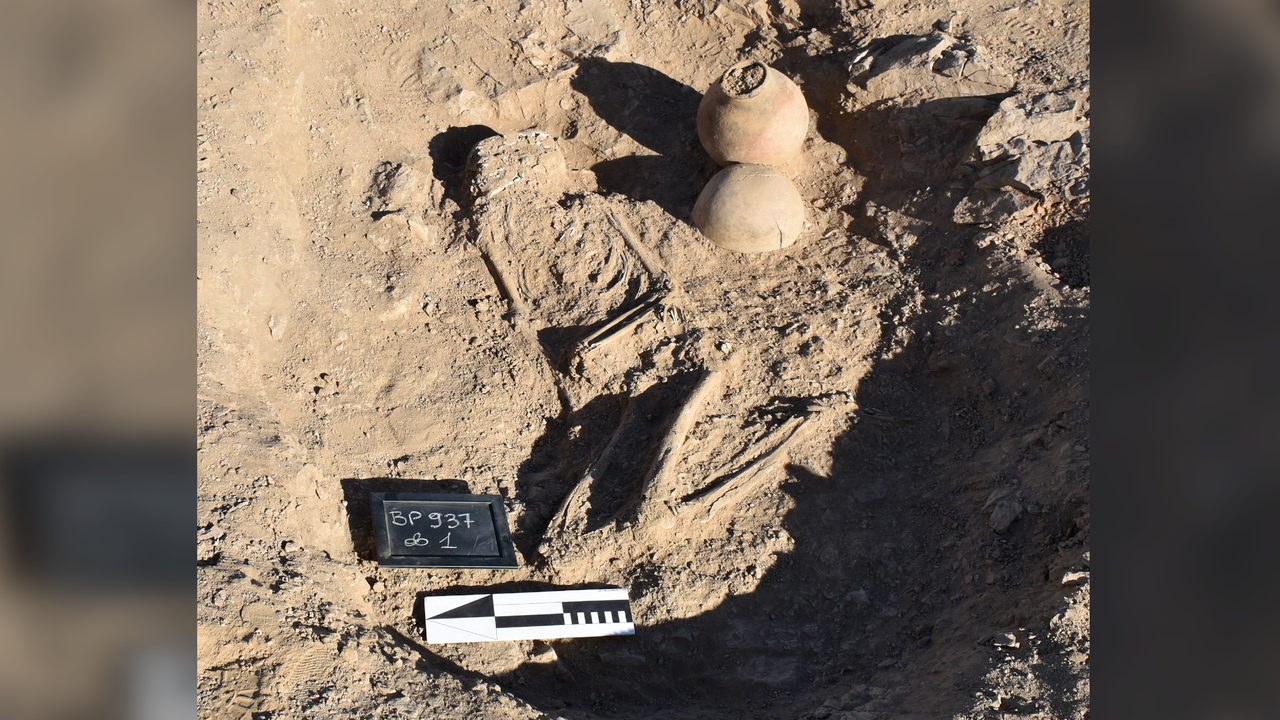
An isolated burial in Sudan has revealed the first evidence of an unknown burial ritual that took place nearly 4,000 years ago in a little-known African kingdom, according to a new study.
In the tomb, archaeologists discovered a ceramic vessel containing charred plant and wood remains, animal bones and insect parts, which the team believes were all leftovers from a burial feast.
In the study, published November 13 in the journal AzaniaResearchers described the burial of a middle-aged man, which they discovered in 2018 during an archaeological survey project in the Bayuda Desert, northeastern Sudan. The tomb was dated to between 2050 and 1750 BC, meaning the man was likely part of the Kingdom of Kerma, an ancient Nubian civilization neighboring Ancient Egypt. In the burial, covered by an oval mound of earth, archaeologists discovered a male skeleton, two ceramic vessels placed behind his head and 82 disc-shaped blue glazed ceramic beads around his neck.
“The mound is not particularly impressive and grave goods, including beads and ceramic vessels, are quite common,” Paner said, suggesting the man did not have elite social status. But “the contents of one of the containers are unusual”, he added, they may be “fire relics associated with a funerary ritual”.
In a medium-sized ceramic jug, researchers discovered a treasure trove of charred remains of plants, wood, animals, insects and coprolites (fossilized excrement). Most of the wood was determined to have come from acacia trees, and researchers identified two legumes – likely a lentil and a bean – and cereal grains among the charred botanical remains. The jug also contained a few weevils, which probably hitchhiked on the plants in ancient times.
“As the container shows no signs of burning, these remains, as well as the animal bone fragments found, were likely simply inserted inside,” the researchers explain in the study. “The bones in question are likely evidence of consumption at a funeral feast, some of the remains of which were then thrown into the fire.”
Botanical remains also indicate that this geographical area was more humid savannah type environment when man was buried, compared to the open desert, it is today. “Even a seemingly modest site” like this isolated burial “can provide important clues for reconstructing past environments and climates,” the researchers wrote.
The other container found in the grave was placed upside down near the individual, but it was empty, the researchers noted.
This burial is the first in the Kingdom of Kerma to reveal evidence of a funerary ritual that took place four millennia ago. But the lack of known similar burials could indicate complex cultural exchange processes in the region, the researchers wrote, meaning more work is needed to understand the trade of goods and ideas in ancient Africa.


