What are pro forma sessions and why do they matter for the DHS shutdown


NEWYou can now listen to Fox News articles!
Carpe Diem. If you’re wondering why all of Washington has been buzzing so much this week about the “pro forma” sessions in the House and Senate, here’s your chance to find out why.
Come on now. Tempus fugit. There is no time like the present. Hopefully, when you finish reading this, you can declare veni, vidi, vici when it comes to your understanding of the pro forma sessions in the House and Senate.
Let’s start with what pro forma means and why it is applied in Congress.
SEN. MIKE LEE URGES TRUMP TO INVOKE RARE CONSTITUTIONAL POWER TO FORCE CONGRESS TO RETURN FROM SPRING RETREAT
In Latin, “pro forma” refers to “a matter of form.” In other words, something seems real, but it’s only superficial. For decades, the House and Senate have used the parliamentary device of a “pro forma” session to adhere to the constitutional requirement to meet every three days.
Article I, Section 5 of the Constitution states that “Neither House, during the session of Congress, shall, without the consent of the other, adjourn for more than three days, or to any other place than where both Houses shall be in session.” » That means the House and Senate must meet every three days — unless both bodies approve the same “adjournment resolution” to allow each other to leave Washington for an extended period. In other words, the House and Senate must vote and agree to withdraw at the same time. And if there is no consensus on a resolution to adjourn, the House and Senate must technically “meet” every three days.
The House and Senate often fail to agree on a resolution to adjourn because the party opposite the president wants to prevent him from using his power to install Cabinet officials or other figures through a “vacation appointment” — thereby circumventing the Senate confirmation process. This makes it difficult to approve an adjournment resolution. But that’s another matter.

Sunrise light hits the dome of the U.S. Capitol on Thursday, January 2, 2025. (Bill Clark/CQ-Roll Call, Inc via Getty Images)
Back to the pro forma sessions.
Without a resolution to adjourn, the House and Senate simply took action every three days. There is (usually) no legislative activity. These are pro forma sessions. The House and Senate meet “in form”. But don’t accomplish anything. There is often only one legislator present: the one who presides. In-house pro forma sessions generally last two or three minutes. Senate sessions are even more abbreviated: they generally last 25 to 35 seconds.
What constitutes a meeting of Congress? These few seconds of session are enough.
A few years ago, senators actually held an informal competition, engaging in pro forma trials to try to determine who could run the meeting the fastest. The fastest pro forma session lasted 21 seconds.
Here is the parliamentary position of the House and Senate last week:
The Senate adjourned in the early hours of Friday, March 28. The House followed suit just before midnight that same evening. Without a resolution to adjourn, the two would meet the following Tuesday. Therefore, if the House or Senate did not have to reconvene until Tuesday.
GOP RAILS AGAINST ‘S— SANDWICH’ DEAL AS ALL EIGHTS TURN HOME TO END DHS SHUTDOWN
Nothing prohibits the House or Senate from conducting legislative business during a pro forma session. In other words, either body must simply conduct legislative work to transform a pro forma session into a de facto session. That’s why Tuesday’s pro forma Senate session was thought to be ripe for activity as the DHS shutdown continued.
Some House Republicans have demanded that the Senate align with what the House passed Friday night: a bill that funds the entire Department of Homeland Security for two months.
The Senate returned to order Tuesday morning around 10:33 a.m. (a few moments late). Sen. John Hoeven, R-N.D., presided. But after 31 seconds, Hoeven adjourned the Senate without any business. Hoeven himself – or any senator – could have tried to pass the House bill with a smaller team. Sen. Chris Coons, D-D.E., was the only other senator present in the chamber. Coons or anyone else could have asked to be recognized to speak. But none of that happened.
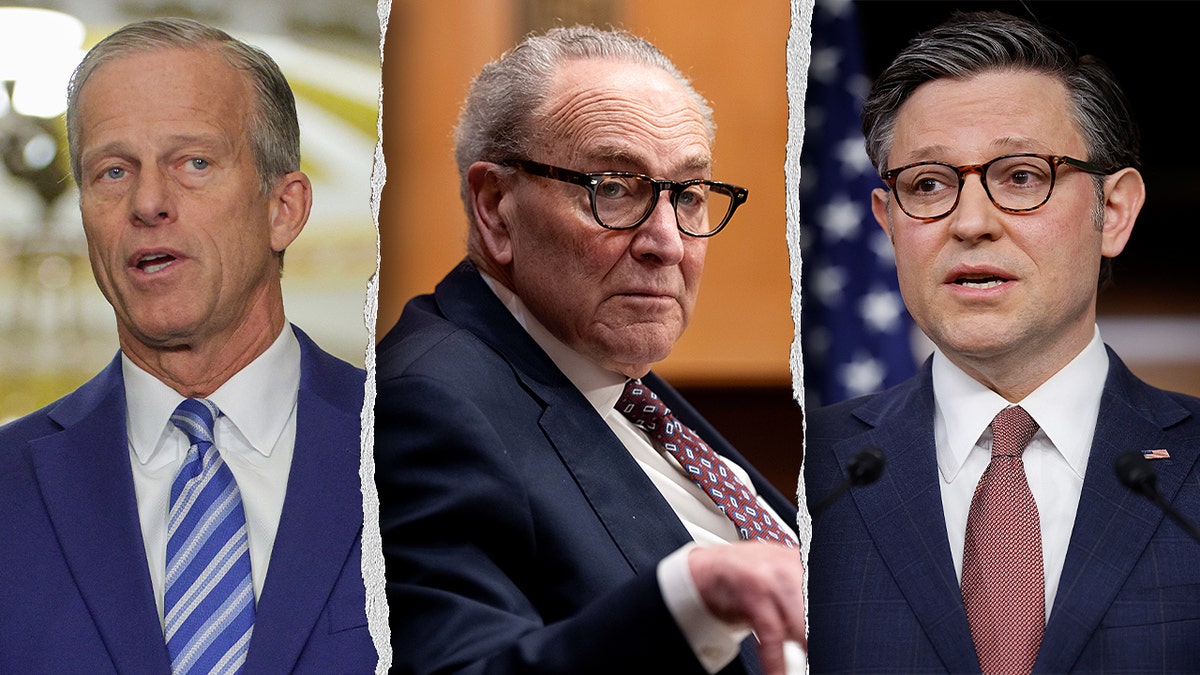
Amid the ongoing shutdown of the Department of Homeland Security, Senate Minority Leader Chuck Schumer, D-N.Y., has not seen his demands for immigration reform met while Senate Majority Leader John Thune, R-S.D., and House Speaker Mike Johnson, R-La., have embraced rival DHS funding proposals. (Photo by Alex Wong/Getty Images; Aaron Schwartz/Bloomberg via Getty Images; Photo by Chip Somodevilla/Getty Images)
And then the Senate adjourned, only to reconvene Thursday morning (note the three-day interlude) at 7 a.m. for another pro forma session.
Pro forma sessions are usually one of the most boring exercises in Congress. A small team of floor staff is there. Those invited to preside over sessions are lawmakers who need to be in Washington for some reason during the holidays or those who don’t get home often. Depending on which party has the majority, lawmakers from Maryland, Virginia, or West Virginia preside frequently – simply because they are nearby. A limited number of journalists surface. They’re all hungry for a quote or soundbite — simply because so few other lawmakers are available thanks to the holidays. The whole enterprise starts and ends in a matter of minutes and everyone goes home.
But that was not the case during last Tuesday’s Senate session. Everyone wanted to see if Republicans could try to approve the DHS bill passed by the House. Or for that matter, if the House tried to align with the Senate and pass its bill. Neither happened. Even if a flood of journalists descended on the Capitol.
BEHIND THE SCENES OF THE ELEVENTH HOUR OF CONGRESS TO FUND DHS
But the drama was even more dramatic last Thursday morning. On Wednesday, House Speaker Mike Johnson, R-La., reversed course dramatically and consented to the Senate-passed bill to fund the entire Department of Homeland Security through Oct. 1 — except for the Border Patrol and ICE. Johnson and Senate Majority Leader John Thune, R-S.D., issued a joint statement endorsing the Senate’s strategy. So at dawn on Thursday, Thune himself showed up to pass the Senate package again.
The presence of the majority or minority leader on the ground during a pro forma session is almost unprecedented. It’s a magna momemti when it comes to a pro forma meeting.
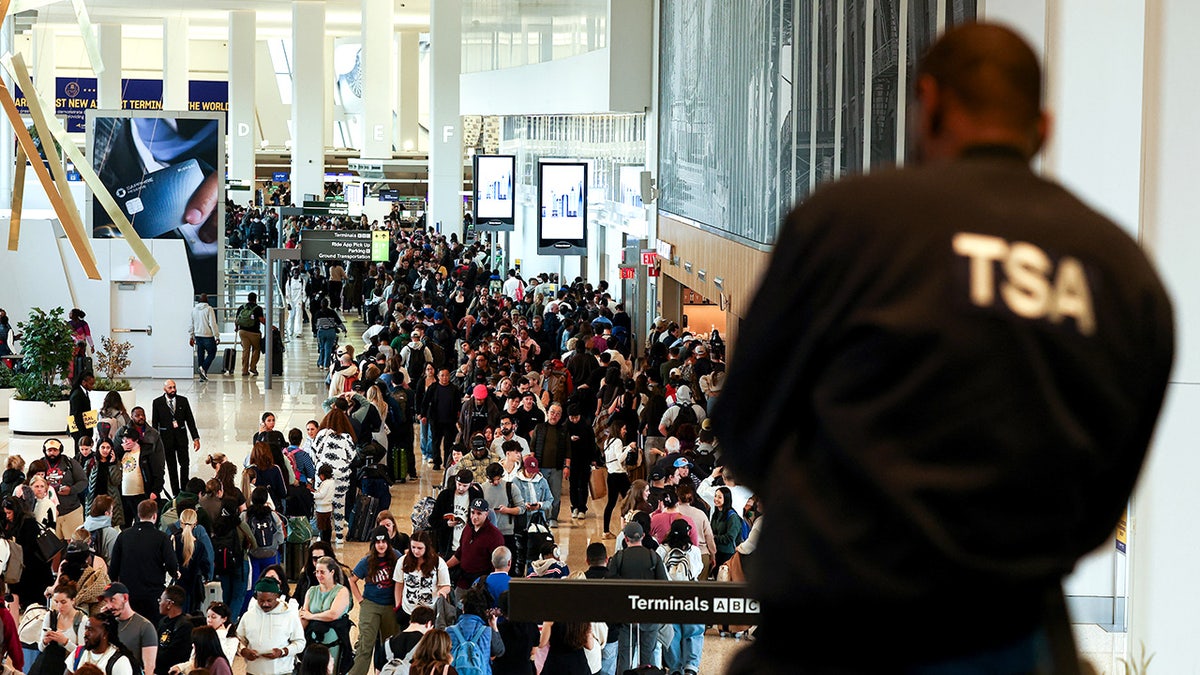
A Transportation Security Administration officer watches passengers line up for security screening at LaGuardia Airport in New York on March 22. (Charly Triballeau/AFP via Getty Images)
This was not an ordinary pro forma form. And while nothing happened on Tuesday, none of those sessions were far from the usual pro forma sessions that Congress usually sees during recess.
The House was expected to align during its pro forma session later Thursday morning. But dismay has gripped the House Republican Conference. How did Johnson suddenly approve the Senate deal he had just called a “joke” days earlier? This is to say nothing of Johnson twisting himself into several knots and aggravating all wings of the GOP conference.
The Chamber therefore took no action. This is why DHS remains closed as the House and Senate amplified the scope and potential of the four pro forma sessions held in recent days.
CLICK HERE TO DOWNLOAD THE FOX NEWS APP
Turns out all those high profile pro forma sessions were just authentic pro forma sessions.
Nil actum est. Congress has accomplished nothing. Again.

:max_bytes(150000):strip_icc()/Health-GettyImages-479899802-ddbc70abf0004b2f8b475ace7e18a144.jpg?w=390&resize=390,220&ssl=1 "8 Powerful Herbs To Fight Inflammation Naturally")


