What Gaza’s Photographers Have Seen


A day for Gaza
/
February 3, 2026
These images are records of a genocidal war, but they also represent something more: they are fragments of Gaza itself.
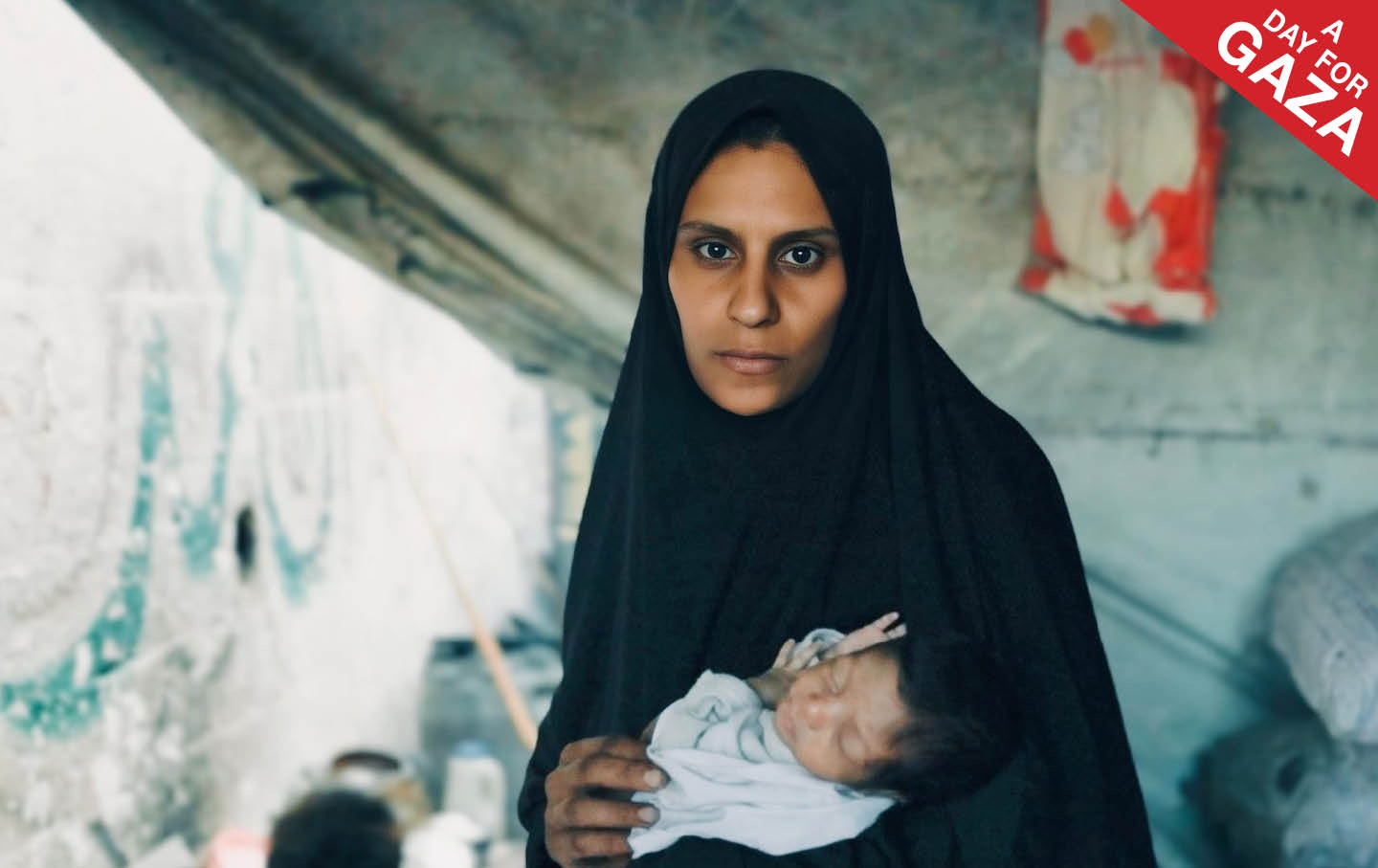
In Gaza, the camera lens doesn’t just capture a scene. It documents the human spirit resisting death. And for Gaza’s photographers, every click of the shutter is an act of defiance. Each image carries a risk, a memory and a moral weight. They photograph through smoke and mourning, through hunger and destruction, and through the pain of seeing the people they love become the subjects of their work.
Throughout the Israeli genocide, Gaza photographers became archivists of loss and life. Their photos are testimonies of a genocidal war, but they also represent something more: they are fragments of Gaza itself, windows into our collective soul. Through their eyes, we see not only death and devastation, but also dignity, defiance, and the love that refuses to die.
At the end of last year, The Nation asked eight photographers from Gaza to choose a photo from the recent past that had special meaning to them, and to tell us why they took it, when and where it was taken, and what story it tells. This is what they came back with.
🇵🇸
“This one broke me”: Samer Abo Samra
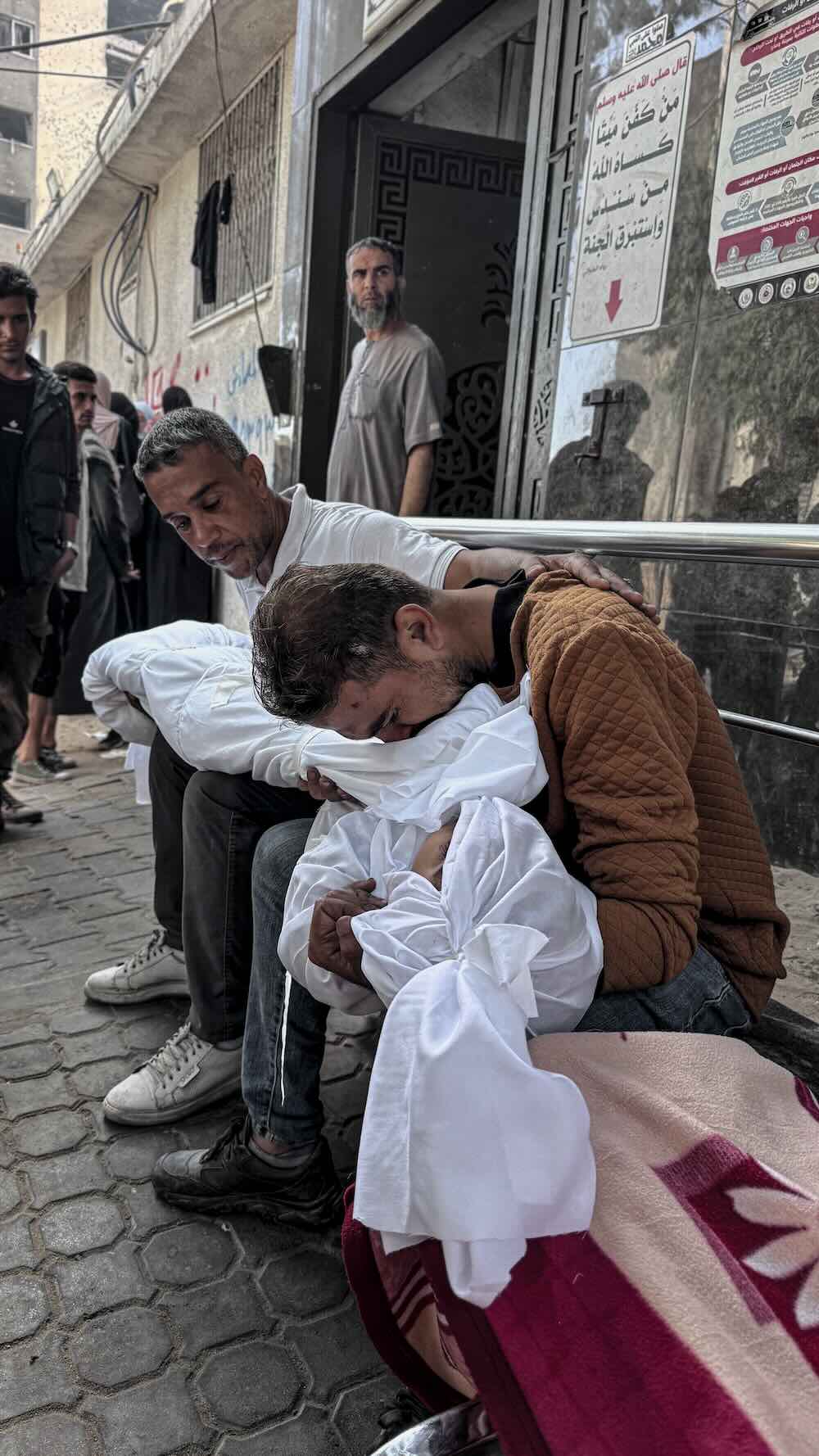
Samer Abo Samra, 27, is a freelance photographer. He took this photo on October 29, 2025 at 8:00 a.m. am in front of the morgue of the Al-Shifa medical complex in Gaza, following a “massacre during the breakdown of the truce by the Israeli occupation, which killed around 100 civilians, mostly children and women.”
In the photo, a grieving father, Mahmoud Shakshak, bids farewell to his children – Sara and Fadi – who have just been killed in an Israeli airstrike. He was kissing Sara’s foot when Abo Samra took the photo.
“The screams, the disbelief, it was unbearable,” Abo Samra said. The Nation. “The father whispered, ‘Last night I bathed you, I dressed you in new clothes… Fadi, you were wearing your Spider-Man shirt… you were so happy. You are now gone to a better world. I will never see you again.'”
“That scene killed me,” Abo Samra said. “I felt like the camera was crying and I felt helpless. I captured many powerful images during the genocide – displacement, destruction – but this one broke me.”
For Abo Samra, the photo is a testimony to “the betrayal of a ‘truce’ which was supposed to protect people”, but instead became a cover for a massacre. “This is a cry from Gaza to the world,” he said. “These children were not numbers. They were joy, laughter and love, stolen from their father’s hands.”
🇵🇸
“This child will never see his own reflection again”: Anas Fteiha
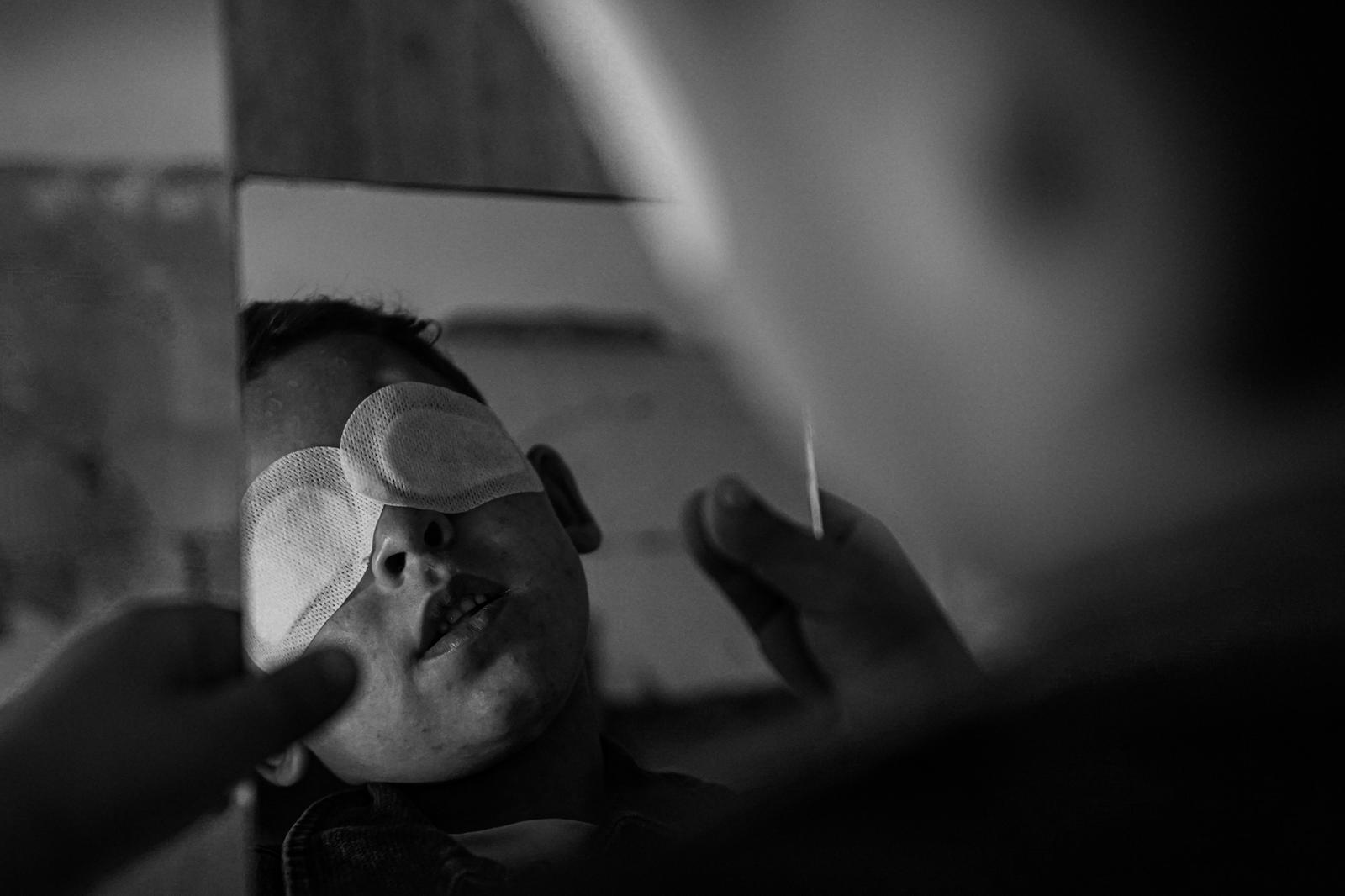
Anas Fteiha, 31, is a photographer for the Anadolu agency. On March 19, 2025, he took this photo of Mohammad Hijazi, a 7-year-old child from Jabalia who had fled south with his family during the genocide. While playing outside, Hijazi came across unexploded war remnants. It exploded. One of his eyes had to be removed; the other no longer sees.
“When I took his photo, I realized that this child would never see his own reflection again,” says Fteiha. “It was the first time I photographed someone who had completely lost their sight.”
He remembers his hands shaking as he focused the camera. “He smiled at the sound of the shutter,” Fteiha remembers. “He thought I was taking his photo so he could ‘see it later.’ It broke me.
“We take sight for granted. For Mohammad, the world is now forever dark and colorless. But his courage is the brightest thing I have ever seen.”
🇵🇸
“She asked me to document her story»:
Moatasem Abou Aser
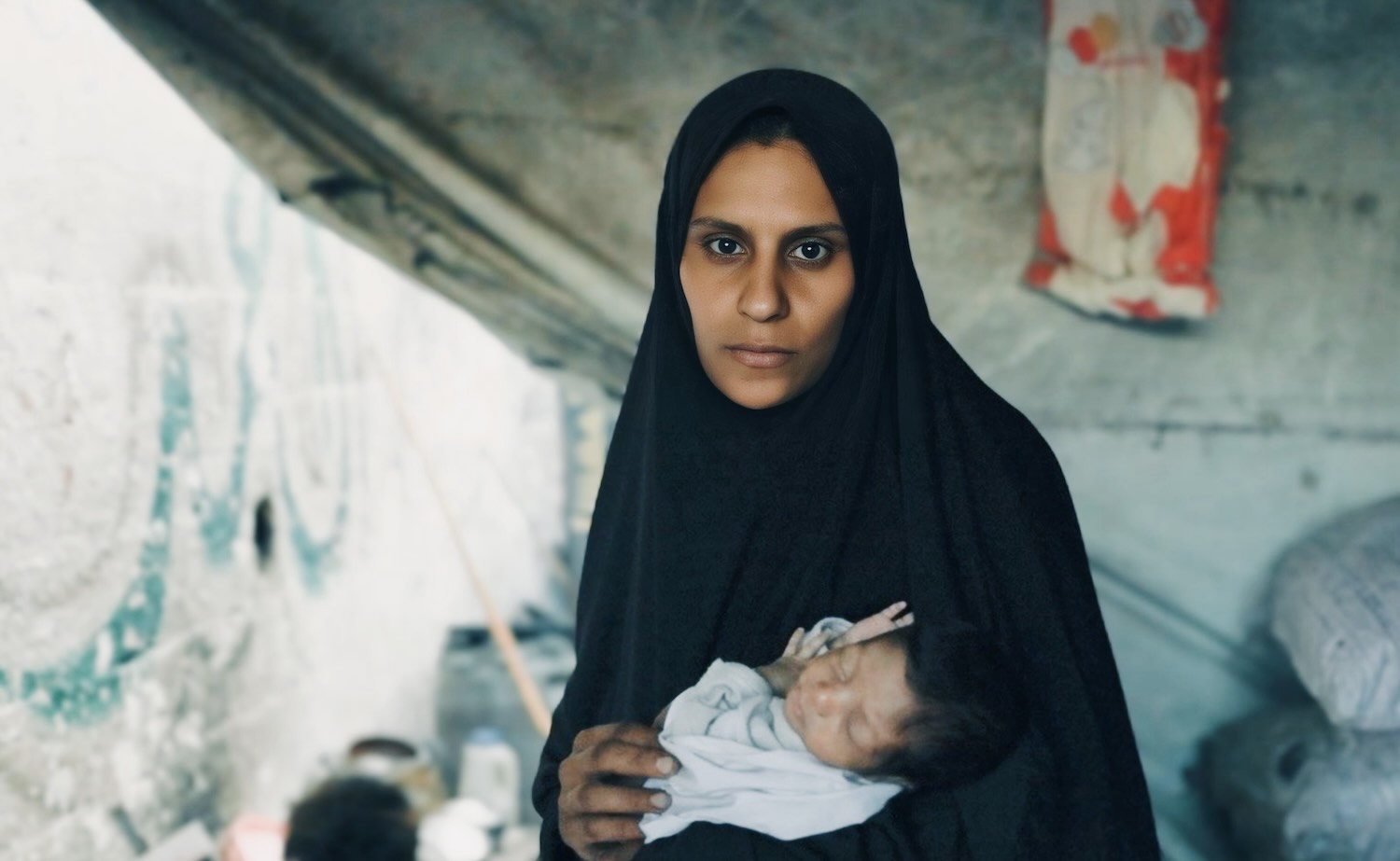
Moatasem Abu Aser, 30, is a documentary filmmaker and photographer. “I chose this photo because behind it lies a vast story, about the violation of women’s rights in Gaza and the multiple sufferings they endure,” he said.
He met the woman in this photo by accident on September 11, 2025, near the Al-Samer intersection in central Gaza. She had just given birth to twins while living with her mother-in-law and other children on a sidewalk, under a torn tarpaulin, attacked at night by stray dogs.
“She asked me to document her story,” Abu Aser said. The Nation. “She hadn’t eaten or drunk since she was pregnant. One of her newborn twins died of starvation.”
Current number
The image shows her exhausted, hollow-eyed, holding her surviving baby in her arms.
“When I saw her, I felt helpless,” Abu Aser said. “I could not offer food or shelter. I could only capture her truth. She is like our mothers, our sisters. Her suffering speaks for every woman who bears the cost of genocide and survival.”
🇵🇸
“It was the battle between annihilation and survival”: Mohammed Al-Aswad
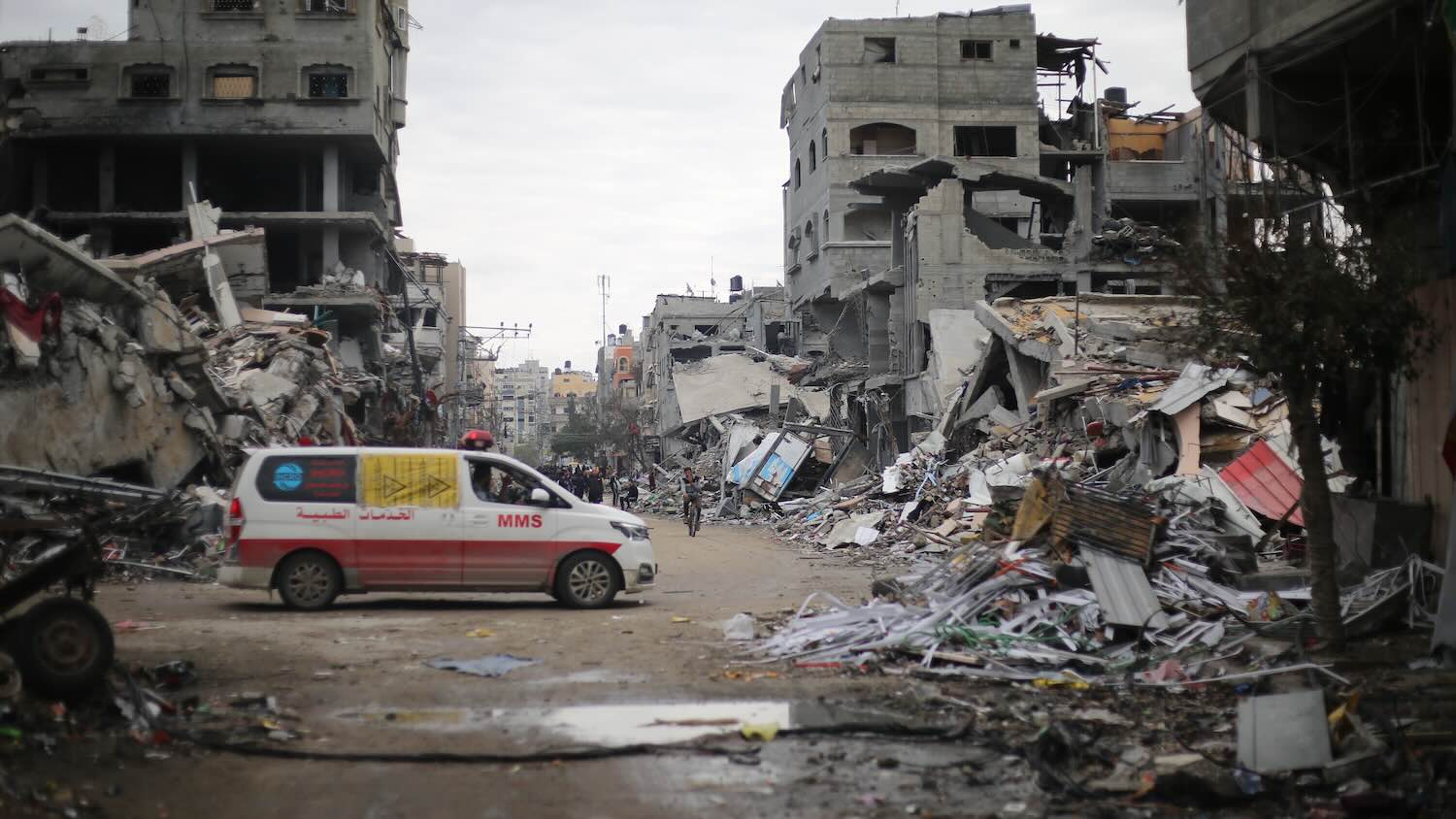
Mohammed Al-Aswad, 28, is a freelance photographer. “I chose this image,” he said, “because it captures the essence of life clinging to existence in the midst of the devastation wrought by genocide.”
The photo was taken in November 2023 in the Beit Lahia region, moments after a heavy bombing. It shows an ambulance heading towards Kamal Adwan Hospital in northern Jabalia.
“The air was heavy with dust and fear,” Al-Aswad recalls. “Drones were still buzzing overhead and the roads were littered with debris. Every step put me on a gamble with death, but I knew I had to capture this moment. It was the battle between annihilation and survival.”
Looking through his lens, Al-Aswad saw more than chaos; he saw the challenge. “The ambulance that drove through the destruction was life fighting to exist,” he said. “This image reminds me that even under the weight of genocide, humanity refuses to die. »
🇵🇸
“It was the strangest joy”: Suhail Nassar
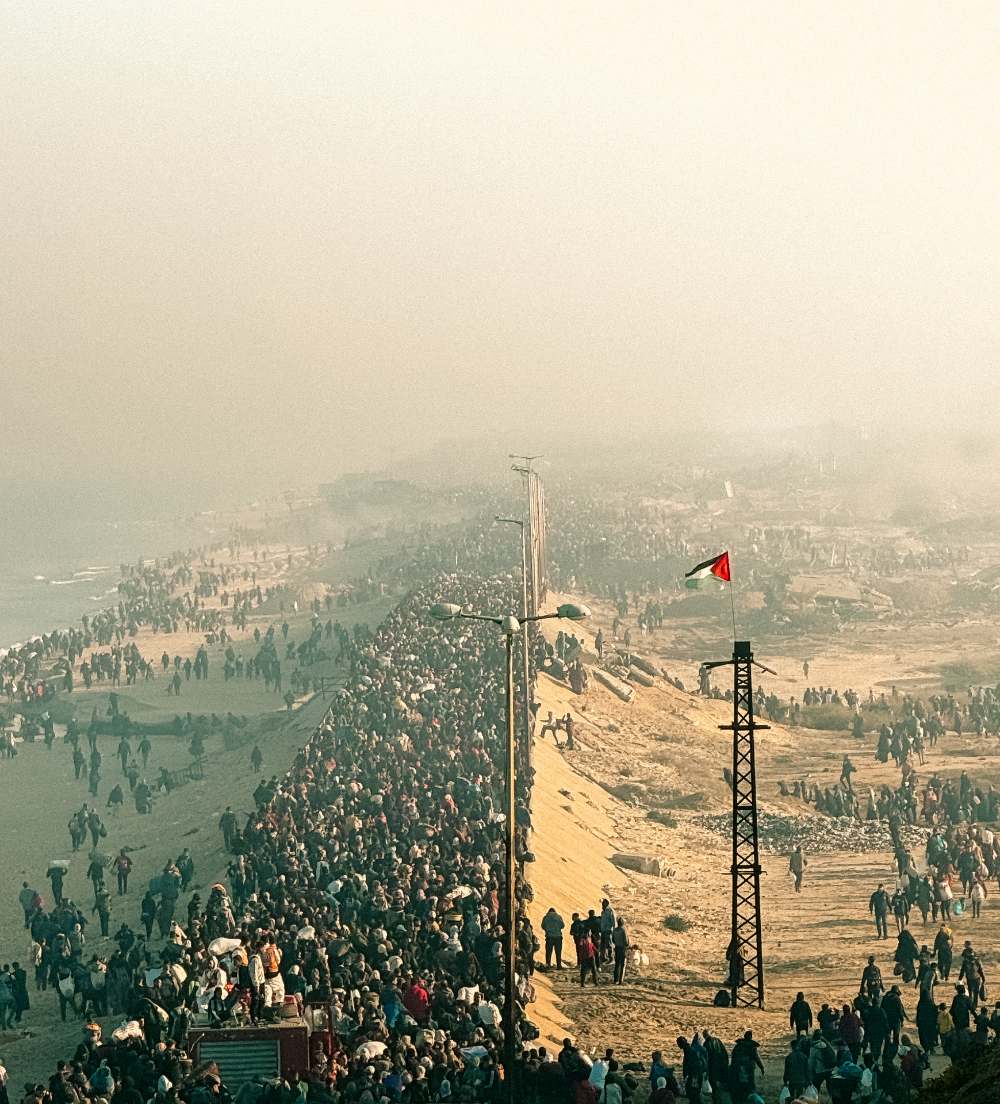
Suhail Nassar, 30, took this photo, which he titled “The Great Return to Gaza,” on January 27, 2025, days after the first extended ceasefire with Israel was declared.
“It wasn’t just a photo,” he said The Nation. “It was a statement. A collective heartbeat coming home.”
Nassar had returned to his destroyed home in Gaza City with his brother. Around them, survivors hugged and cried amid broken concrete and silent streets.
“It was the strangest joy,” he said. “We weren’t afraid. We felt like our souls had finally found the earth. Every breath was nostalgia, every ruin a memory.”
Although Nassar said going home “was the best feeling of my life,” the day was still marked by sadness. “When I was there, I could almost hear the voices of the friends we had lost. Happiness was pierced by their absence. The city was still hurt.”
🇵🇸
“I was dying of hunger too”: Omar El-Qattaa
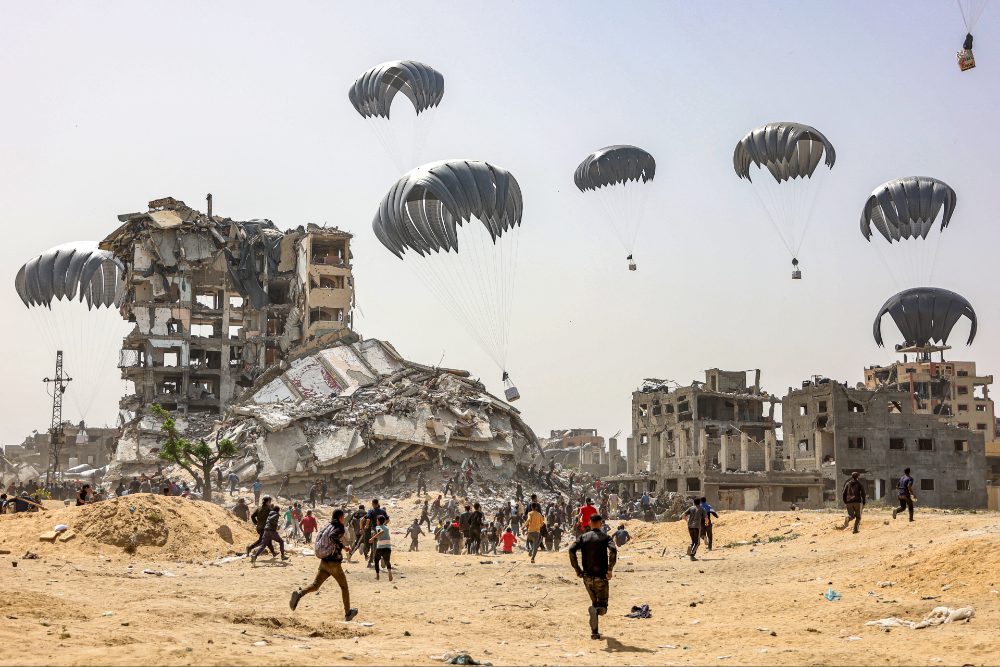
Omar El-Qattaa, 35, is a photographer at Agence France-Presse. He took this photo on April 23, 2024, in the Al-Mokhabarat Towers area in northern Gaza, at the height of the Israeli-induced famine. He captures a swarm of desperate civilians hunting food falling from the sky.
“It was a picture of humiliation,” El-Qattaa said. “People were fighting over bags thrown from planes, like crumbs for birds… there was no help, no food, nothing but airdrops. I saw people running, falling, hitting each other, just to feed their children.”
El-Qattaa was not simply an indifferent observer. “I too was starving, unable to feed my children,” he remembers. “That day, someone shared cookies with me for them.”
🇵🇸
“Every blow felt like a betrayal”: Omar Ashtawy
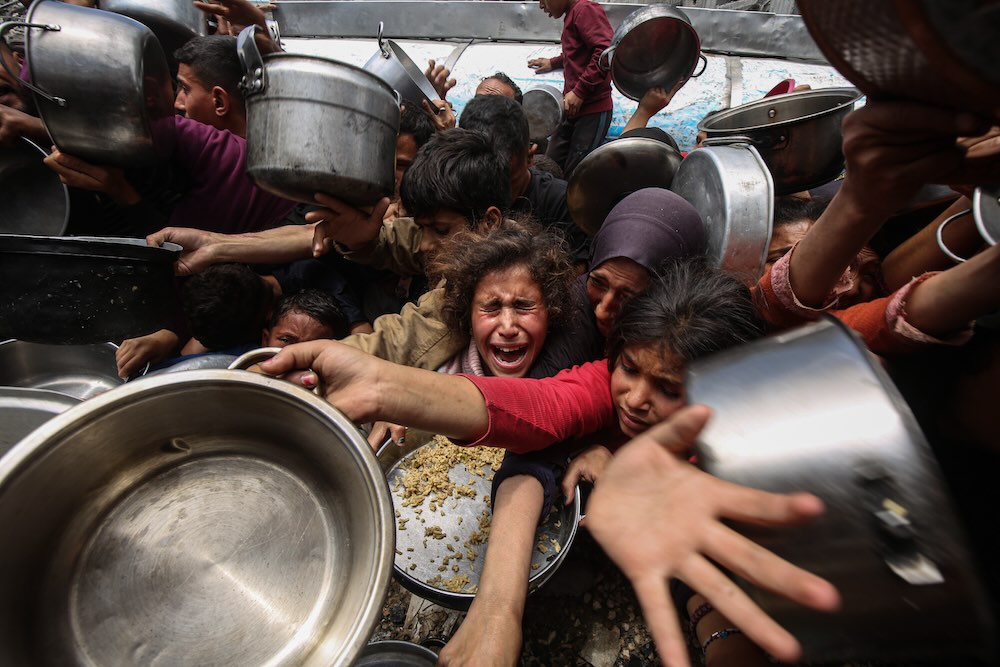
Omar Ashtawy, 21, is a photographer for APAimages and freelance for Reuters, UPI and DPA Picture Alliance. He took this photo on May 14, 2025 in Jabalia. We see a crowd with outstretched hands, metal bowls glistening in the dust.
“I chose this photo because it captures human pain in its rawest form,” he said. “It wasn’t just about people starving and holding empty pots: it was about dignity. »
Dust filled the air; people were running around with bowls, lids, or anything that could hold a portion of food. Ashtawy stood among them, the camera unbearably heavy. “I was weak, dizzy from hunger, like everyone else,” he said. “The children’s cries echoed in my head. Each shot was like a betrayal: I recorded the pain I shared.”
Ashtawy felt the weight of the camera as “a tool carrying a responsibility greater than my abilities”.
“I felt angry,” he said. “Anger at a world that leaves people begging for their lives. But I also felt a duty to show the truth before it disappears.”
From Minneapolis to Venezuela, from Gaza to Washington, DC, we live in a time of staggering chaos, cruelty and violence.
Unlike other publications that reproduce the opinions of authoritarians, billionaires and corporations, The Nation publishes stories that hold the powerful accountable and center communities too often denied voice in national media – stories like the one you just read.
Every day, our journalism weeds out lies and distortions, contextualizes developments that are reshaping politics around the world, and advances progressive ideas that fuel our movements and incite change in the halls of power.
This independent journalism is only possible with the support of our readers. If you would like more urgent coverage like this, please donate to The Nation Today.


