Do any bugs live in the ocean? Short answer: Not really.


By some estimates, insects make up 80 percent of named animal species. They are found all over the world and in all sorts of places, from rainforests and deserts to human homes and bodies (much to our annoyance). But surprisingly, Earth’s largest environment, the sea, is almost insect-free.
Many insects live in fresh water or near the sea, in salt marshes and beaches. There are also several species of water striders in the genus Halobateswhich live on the surface of the oceans, far from land. Halobates are the closest thing to a marine insect, but even they don’t actually live In the sea, just above. So why isn’t the ocean teeming with insects?
Insects come from crustaceans
The most likely explanation, according to a 2022 article on HalobatesThis is because “by the time insects evolved, the seas were already well populated with all the major phyla of marine invertebrates.” The ancestors of insects left behind a populated sea as they adapted to life on land. You could say they were moving from a bad job market to one with better opportunities.
Modern insects share a common ancestor with crustaceans, such as crabs and shrimp. After evolving in the sea around 500 million years ago, crustaceans developed in a wide range of underwater niches. Even today, they perform many of the same ecological roles in the sea as insects do on land. Crustaceans are plant nibblers, scavengers, and parasites of larger animals. Blood-drinking “sea lice” get their name from the insects they look like, but they are actually copepods, a type of crustacean.
The insects left the sea with the plants
When insects evolved around 440 million years ago, it was to take advantage of a relatively untapped niche: land, and specifically land plants. Related groups of animals, such as the ancestors of today’s centipedes, crawled out of the sea somewhat earlier than insects. But it’s no coincidence that insects appear in the fossil record around the same time as the first terrestrial vascular plants (a group that includes most modern plants).

When giant centipedes ruled
Ancient centipedes, like the eight-foot-long Arthropleura, roamed modern-day Europe and North America about 344 to 292 million years ago. Video: When Giant Centipedes Ruled, PBS Eons
The evolution of plants and insects is deeply linked. Most modern insects rely on plants, sometimes a single plant species, for food and shelter. Fossil evidence suggests that as plants expanded from sea to land, the animals most dependent on them followed. And as plants diversified and spread across the Earth, so did insects, acquiring special adaptations that gave them an advantage in surviving far from the sea.
Insects are adapted to life on land
Marine environments present, among other obstacles to survival, overwhelming pressure, strong currents and high salt levels. Marine crustaceans, present in the sea for hundreds of millions of years, are well adapted to these challenges. For example, a 2012 study of crustacean gills described them as a “multifunctional organ,” used to breathe oxygen as well as regulate the intake of salt and other chemicals.
According to BBC Wildlife Magazine“Because insects almost certainly evolved on land, many of their adaptations, from reproduction to the physiology of eating and breathing, are suited to a terrestrial existence. Even insects that live much of their lives in fresh water cannot stray too far from land.” As the insects’ marine ancestors adapted to their new habitat, they lost characteristics that were no longer needed and gained new ones.
Unlike crustaceans, insects have evolved a system for delivering oxygen through tiny holes in their bodies. It is more efficient than the gills in breathing air. According to a major hypothesis, the gills of the first insects, which were no longer used to breathe, would have become wings. Flight was another crucial adaptation, as it helped insects move easily over land and to high places like treetops. And for maximum stability on land, the numerous legs of crustaceans are reduced to six in insects.
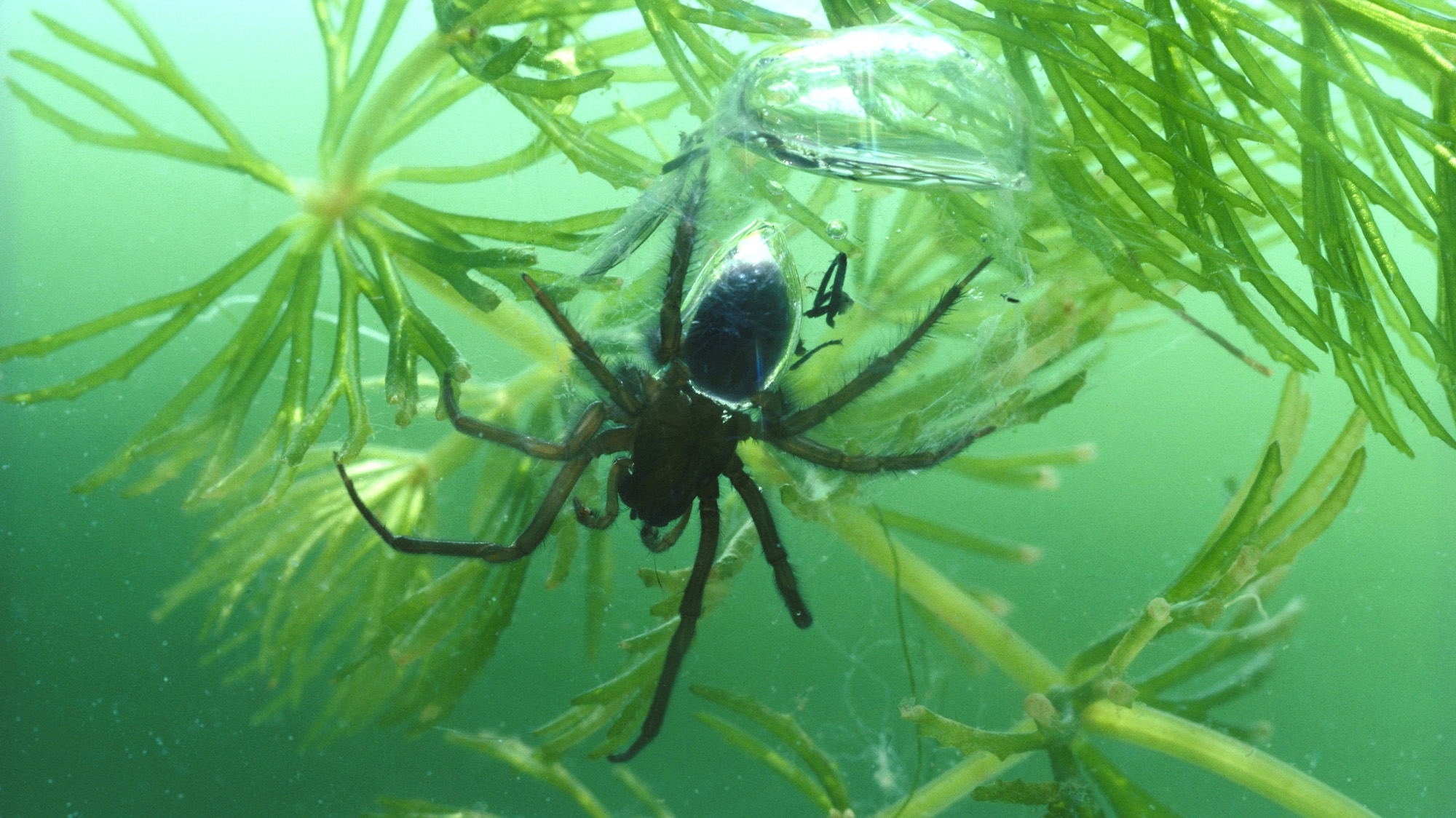
There are many other examples of traits that give insects mastery of terrestrial environments, but would not be as useful under the sea. Many insects have specialized mouthparts for sucking plant juices or chewing leaves. Most go through a life cycle called complete metamorphosis, which helps them cope with seasonal food availability. The same insect can nibble leaves in summer as a caterpillar, sleep through winter as a chrysalis, and sip nectar from flowers in spring as a butterfly.
The loss of these characteristics and the evolution of oceanic adaptations could again represent a prohibitive cost in time and energy. This is especially true since crustaceans have never lost their monopoly on the sea. It might be better for insects to stay where they are rather than trying to compete with marine crustaceans.
Insects are one of evolution’s great success stories
The ancestors of insects came from the sea. But their long evolution on land may have made them too specialized to easily readapt there.
For comparison, we can look at the few species of terrestrial crustaceans: woodlice (also called woodlice) and certain crabs. They succeed in specific terrestrial niches, but insects are much more versatile and widespread. Land crustaceans move more slowly than insects. They cannot fly and need humid environments because they breathe through gills. Some still breed in the sea and therefore cannot live too far away. You won’t find a land crab on a mountain any more than you will find insects on a coral reef.
Ocean habitat Halobates This may be an exception, but they are also a remarkable success in their own right. It is the only animal that lives entirely on the surface of the ocean and, what’s more, “one of the most widely distributed organisms in the world.” This says a lot about the incredible adaptability of insects. With or without an ocean, insects thrive.
In Ask us anythingPopular Science answers your wildest and most burning questions, from everyday things you’ve always wondered to bizarre things you never thought to ask. Do you have something you always wanted to know? Ask us.
Related Stories “Ask Us Anything”

The best new PopSci 2025 releases


