What is biometric AI and how does it work?


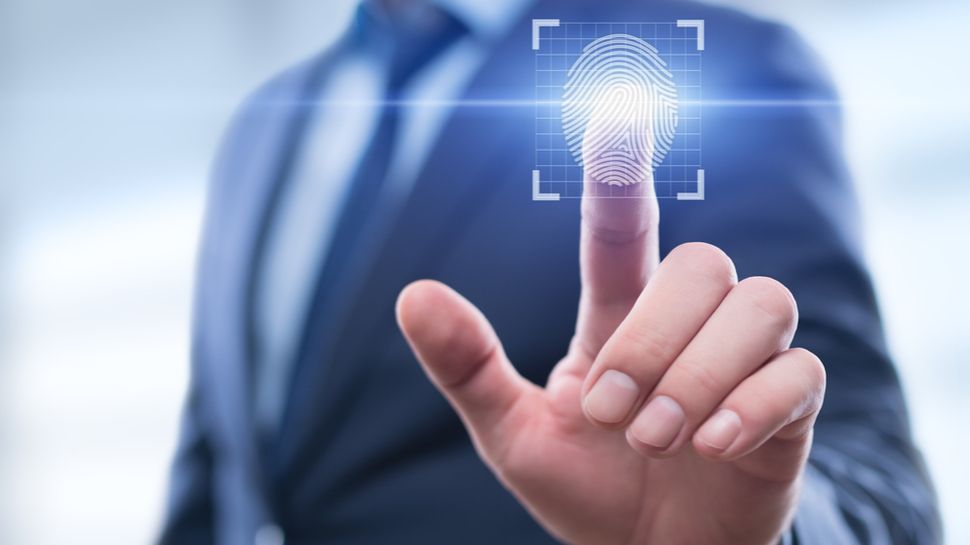
Biometrics are the set of unique physical or behavioral characteristics that can be used to identify an individual – most commonly voice, face, speech patterns and fingerprints.
A good example of the evolution of biometric technology is the progression of Apple’s iPhone and iPad locking features over the past 15 years. This is a clear illustration of how far we have come.
Founder and CEO of FARx Group Limited.
Yet even in the last 12 to 18 months, the landscape has changed significantly. Two years ago, the digital identity solutions market was valued at $34.5 billion and is expected to continue its strong growth in the years to come.
Latest reports show that the number of people using software facial recognition to secure payments will exceed 1.4 billion worldwide this year, up from just 671 million in 2020.
The current landscape
As the use of biometrics continues to grow due to its effectiveness in enhancing security, rapid advancements in fraudsters’ tools have made it increasingly possible to replicate a person’s image.
A groundbreaking report released in 2020 predicted that cybercrime would cost the world $10.5 trillion annually by 2025.
To put things into perspective, this makes cybercrime the third largest economy in the world, behind the United States and China.
With this level of financial gain flowing into the pockets of cybercriminals and fraudsters, they have been able to expand their operations to mirror legitimate private sector organizations.
Today, many operate in high-rise offices, complete with HR departments, benefits and corporate structures.
Although it may seem fictitious, these details reflect the level of funding, sophistication and expertise now embedded in criminal networks.
Backed by billions of people, the tools and tactics they deploy to target individuals and organizations have evolved at an alarming rate.
In response to this growing threat, AI-powered biometrics have emerged, bringing a new level of intelligence and adaptability to identity protection.
Technological advances have ushered in a new era of threats, notably through deepfakes, which are now capable of convincingly imitating voice, face and behavioral traits.
For those of us who build the digital defenses that businesses and institutions depend on, this challenge has forced rapid innovation in cybersecurity.
Biometric security is already recognized for protecting the world’s most sensitive assets, from banks and governments to military infrastructure.
But if deepfakes manage to convincingly circumvent these systems, as OpenAI founder Sam Altman warned in July, then the question becomes: How can we stay ahead of the curve?
The answer lies in AI-powered biometric fusion – a technology that merges voice, facial recognition and speech pattern analysis to develop an intelligent system capable of understanding not only how a person looks or sounds, but also how they express themselves.
By learning an individual’s appearance, behavior and vocal characteristics, the system constructs a dynamic identity profile that is extremely difficult to impersonate.
How AI helps
The system does this through AI – technology that replicates human intelligence.
It learns from data, much of which is generated by humans, to solve problems, understand language, recognize patterns, and make decisions in the same way humans do.
At its core, identity is a set of data; a unique set of data that each of us produces, representing us and allowing others to recognize who we are.
Our biometric data facilitates communication, connection and above all trust between individuals.
If I know who you are, I can trust you to complete transactions, undertake tasks, and share confidential information with you, knowing that I am communicating with someone I know.
In humans, the main biometric modalities are face and voice. We recognize each other by learning the distinct voice and facial features of each individual.
AI biometric technologies mimic the human ability to recognize each other by learning individuals’ unique visual and verbal traits.
This means that the next time you log in to a secure online service, the AI biometric system will recognize your identity by identifying your unique voice and facial characteristics, which it learned from your previous logins.
This continuous learning process allows the AI biometrics to continually improve its ability to recognize individuals, increasing its confidence that it is you – the authorized user – who is accessing a secure service.
On the other hand, the better he knows you, the better he is at detecting when it’s not you; such as facing a fraudster, a recording or a deepfake.
But AI biometrics isn’t just about recognizing that it’s you. As with humans, AI biometrics can also infer a range of other attributes.
Your voice and facial features can reveal your age, gender and ethnicity, based on your accent, language and appearance. Certain health conditions can be identified through voice and facial biometric analysis.
Importantly, just as humans learn to perceive a person’s emotional state from their vocal and visual signals, AI biometrics can also interpret these attributes to determine a user’s emotional state.
This capability is particularly important for the development of engaging and empathetic agentic AI. An AI that knows you.
In an age where identity is synonymous with security, this AI-driven approach provides a critical layer of protection, one that evolves alongside the threat landscape.
We rated the best antivirus software.
This article was produced as part of TechRadarPro’s Expert Insights channel, where we feature the best and brightest minds in today’s technology industry. The views expressed here are those of the author and are not necessarily those of TechRadarPro or Future plc. If you’re interested in contributing, find out more here: https://www.techradar.com/news/submit-your-story-to-techradar-pro


