What Pan-Africanism Can Teach Us Now


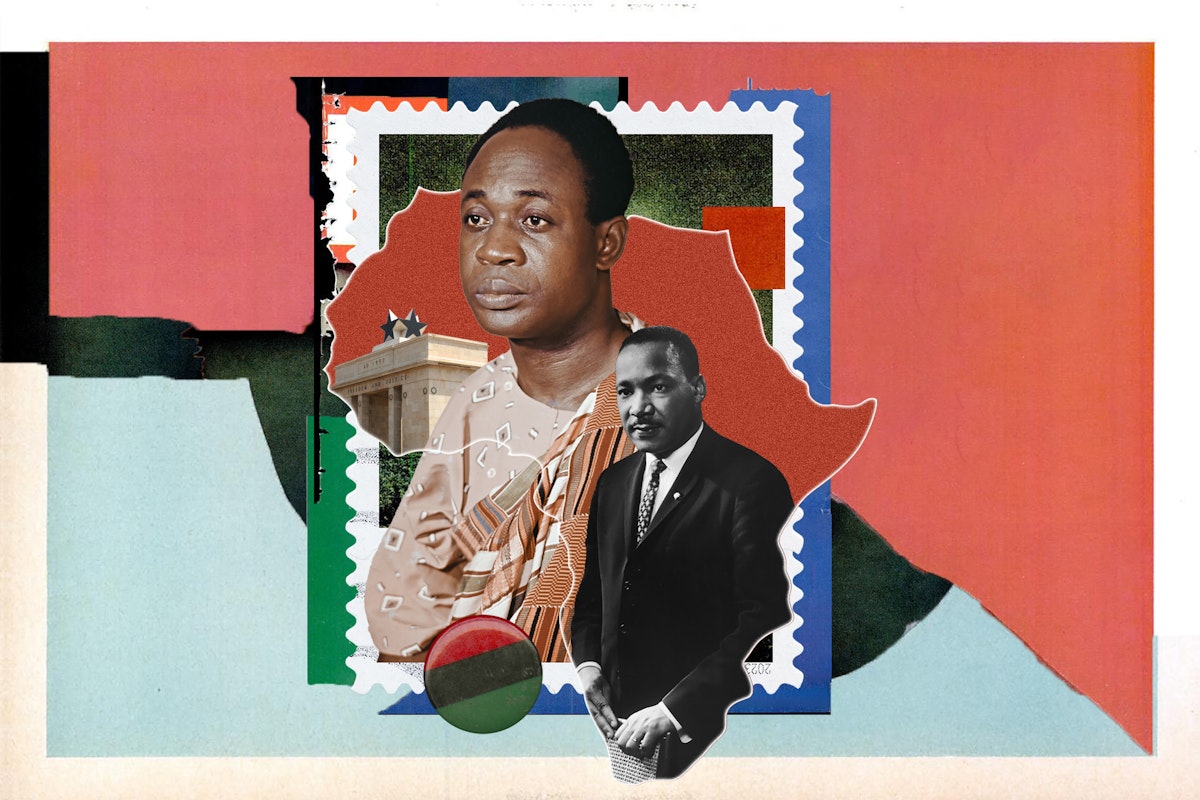
French, journalist and longtime author, more recently, Born in darkness, A crucial text that reaffirmed the important role that sub -Saharan Africa has played in the development of modern civilization, adopts a prospective approach. He calls into question the lazy theories which attribute the current economic precariousness of Africa and the political instability to incompected and wonders what the continent could look like if the intellectuals and today’s organizers have read the Pan -African ideals of Nkrumah. What is Africa – and the wider black diaspora, if its people could focus on building material ties between national and ethnic identities? These questions supervise the biography of Nkrumah by French, which mixes rigorous archival research, lively relationships on the ground and poignant personal anecdotes to build an admiring portrait of the first leader of Ghana. While French never stands out from Nkrumah’s faults, there remains a sympathetic biographer, recognizing the pressures that the pan -Africanist has been confronted and the antagonistic forces encouraging his possible fall. Although The second emancipation Aims to be a large -scale study of a singular revolutionary moment, he is very convincing and propulsive when French houses in the almost mythical trip of Nkrumah of a village son to the hope of a nation. The history of the Ghanaian leader is an opportunity to reconsider the current fate of Africa.
There are few details available on the origins of Nkrumah outside of his own writing, on which French is based in the first chapters of The second emancipation. Nkrumah was born in the village of Nzima de Nkroful under the name of Francis Nwia Kofi Nkrumah, to parents of modest means. Her mother, Elizabeth Nyaniba, wanted her son to succeed, then when Nkrumah was young, she moved to a greater city and scored it in a Roman Catholic mission school. Although Nkrumah does not like experience – he fled the first day – he paved doors that paved the way for his brilliant future. There is an apocryphal radiance in certain parts of the biography of Nkrumah, which can be attributed to the propensity of the political leader in self-invention and the messianic role that he would end up playing in Ghanaian history. After about eight years of school, Nkrumah entered the newly formed Achimota college, where he studied to become a teacher. There, he met one of his mentors, James Aggrey, the first member of the African faculty and deputy director of the college, who then convinced Nkrumah to study in the United States.
The young Ghanaian left for this country in 1935. The Frenchman describes the journey as “an odyssey in three parts”, which included the solicitation of a parent’s money, hiding among the crew members on a ship, and making a stop in Liverpool, where he was briefly organized by PAA Grant, the first president of the Gold Coast convention, or a political role, as a political role Role of Nkrumah, or UGCC, as a political role that would play an important role in Nkruma Chef. Nkrumah was an ambitious but socially reserved figure: although charming and loved, he seemed fundamentally alone. The French ruminations on the romantic life of Nkrumah (or his absence, until her unexpected marriage with Fathia Halim Rizk in 1957) and wonders how this charismatic chief could be so clumsy – bordering on juvenile women. These types of details, although awkwardly deployed by French sometimes, actually humanize Nkrumah, anchoring a figure which is so often considered as a prophet that a man.


