What to know about colostrum supplements: What experts say


Should you add colostrum to your daily diet?
On social media, influencers add scoops of powder to drinks. On podcasts, ads for the supplement tout it for a number of benefits: better immunity, better gut health, weight loss, recovery after exercise.
“Colostrum has been one of the most exciting supplements over the past year,” a GNC spokesperson wrote in an email. In GNC’s upcoming “Anti-Trend Report,” colostrum supplements were highlighted as one of the biggest supplement trends of the year.
Sometimes called “liquid gold” because of its honeyed appearance, or “starter kit” for infants, colostrum is a crucial part of newborn development.
But what about adults? What if this colostrum came from a cow and not a human?
Here’s everything you need to know about colostrum supplements and whether they’re worth it.
What is colostrum?
Colostrum is an early form of breast milk produced right after childbirth.
It is intended to support the development of newborns and contains essential nutrients to boost their immune system, support their gastrointestinal system and promote their overall growth.
Compared to so-called mature milk, the type of milk produced after colostrum, colostrum is richer in proteins, fats, vitamins, minerals and peptides. It is produced approximately five days after birth.
Dr. Pieter Cohen, associate professor at Harvard Medical School and general internist at Cambridge Health Alliance, said colostrum contains certain antibodies and compounds important for infant development.
“Colostrum contains a lot of things that are good for babies of the given species,” he said. “Human babies will be exposed to things that can help, like immunoglobulins and other proteins in colostrum that boost the immune system. They’re really good because babies develop their own immune systems.”
Other studies have demonstrated the importance of colostrum for infants in shaping the gut microbiome and reducing allergy risk.
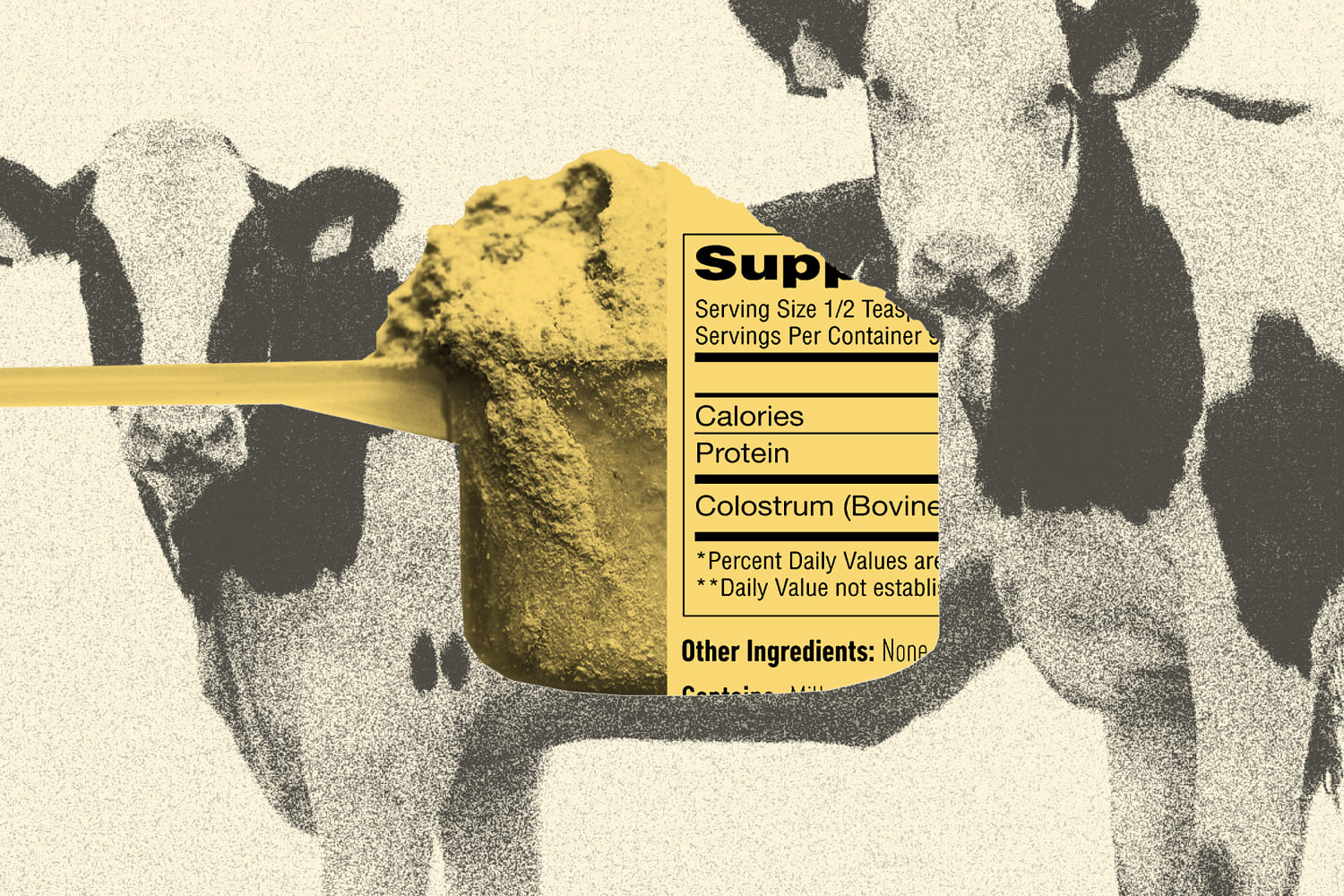
However, colostrum supplements are not made from breast milk. The majority is made from cow’s milk and sold as bovine colostrum. Some colostrum supplements are made from goat’s milk.
Why do people take colostrum and what does the research say?
There’s a lot of interest in colostrum for fighting inflammation, especially among athletes, said Daniel Fabricant, president and CEO of the Natural Products Association, a supplement industry trade group. He also cited gut health as a benefit.
(Manufacturer added that colostrum supplements are not intended to cure, treat or alleviate disease. “It is always important to differentiate something that is a health and wellness product from something that cures, treats or alleviates disease,” he said.)
In a review article published last year in the journal Frontiers in Immunology, researchers said numerous studies have reported positive effects for athletes taking the supplement – including promoting muscle recovery, boosting immunity after strenuous exercise and healing injuries – while adding that more research is needed. The review was funded by a dairy company.
Another review found improvements in gastrointestinal issues like diarrhea. The authors, however, wrote that there was “limited evidence” on the effects of colostrum on gut health, “with mixed results.”
Wesley McWhorter, a registered dietitian and spokesperson for the Academy of Nutrition and Dietetics, said research on colostrum supplementation is too early to make bold claims.
“Most of this research, still very preliminary, is in its early stages. There are no large-scale studies, so there is no hard evidence,” McWhorter said. Still, he said he wants to see where the research leads.
In many cases, studies are funded by companies selling colostrum.
Richard Bloomer, dean of the College of Health Sciences and director of the Nutraceutical and Dietary Supplement Research Center at the University of Memphis, said the factors in each study — the source of the supplement, its dosage and the subjects — vary, which can affect the results.
Cohen said he doesn’t think the research is thorough enough yet and he doesn’t recommend colostrum supplements.
He added that supplements can vary by each manufacturer and brand, and quality assurance is lacking.
“So even if there were one or two studies on a specific product, that doesn’t mean that product today is made the same way as the one that was studied,” he said.
Can you get the same benefits without colostrum?
Colostrum research appears most promising for athletes, who are in control of their sleep, diet and exercise, McWhorter said. But for the average person, he says, there are other ways to get the same benefits.
McWhorter recommended a “food first” approach.
“Focus on your diet first, then your exercise, and focus on the other elements,” he said. “And that’s really where you should be spending your time, rather than taking supplements. There’s no magic pill right now.”
Benefits like those promised by colostrum can be achieved through lifestyle changes, such as diet, exercise and regular sleep.
Bloomer said consumers should evaluate what they are willing to spend their money on.
“Could you justify $2, $3, $5 more per day to get a small potential benefit? You might be better served spending that $5 on a bunch of fruits and vegetables and trying to improve your immune function that way,” he said.


