What to know about Iran’s Kharg Island and Trump’s threats : NPR


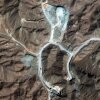
An Iranian tanker docks at the platform of the oil installation on the island of Kharg, on the edge of the Persian Gulf. The island is responsible for 90% of Iran’s oil exports, making it a lifeline for its economy.
Atta Kenaré/AFP via Getty Images
hide caption
toggle caption
Atta Kenaré/AFP via Getty Images
The United States has targeted Kharg Island, the hub of Iranian oil exports in the Persian Gulf, during the ongoing war with Iran. Although President Trump has said the island’s oil assets remain intact, he has also threatened that could change.
Damage to oil infrastructure on the island, located at the northern tip of the Persian Gulf about 15 miles (24 kilometers) from Iran’s coast, would cause major disruption to Iran’s economy and represent another blow to global oil supplies at a time when gas prices are already volatile.
Here’s what you need to know about the island as the war continues.
What the United States has done so far
In a March 13 post to Truth SocialTrump announced that US Central Command had carried out “one of the most powerful bombing raids in the history of the Middle East” by “totally annihilating” military targets on the Iranian island of Kharg. Even though he says the U.S. military leaving oil assets alone, he threatened to hit them too if Iran continued to block the safe passage of ships and large tankers through the Strait of Hormuz.
The strait is a critical area for oil transport. In 2024, an average of 20 million barrels per day crossed the strait, which is equivalent to approximately 20% of the world’s consumption of petroleum liquids.
Iran has threatened to strike any ship passing through the strait that is not carrying Iranian oil, with few exceptions. The Trump administration has offered to escort the ships through the strait and encouraged other NATO allies to join the effort. So far, other countries have declined, and the United States has not escorted any ships through the strait since the start of the war.
Trump has said in recent days that he plans to strike oil pipelines located on Kharg Island.
“We can do it on five minutes’ notice. It will be over. But for the sake of one day rebuilding this country, I guess we did the right thing, but it may not stay that way,” Trump told reporters Monday. “Just a simple word, and the pipes will be gone too, but it will take a long time to rebuild them.”
The importance of Kharg Island
Kharg Island is Iran’s economic lifeline. Iran is one of the world’s largest oil producers, and oil and gas exports are the Middle Eastern country’s main source of income. Before the war, the small island provided 90% of Iranian oil exports.
It’s a small but mighty island, as the waters around it are deep enough for huge tankers to dock, making it an ideal place to ship oil. Much of the Persian Gulf coast is too shallow to accommodate large oil tankers.
If the island’s oil infrastructure were to be wiped out, Quincy Institute Executive Vice President Trita Parsi said it would lead to an escalation of war and have catastrophic impacts on the global oil supply chain.
“Almost 90% of Iranian oil is going to be taken off the market. This is going to impact an already tight market,” Parsi said. “On top of that, if the Iranians retaliate – which there is absolutely no reason to believe they wouldn’t – then we’re talking about almost no oil going through the Persian Gulf for some time, and that will have a devastating impact on oil prices.”
But Parsi stressed that this would not be the first time Iran faced devastating attacks on oil infrastructure on Kharg island. The Iraqis regularly struck the island during the Iran-Iraq War in the 1980s. The Iranians persevered by finding solutions to continue exporting oil. Although US strikes would have serious consequences for the Iranian economy, the likely retaliatory strikes would ensure that Iran would not suffer alone.
Parsi added that Asian countries are currently “much more vulnerable” to the oil impacts of Iranian retaliation. China is the largest buyer of Iranian oil. But Iranian attacks, Parsi said, would likely target all Gulf Cooperation Council (GCC) states, which include Bahrain, Kuwait, Oman, Saudi Arabia, Qatar and the United Arab Emirates, and their “economic capabilities as well as all depots and terminals” that handle oil.
GCC Secretary General Jasem Mohamed Albudaiwi has already condemned the attacks on member countries, including a Monday that he says killed a civilian in Abu Dhabi. He said Iran’s actions constitute a “blatant violation of the principles of good neighborliness and all international laws and norms.”

The GCC holds more than 32% of the world’s proven crude oil reserves. In the event that Iran bombs its oil infrastructure and transit routes, Parsi said it would lead to even higher prices at the gas pump and beyond in the United States.
“We are talking about oil prices exceeding $150 [a barrel]”, which could mean gas prices would rise as much as $5 or $6 a gallon,” he said. “That will then have other ripple effects, because oil is not only produced to be turned into gasoline. They also use it as fertilizer, which is very important for agriculture. And suddenly food prices are also going to rise dramatically.”
Bloomberg reports that Goldman Sachs Projects If the war extends for another five or six weeks, it will cause a 14% contraction in the GDP of Qatar and some other GCC countries. According to Parsi, this would have a domino effect on the global economy, adding that the only impact comparison available is the state of the global economy during the COVID-19 pandemic.

Trump has had his eyes on the island for years
Decades before Trump became president, he was thinking about what he would do to Kharg Island if he one day became commander in chief.
“I would be tough on Iran” he said The guardian in 1988. “They beat us psychologically, making us appear [like] a bunch of idiots. One bullet fired at one of our men or one of our ships and I’ll do a number on Kharg Island. I would go in and take it.
Now, in 2026, Trump faces an opportunity. But when asked if he would take Kharg Island during a March 13 interview with Brian Kilmeade on Fox News Radio, Trump did an about-face. He told the host: “Who would ask a question like that? And what fool would answer it, okay?”


On Tuesday, during a meeting with the Irish prime minister, Trump acknowledged his comments made in 1988, noting that he had spoken about Iran being “a great threat to this country, to our world.”
“I was right. In fact, I said you had to attack Kharg, the island of Kharg. You had to attack them, years ago, when they were in action,” Trump said.
What happens next
Trump praised the initial U.S. attack on March 10 that destroyed the island’s military satellites. However, he remains reserved about his next projects. He keeps signaling that something more is in the works.
On Sunday, Trump said the United States was prepared to launch additional strikes on Kharg Island, saying: “We have everything locked, loaded and ready to go if we want to do it. But we chose not to do it. I chose not to do it yet.”
In the Oval Office on Monday, Trump said the U.S. military “destroyed everything on Kharg Island except one thing. We left the pipes,” referring to the island’s oil infrastructure.
But he added another hint of a threat.
“At some point, something positive is going to happen with respect to these pipelines,” Trump said, without elaborating.


