When coal smoke choked St. Louis, residents fought back, but it took time and money


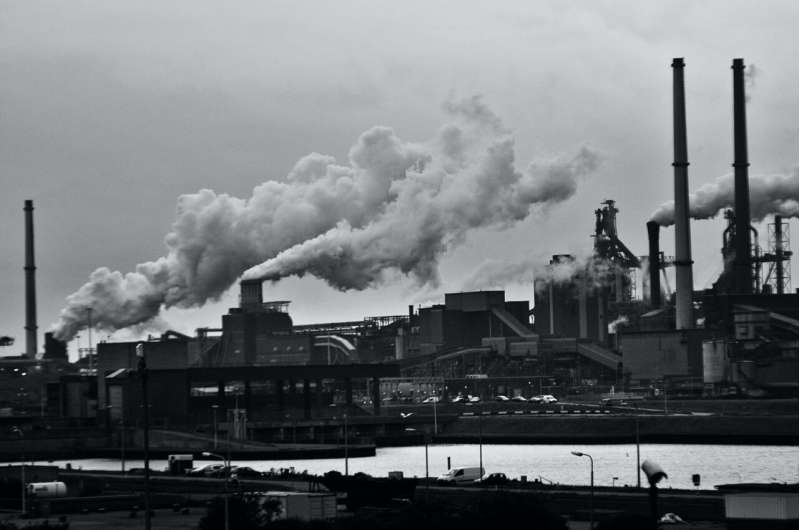
Credit: Frans van Heerden from Pexels
It was a morning unlike anything St. Louis had ever seen. Car traffic slowed to a crawl as drivers struggled to see in the cloudy air. Buses, trams and trains ran an hour late. Downtown parking attendants used flashlights to guide vehicles into their lots. The streetlights were on and the store windows shone with light.
Locals called November 28, 1939 “Black Tuesday.” Day turned to night as thick, acrid clouds blackened the sky. Even at street level, visibility was only a few meters. Air pollution was caused by homes, businesses and factories burning soft, sulfur-rich coal for heat and electricity. Soft coal was cheap and burned easily, but produced large amounts of smoke.
That dark morning was an extreme version of a problem that St. Louis and dozens of other U.S. cities have experienced for decades. It would be another 30 years before strict federal regulations on air pollution were passed, and state and local efforts to limit coal smoke had failed miserably.
Today, as the Trump administration works to reduce coal-related air pollution limits, the events in St. Louis more than 80 years ago are a reminder of how bad a situation can become before public objections finally force the government to act. And as I explain in my book “Black Gold: The Rise, Reign and Fall of American Coal,” these events also highlight how successful this action can be.
A generalized citizen effort
Days after Black Tuesday, St. Louis Mayor Bernard Dickmann responded to the crisis by creating a commission to investigate and recommend a solution to persistent air pollution.
Just before Black Tuesday, Joseph Pulitzer II, publisher of the St. Louis Post-Dispatch, launched his own newspaper anti-smoking campaign for fundamental change. In my research, I found the first editorial, from November 13, 1939, which declared “something must be done, or else.” A crack reporter, Sam J. Shelton, was assigned full-time to what became the smoke beat. Post-expedition news reports, editorials, and political cartoons championed the values of cleaner air and the dangers of toxic pollution.
The Dickmann Smoke Elimination Committee met 13 times during a winter that seemed relentless in the darkness. News and weather reports reported that smoke blotted out the sun one day out of three, and sometimes sunlight never penetrated the darkness. Tips poured in, including from Hollywood-style stuntman and flagpole keeper Alvin “Shipwreck” Kelly, who offered to roost in the sky looking for dirty smokestacks.
In late February 1940, the commission issued a report recommending restrictions on smoke emissions. The report says residents and industry would either have to pay more to buy lower-sulfur coal or another fuel, or pay for and install new equipment to burn high-sulfur coal more cleanly. On April 5, the city’s Board of Alderman met to consider legislative changes that would implement the recommendations.
Newspapers reported that more than 300 demonstrators, including traders, coal miners and coal miners, parked their trucks in front of city hall waving banners. Black smoke was billowing from coal stoves mounted atop one of them, the newspapers said. The noisy crowd marched to City Hall, shouting and often drowning out city officials. Amid shouts and jeers, aldermen passed Ordinance 28-1.
Immediately, Deputy Mayor Raymond Tucker began finding suppliers of more expensive, low-sulfur coal for the city’s residents and businesses. He launched a slick public relations campaign to urge residents to comply with the new law. He also hired a team of inspectors to block illegal shipments of sulfur-rich coal and to cite anyone whose chimney smoke was too black.
Illinois coal operators, who sold cheaper sulfur-rich coal, urged their state’s residents to boycott St. Louis products and filed lawsuits challenging the legality of the new order. These actions seemed threatening but achieved little.
The real test of the ordinance would come with the winter cold.
A winter of change
By the time winter arrived, legal coal was 10 to 30 percent more expensive than high-sulfur coal, and some families were struggling, especially in the city’s poorest neighborhoods. Shipments of contraband coal arrived. More than once, Tucker’s armed detectives fired on a suspicious truck that had ignored orders to stop, according to newspaper reports from the time.
While there was already hope that the strict new measures would clear the skies, the winter of 1940–1941 defied even these optimistic expectations. By mid-January, the city’s skies were so much cleaner than the previous year that they were the talk of the town. They were light blue, and even on days when there was smoke, it was far less than was common before the city ordinance was passed.
The national press picked up the story, and arriving visitors wrote letters to the editors of their hometown newspapers, saying they were amazed by what St. Louis had accomplished that winter. Tucker compiled notes on the number of communities in the United States and Canada that have requested details about the transformation. In this document, now kept in his archives at Washington University in St. Louis, he listed 83.
“A big city has washed its face,” Sam Shelton wrote for the Post-Dispatch. “St. Louis is no longer the grimy old man of American municipalities.” The “scourge of smoke and soot” had been eradicated after a century thanks to “a dramatic story of intelligent, courageous and cooperative efforts.” Residents no longer had to endure “burning throats, dry coughs, burning eyes, soot-covered faces and soiled clothes.”
The newspaper received the Pulitzer Prize for public service in 1941 for its campaign, the first time a major award had been given for an environmental article.
For years, the coal industry argued that the St. Louis campaign was a fraud that unnecessarily forced residents to buy more expensive fuel and equipment. But even during World War II, when industrial restrictions worsened pollution in the name of the war economy, the city’s skies were never as blackened as before.
Tucker, the deputy mayor, then used the fame he gained from the smoke campaign as a springboard to be elected mayor. He served 12 years. His former boss, Dickmann, was less fortunate, losing re-election in 1941. He blamed this on forcing residents to pay more, even if it meant cleaner fuel for their homes and clearer skies for their community.
Provided by The Conversation
This article is republished from The Conversation under a Creative Commons license. Read the original article.
Quote: When coal smoke choked St. Louis, residents fought back, but it took time and money (October 21, 2025) retrieved October 21, 2025 from https://phys.org/news/2025-10-coal-st-louis-residents-fought.html
This document is subject to copyright. Except for fair use for private study or research purposes, no part may be reproduced without written permission. The content is provided for informational purposes only.