The clever way Magellanic penguins ride—and adjust to—ocean currents


Magellanic penguins (Spiniscus magellanicus) By trying to save energy on their travels of 1,200 miles long, can have exploited the aid using one of the most dynamic forces of the ocean. Sea birds can detect changes in currents and use it to maximize their efficiency by alternating their travelways. The results are detailed in a study published on July 17 in the open access newspaper Biology PLOS.
“The Magellanic penguins finding their way to their open ocean nests subtly adjust their titles to exploit the tidal currents, according to the tracks which reduce energy costs while maintaining remarkable precision,” wrote the authors of the study in a press release. “Rather than swimming directly at home, they derive laterally with the tides, balancing the efficiency of travel and opportunistic food along the way.”
Many animals have ways to use physics to their advantage when traveling. It is believed that the famous formation of “flying flight” in birds retains energy and benefits from a principle called drafting or slipstressing. Also seen in human endurance sports such as race and bicycle, writing can help athletes save time following the low pressure areas created by the person waiting for them.
Marine animals can use a similar principle, but in water with currents. Plankton and jellyfish essentially write the current instead of swimming. Larger animals such as sea turtles and humpback whales also use currents to help their epic travel.
[ Related: Turtles and penguins have a swimming sweet spot that reduces drag. ]
Magellanic penguins seem to do something similar. Birds roam long distances without any visual landmark to find food, then return to their colonies to feed their chicks. They can detect current drifts – or how the current affects their path to follow. These sea birds of around 10 pounds are around the Falkland Islands along the southern tip of South America, but some were spotted as far as Brazil, New Zealand and the Antarctic Peninsula.
To see how the penguins orient towards their colony and if they can feel the current researchers of the excesses of the Max Planck Institute of animal behavior in Germany installed 27 adult penguins in the San Lorenzo Magellanic Peuchly in Argentina with GPS and IMU deviations. The IMU loggers measure the forces around the body and the movement. The team observed a food trip made by each penguin, then deleted the devices. With the data, they analyzed the diving profiles of the penguin, the directional titles, the speeds and the durations, to model the way the birds navigate in different current conditions.
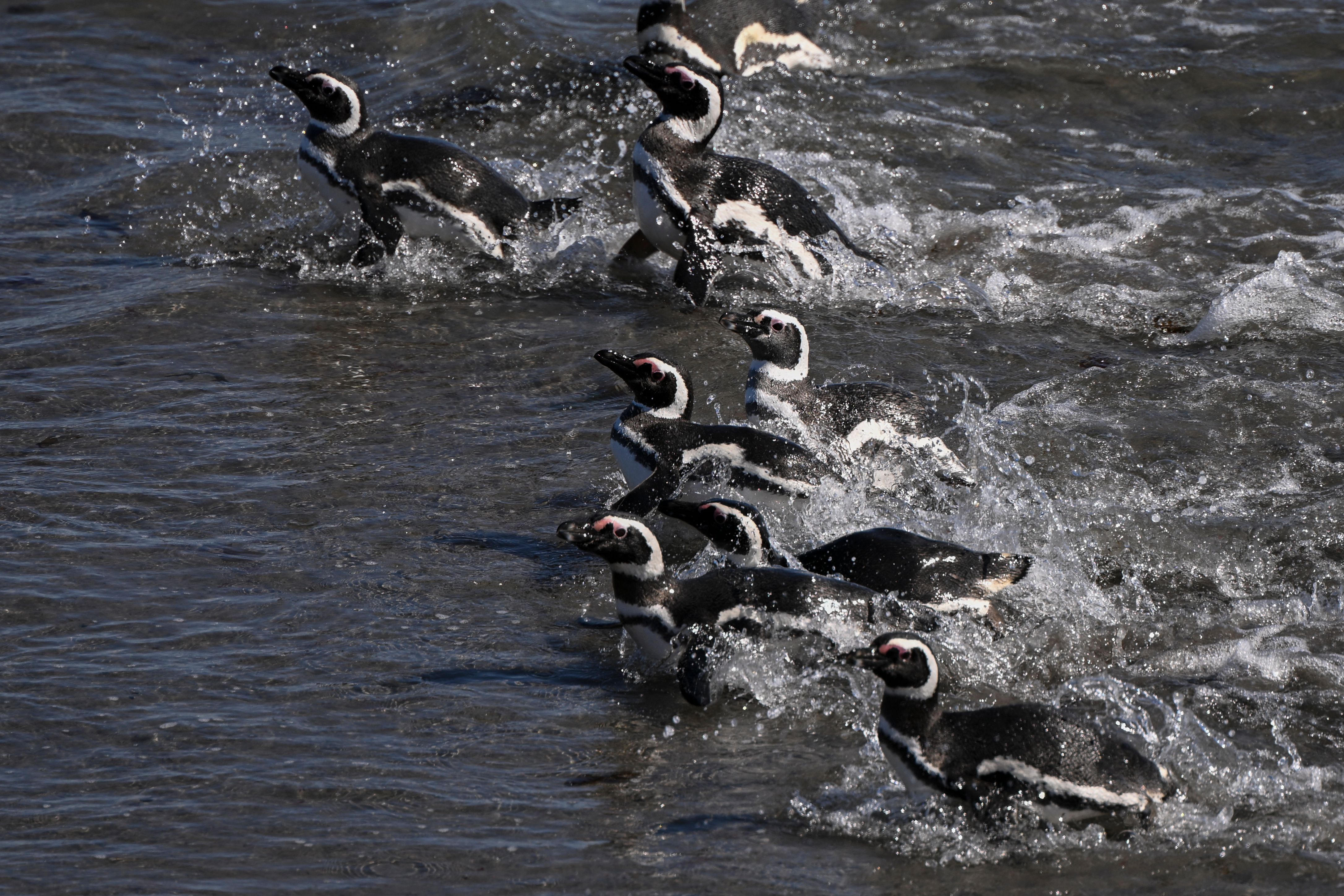
They found that penguins alternate between moving to a direct route and going with the flow of the current. This flexibility can maximize their navigation efficiency. In case of calm current, the Penguins maintained precise routes of the vision towards their colony. In stronger currents, birds swam in the direction of the flow of current. While swimming in this way increased the displacement distance, staying with current management saved energy. Under strong currents, the Penguins were still generally aimed at the colony, but may have changed their management to compensate for the power forces. This suggests that penguins are probably aware of the current drift compared to their destination, even if the colony is out of sight.
“Such behavior is consistent with effective navigation even when it is out of view of the field,” added the authors. “This central observation is a precious contribution to our understanding of navigation capacity in marine animals.”
This particular study only examined 27 penguins, therefore more research, a larger sample size and the search for other species could help us better understand navigation on penguins and how they get around the big blue.

More offers, reviews and purchasing guides


