Why are teens trying them?


Digital health editor, BBC News

 Getty images
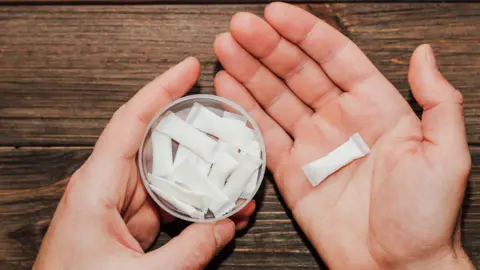
An increasing number of adolescents we use caffeine sachets to obtain an energy rush, say that experts who fear that the trend can soon take off in the United Kingdom.
Small tea -type sachets, placed between lip and gum, offer a quick blow of caffeine, directly on blood circulation.
Some social media influencers push products, recommending them to gymnasts for performance or students who wish to be vigilant for exams.
Tiktok Shop sells many brands and flavors that could appeal to young people, explains Dr. Rob Van Dam from George Washington University.
But with a single pocket containing as much caffeine as two cups of ordinary coffee, it could be easy to take too much and get bad side effects, he says.
There is already a growing concern in the United Kingdom about young people using sachets of nicotine or SNUs.
The caffeine covers are also discreet – you may not be able to say if someone has one in your mouth – which facilitates the hiding place of parents and teachers.
Some fans of the product boast online on the “buzzing” of the use of two sachets both for a large rush to caffeine.
As caffeine is quickly absorbed, the effects can start a few minutes after ingestion and last a number of hours. The levels can become uncontrollable.
Dr. Van Dam told BBC News: “Young people can have less caffeine tolerance and there is a chance that they can find themselves in the emergency room if they have too much.”
Why is the caffeine and what happens if you have too much?
 Getty images
Caffeine is a stimulant that can make you more alert and less sleepy because of its effect on the brain and the nervous system.
Lewis James, from the School of Sports, Exercise and Health Sciences at the University of Loughborough, says there are good proofs that caffeine can help facilitate the feeling of exercise.
It has become one of the most used supplements among athletes.
While you exercise, your body produces a chemical called adenosine that makes you feel tired. Caffeine blocks adenosine receptors in your nerves, so your brain perceives less pain and fatigue.
But it also acts on other parts of the body – including the cardiovascular system – which can be risky.
High levels can cause rapid heart rate, abnormal heart rhythms and crises.
Although rare, there are documented deaths of excess caffeine.
Some people are more sensitive to caffeine than others and may feel nauseating, anxious and irritable, and obtain headaches even in lower doses.
Generally, up to 400 mg of caffeine per day seems to be sure for most healthy adults – it’s about four cups of instant coffee.
Tea contains a little less, so five cups a day are generally good.
Pregnant women are advised to make daily consumption at 200 mg or less.
Children and adolescents are also more sensitive to the risks and potential of an overdose.
This is why energy drinks containing more than 150 mg of caffeine, for example, are already held by EU law to transport labels by declaring: “A high caffeine content. Not recommended for children or pregnant women or breastfeeding”.
Monitor other drinks or foods containing caffeine
Dr. Van Dam says it can be easy to overload. Caffeine is in many drinks and certain foods, so it is important to check how much you consume.
“Although it is more difficult to overdose on coffee, with these products, it’s easier, especially if young people also use energy drinks.”
He says that some products, when you check them in the laboratory, contain more caffeine than they claim on labeling.
 Getty images
- Coffee: A cup contains approximately 100-140 mg of caffeine, but it can vary considerably
- Tea: A cup contains about 75 mg
- Energy drinks: often contain 80 mg in a 250 ml box
- Soft drinks: generally contains about 40 mg per box
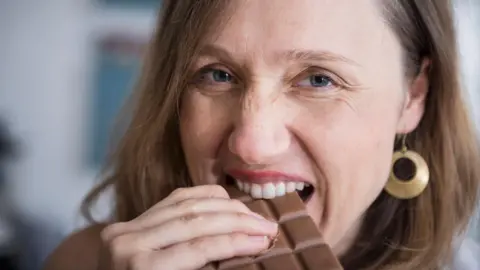
- Chocolate: There are about 25 mg of caffeine in a 50 g dark chocolate bar and about 10 mg in a 50 g milk chocolate bar
Dentists say that using them over time can irritate the gums – similar to the SNUs and the pockets of nicotine.
Some experts are worried about caffeine pockets could be a gateway to use.
Bini Suresh is responsible for dietetics at the Cleveland Clinic in London, and spokesperson for the British Dietetic Association.
She says that the use of sachets can feel “trendy” or harmless, but there is a real risk of normalizing the use of stimulants in adolescents and young adults, potentially creating dependence models.
She told the BBC: “Although caffeine can give a temporary boost, it can disrupt sleep and worsen fatigue over time, especially in children and adolescents who are more sensitive to its effects.”
If young people will have caffeine, the BDA and the NHS both advise caution.
The European Food Safety Authority suggests 3 mg / kg body weight as a higher limit for children and adolescents, which means that a child weighing 30 kg should not have more than 90 mg in one day.
Instead of reaching caffeine, Ms. Suresh says it is better to focus on regular dishes, hydration and nutrients that support constant energy levels throughout the day.
A healthy diet with enough iron, protein and slow release carbohydrates should do the work, she says.


