Why do cats hate water? An expert explains.


It can happen in an instant. Your feline friend traverses your bathtub like a balance bundle, curious to know what you do behind the shower curtain. Then a leg slides. They fall. Water goes everywhere. You are amazed. They are horrified. And, as quickly as they fell, they zoomed out.
Cats and water simply do not mix – this is the dominant story. And yet, certain cats seem to love water. Place just on YouTube, Instagram, Tiktok or the more specialized sub-genre of the platform, #Cattok, and you will necessarily find felines who like water while enjoying a shower or swimming. So what gives?
“In general, most cats are opposed to water,” explains Kristyn Vitale, an animal behaviorist in Maueyes Cat Science and Education. “But I think that is like everything, as with people too, that a general statement never applies to each individual.” To discover the reason why most cats are not fans of water, we must look at the evolution, education and biology of our fur friends for answers that extend in thousands of years in the past.
First of all, blame the evolution
In many ways, cats have not changed much in 10,000 years of domestication. Unlike dogs, our feline companions “have not really been raised selectively. So their predatory engine motif is still intact,” explains Vitale. “Much of their behavior will be very [similar to] their wild ancestor.
This ancestor is the African Wildcat (Felis Silvestris Lybica). By browsing between six and 18 pounds, the African Wildcat is more like a large Tabby cleaning – and like a Tabby house, this wildcat is not in the water either.
“African Wildcats will generally hunt on earth and hunt terrestrial animals. So they have not really developed a lot of behaviors to be in the water or hunt in water, ”explains Vitale. They are, and have always been terrestrial animals – especially arid terrestrial animals.
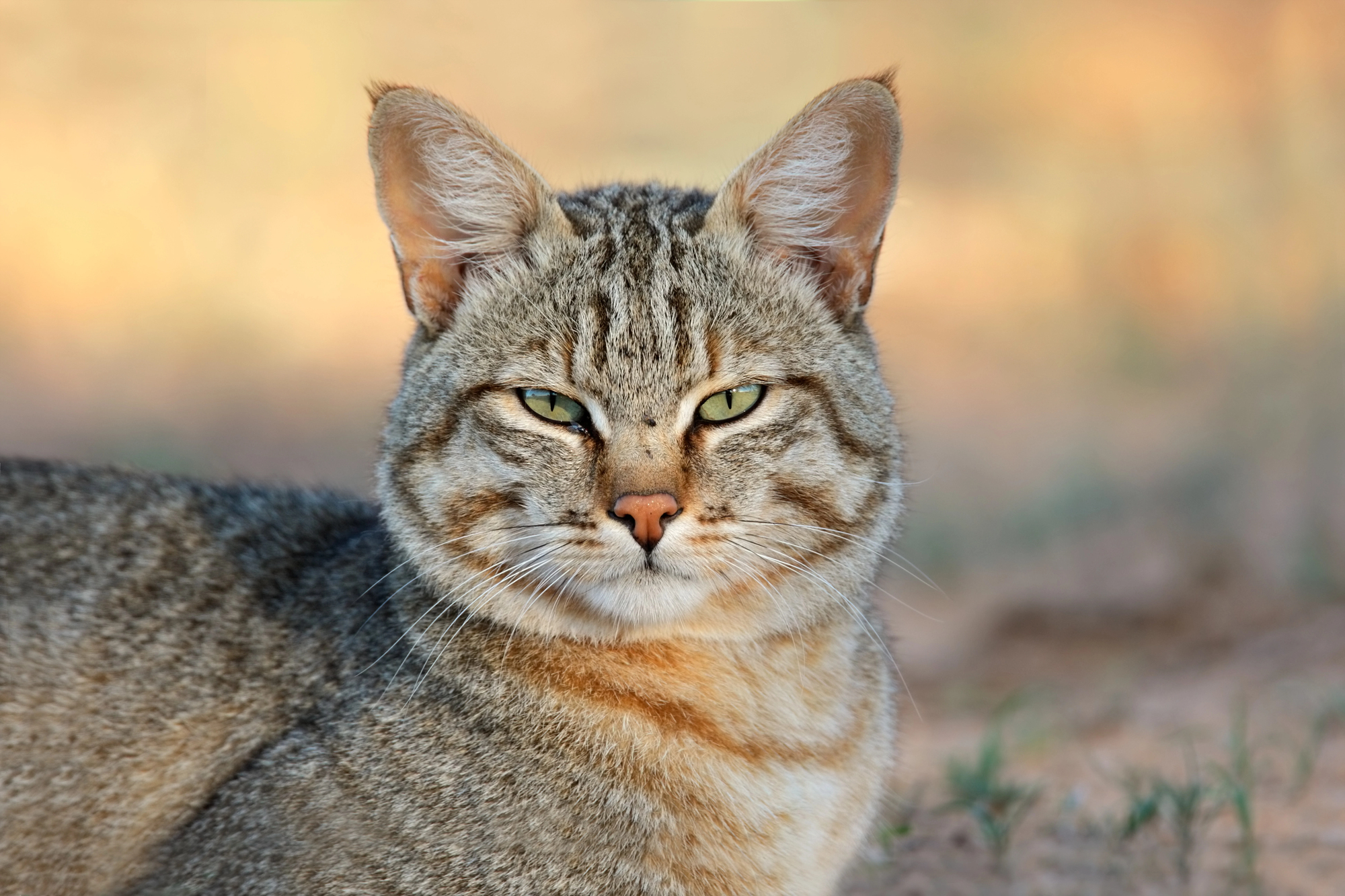
African savages live mainly in deserts and savannas. When they were domesticated for the first time about 10,000 years ago, they called the dry plains of the fertile crescent, a large band of the Middle East which extended from northern Egypt to Iran, at home. It is therefore logical that their modern descendants do not jump into the pools with a lot of strikes.
A cat’s education also plays a role
But evolution is only part of the equation. How cats are raised also play an important role in the reasons why some, if not most, of our feline friends are worried about the water.
“If you think of dogs, many animal owners will take their dogs to the beach or their dogs will take baths more often. So, from an early age, dogs learn water and I hope that water is not something scary, ”explains Vitale. “But as cat owners, we don’t really do that.”
Most cats in the domestic house are not exposed to water as often as their canine counterparts. Some cats can even develop a fear of water if, say, they accidentally fall into your shower or get a bath after being sprayed by a skipstick. Unpleasant experiences like these can still deactivate cats to get wet, explains Vitale.
On the other hand, if your cat has positive experiences with water, it can start looking for it. In more extreme cases, they may even reach you for a shower. Can I present Pym the shower cat.
You shouldn’t bathe your cat
To be clear, it is generally better not to swim your cat. Most cats have been autonomous, using their coarse languages to prepare to prepare or prepare. “Baignings can cause problems because you potentially hide the smell of cat,” explains Vitale, especially if you use a fragrant shampoo or a soap. “Cats feel safe when they can feel themselves. And if you mask their perfume, it can cause stress and anxiety, “explains Vitale. This is bad news if your fur friend is starting to associate water to be stripped of their natural fragrance.
Related cat stories
There is also the potential that getting wet can get the balance of a cat. For example, mustaches play a vital role in the way cats play the world around them. They provide information on their environment and how to navigate it. “It is very possible to get wet could hinder [whiskers’] Ability to resume vibrations and sensations, ”explains Vitale.
That said, Vitale says that it is not necessary to worry if your cat likes splashes in the bathtub or a quick rinsing. “It’s like people, you know, some people like to go swimming and some are really afraid of water. It is the same kind of individuality that we see in cats. ” So don’t worry, Pym the shower cat is fine.
The slowly introduction of water can be beneficial
In general, you want to avoid forcing your cat to interact with water. This will only lead to an association with water and negative experiences. Instead, Vitale suggests introducing your cat to the water slowly, especially if you have a kitten or a young cat who may not yet see the water like an enemy. One of the best ways to introduce cat water is to provide them with a fountain, in this way “they can somehow test the water themselves”, explains Vitale. “They can put their paws. They can put their tail. ” It is on their conditions.
You can also find opportunities to introduce water to activities that your cat already appreciates, such as pets. The next time your cat will jump near a sink, “turn on the tap for them and maybe sprinkle a little water [on them] Or get your hand wet and stroke them with your damp hands to start, and see how they react, ”explains Vitale.
“If they really panic about it, then perhaps, you know, go back and go even more slowly. But often, these progressive presentations of water can really help them realize that,” hey, water is not something to fear. “”
This story is part of popular sciences Ask us anything seriesWhere we answer your most bizarre and burning questions, from the ordinary to the wall. Do you have something you always wanted to know? Ask.

More offers, reviews and purchasing guides