
If you’ve ever been around a cat, you know they can get the sudden urge to groom themselves at just about any moment. You’re petting them on the couch. They’re purring. Everything seems lovely and content. Then, they lose all interest in you and start licking their butt.
But some felines don’t just lick themselves: They also lick you. A cat will be busy grooming themselves. Then, without warning, they’ll turn their spiky tongues on their unsuspecting humans. Other cats can’t be bothered and won’t ever groom or lick their human friends, or other kitty friends for that matter.
So, why do some cats lick their owners? Are they trying to clean you, too? We asked an animal behaviorist and cat expert to help us sort out exactly what is going on when your cat licks you.
Mama cats regularly groom their babies
For a mother cat, grooming is an important part of child rearing. When a mama cat licks her kittens it serves two important purposes: keeping her kittens clean and promoting social bonds, Kristyn Vitale, an animal behaviorist at Maueyes Cat Science and Education tells Popular Science.
On the one hand, “mother cats are going to groom their kittens to help keep them clean and healthy,” says Vitale. Kittens can be especially susceptible to diseases, and “anybody who’s raised young kittens knows how dirty they can get, and a mother cat is not going to obviously bathe their kitten in a tub. They’re going to use their tongue to clean them.”
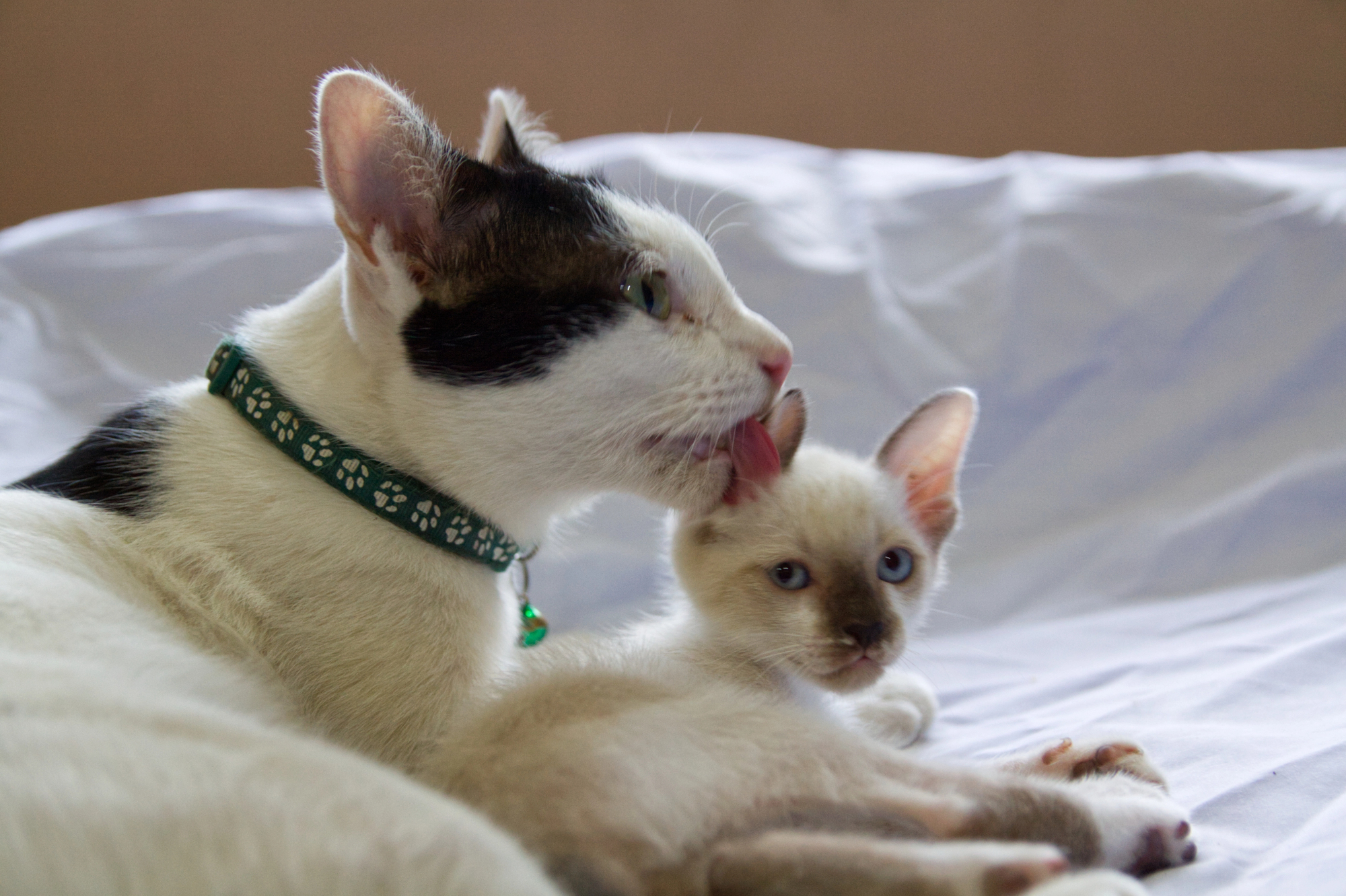
But grooming also helps a mother cat strengthen her relationship with her kittens, says Vitale. A mother licking her babies is “one of the kitten’s first forms of social interaction.”
It’s essentially a way for mothers to say, “I love you and I care for you.”
How grooming shifts for cats in adulthood
Kittens learn to groom from their mom, and usually start grooming themselves when they’re around four weeks old. Pretty soon after that, some cats “begin to reciprocate [their mother’s] grooming and they’ll groom their siblings or other unrelated cats and also preferred people in the house,” says Vitale.
If your cat grooms other cats, animal behaviorists like Vitale call those cats their “preferred associates.” For instance, bonded cats often groom each other as a way to reinforce their bestie status. For cats, grooming other cats becomes “a very important social behavior that helps build bonds between the individuals.”
Wild cats lick each other, too
We also see the same behavior in wild cats where mothers groom their cubs to keep them clean and strengthen their connection, says Vitale. In adulthood, wild cats might continue to groom others. You don’t have to search hard to find adorable videos online of lions and tigers licking their besties.

Lions Cuddling and Licking Each Other
Like domestic cats, lions will lick their feline buddies. Video: Lions Cuddling and Licking Each Other/ DerpDerp
But Vitale says there is one big difference here. A lot of wild cats, like tigers or even the closest relative of domestic cats, the African wild cat, “don’t live in social groups the same way the domestic cat does.” So they don’t always have the same opportunities to shower their buddies with love, because, well, they just don’t really have many buddies.
Cats lick humans to strengthen your relationship
So why, then, do some cats licks their owners? In general, if your cat licks you, it’s them saying (in so many licks) that they love you.
Vitale says when her cat licks her, she sees it as them “engaging in a social behavior with me” that’s strengthening our relationship. “I’m thinking in my mind that they’re just in a happy mood and looking to hang out together and interact a little bit.”
What if your cat doesn’t lick you?
While all cats groom themselves (which is why you don’t really need to worry about baths for most cats), not all cats groom other cats or their human friends. But should you feel bad if your cat doesn’t lick you? Does it mean they don’t love you? “No!” says Vitale.
“Licking’s just one social behavior they could engage in. If your cat just sits on your lap, or sits near you, or your cat’s rubbing up against you, or your cat plays with you, those are all other social behaviors that show there’s a bond,” she says. Cats show love for their owners in all sorts of ways, she emphasizes. “Licking is just one thing a cat could do.”
Vitale has three cats, and of the three she says only one licks her, “very, very sparingly, like once or twice a month.”
So, don’t worry, whether they’re a licker or not, your cat loves you. They might just have a different way of showing it.
In Ask Us Anything, Popular Science answers your most outlandish, mind-burning questions, from the everyday things you’ve always wondered to the bizarre things you never thought to ask. Have something you’ve always wanted to know? Ask us.

2025 PopSci Best of What’s New


